Marika Gombitová
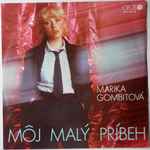
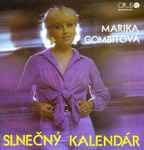
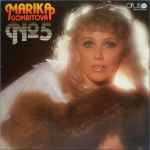
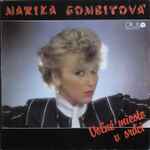
Marika Gombitová (Slovak: [ˈmarika ˈɡɔmbitɔʋaː]; born 12 September 1956) is a Slovak singer-songwriter and musician. Once a member of Modus, Gombitová started to gain early acclaim as a former female vocalist of the group. Nevertheless, she gradually developed her public image as a solo artist, making own debut on short play in 1977. Subsequently, after topping the local music charts with "Študentská láska" (1978), her debut set entitled Dievča do dažďa (1979) saw its eventual results on OPUS Records. The album's lead "Vyznanie", earned several music awards; most notably at the 4th Intervision Song Contest held in Poland (1980). In years to come later, the love anthem was to be celebrated as "The Hit of the Century" (2007) in her country. Shortly before launching the second LP, Môj malý príbeh (1981), her career was adversely affected by a single-car crash. She was reliant on a wheelchair, possibly for life, due to the resulting multiple injuries. Following her partial recovery, Gombitová returned to the spotlight scoring new top rankings and even touring again. Her comeback album Slnečný kalendár (1982), continued with the previously established sound, such as mainly pop rock. Soon after that, she began to explore other styles too. While her guitar-based double effort Mince na dne fontán (1983), received the Gold Arms award as the best-selling record, its successor called №5 (1984) would find her experimenting with electronic music, giving Gombitová some of her strongest reviews, for a change. More recently the singer has carried on achieving commercial success through a radio-friendly format. Her consecutively running synthpop outputs, such as Voľné miesto v srdci (1986) and Ateliér duše (1987), they both enjoyed a series of airplay hits, being accompanied with a sold-out concert tour and a video album release, respectively. Unlike Kam idú ľudia? (1990), which showcased a more rock-oriented sound and, eventually, it marked the end of the artist's prolific period of time. Gombitová however managed to sustain an indisputable level of popularity also off the scene. Prior to her long-term withdrawal from public life, she delivered on Jumbo Records Zostaň (1994), her final studio collection of pop tunes to date. Gombitová is regarded in popular culture as a dominant figure whose influence reflect numerous awards and honorific titles to her credit. Besides, her contributions to the genre have made singer one of the most successful solo acts in the history of Slovak contemporary music, having six out of nine full-length records listed among The 100 Greatest Slovak Albums of All Time. In her homebase, she is often recognized as The Songstress of the 20th Century (2000), and has been quoted as an inspiration by various local artists since. Inducted into the ZAI Hall of Fame at the age of barely forty years, her work remains covered and a radio favorite in the region. "Koloseum" One of the singer's most recognized songs from 1987. The lyrics stress her interrupted career, culminating in the chorus: Coliseum, glory to fall ▪ How many times time's come to halt ▪ A stone is glorious after all ▪ Coliseum, fame is a fall ▪ How many times time's come to halt ▪ The stone is famous on its own ▪ Above all alone Problems playing this file? See media help. Marika Gombitová was born on 12 September 1956 in the village of Turany nad Ondavou, east Slovakia, as the seventh child of Michal (19 December 1913) and Margita (19 August 1921, née Novotňáková). However two of their older daughters – one of whom was already given the name Mária – died due to hypothermia. Since the age of nine, she was taking piano lessons in the local Ľudová škola umenia (LŠU) in Stropkov. Following her failure to study singing at the Music school, she continued with engineering in Košice. While on high school, she sang with an amateur band called Profily. Later she would shortly perform for the orchestras of Juraj Szabadoš and Július Olajoš, respectively. In 1975, Gombitová made her first recordings ("Karta" and "Nájdem hviezdu") at Slovak Radio Košice. The next year, she received an offer from Janko Lehotský, frontman of the Modus band, to join his professional group. Following the leaving exam she, therefore, moved to Bratislava and got an initial exposure in Slovak Television with songs "Lúčenie" and "Túto pieseň spievam vám" (both co-written by Lehotský), performed in Chvíľa pre pesničku in 1976. At first, she would release a number of singles with Modus (such as "Veľký sen mora", "Margaréta", "Zažni" – all from 1977) as a backing vocalist. Her solo part came along with the Bratislavská lýra '77 winning composition "Úsmev" that featured also vocal contributions by Lehotský, Miro Žbirka and Miro Jevčák. Subsequently, Gombitová recorded her debut solo single entitled "Boľavé námestie." For the first time, her name appears in the national music poll Zlatý slavík, being ranked as the 46th Most Popular Female Singer in Czechoslovakia in 1977 (Modus scored at number #6). "There's no way to deal with this, and if someone claims such thing, you don't buy it." — Gombitová on account of her suffered damages The second solo single by Gombitová, "Študentská láska," was issued in 1978. The song won two awards at the Bratislavská lýra '78 festival, being classified as the most selling SP in July in Slovakia. She also recorded four tracks on the Motion Picture Soundtrack of Smoliari (issued in 1979), and her position in annual Zlatý slavík skyrocketed to number #4 this time (Next year she scored at #3, while at #2 in 1980). Following her contribution to the Collegium Musicum's full length project entitled On a Ona, Gombitová along with Modus was headed in February 1979 to the recording studio to work on their self-titled debut album. In addition, she would also release her own debut set Dievča do dažďa. With its pilot single "Vyznanie," Gombitová entered the 4th Intervision Song Festival held in Sopot, Poland on 20–23 August 1980. As a result, she received the first prize in the competition representing record companies, shared with Nikolai Gnatiuk from Russia (for the song "Dance on a Drum"). Prior to crash "Muž Nula" While continuing her musical evolution with Mince na dne fontán in 1983, singer helped popularize electronic musical instruments. In a more comprehensive manner to receive a synthesized voice in place of her own, she utilized vocoder for such tracks as "Skúška prvých šiat" and "Muž Nula". Problems playing this file? See media help. With ambitus registered at F♯2, Gombitová possesses an over two-octave vocal range and has the ability to reach notes beyond H2, when using head register. In the early phase of her solo career, she underwent vocal training with coach František Tugendlieb, whose supervision included a broad range of her peers recording artists. Tugendlieb had become proverbial for dividing off head register from chest voice, allowing production of nasal tones, which resulted in a greasy-voiced sound distinctive for overtone singing, or rather children. As such it was popularized by Bee Gees. Unlike her later imitators (e.g. Darina Rolincová as the most notorious in the 1980s), Gombitová's vocal style was not similar to other pop stars of that period and she soon introduced her own modus, establishing herself as The Songstress of the Century in the 20th century. Reactions to the "childlike quality" of her vocals changed with the release of her solo debut album Dievča do dažďa (1979). Peter Lipták praised Gombitová for "[her] beautifully metallic, a bit heavily-sounding voice", while František Horáček from Populár went in his superlative review even further when compared "[her] original, metallic-sharp timbre" to "the tonal compression of organ pipes". He would also emphasize her "absolutely extraordinary way to split a melody" and "phrasing that brings an outstanding tension – the bigger the slower is [her] composition". Other critics, such as one of the Czech most intransigent Jan
Discografía en vinilo
Ordenada por relevancia (lo más escuchado primero).




En la onda de Marika Gombitová
Otros artistas afines, con vinilo.