
Евгений Дога
Eugen Doga (1 March 1937 – 3 June 2025) was a Moldovan composer. He made significant contributions to various forms of music during his career. Doga created ballets, Luceafărul, Venancia, and Queen Margot, the opera Dialogues of Love, more than 100 instrumental and choral works, symphonies, 6 quartets, Requiem and other church music. He also wrote incidental music for 13 plays, radio shows, more than 200 film scores, more than 260 songs and romances, more than 70 waltzes. He also composed works for children and the music for the opening and closing ceremonies of the 1980 Summer Olympic Games in Moscow. The World Intellectual Property Organization (Geneva), in recognition of his outstanding achievements in music, awarded him a special certificate in 2007. Doga was born on 1 March 1937 in the village of Mocra in the Rîbniţa District (then in Moldavian Autonomous Soviet Socialist Republic), in a Romanian family. The childhood of the composer coincided with a period of historical cataclysms – the war, repressions, hunger, poverty, and exhausting hard work (the composer's memories of his childhood). After finishing seven years at school, Doga with his friends went to Chișinău (barefoot and without money, as he recalled later) to enrol in the School of Music which he learned about when listening to a homemade radio. He was admitted to the music school, despite having no prior training. Thanks to his natural talent and hard work, Doga managed to quickly catch up, mastered musical notation, and learned to play cello. He always had the fondest memories of his cello teacher Pablo Giovanni Baccini, with whom his personal example greatly influenced the future destiny of the composer. "My second teacher, an old man by the name of Pavel Ivanovich Bachinin, became my salvation. I always think of him with joy. He scheduled my first lesson at 6 o'clock in the morning. I came in – he was already sitting there playing the piano. I liked him a lot – intelligent, very musical, and tactful. He worked with me every morning from 6:00 to 8:30, before lectures, for two and a half years. He taught me not only to play the cello, but simply to be a decent human being. He never said the word 'must', never used the imperative mood. However, through his own example, his attitude, he had taught me a lot,"- said Doga. In 1951–1955 he studied at the Music School in Chișinău, specializing in cello, and then at the Conservatory where one of his classmates was a future opera star Maria Bieșu. She made her debut with his song "White flower garden" (Floare dalbă din livadă) on the Moldovan television. Paralysis of the left hand prevented a career of a musician – this was due to the fact that he used to live in a basement. Doga studied for another 5 years at the Art Institute "Gavriil Musicescu", in the class of Professor S. Lobel specializing in composition. 1 January 1957 for the first time in his work, "New Year song" (Cântec de anul nou) was performed on the Moldovan radio children's choir and orchestra under the baton of Shiko Aranova. In 1963, he wrote his first string quartet. After graduating from the Conservatory in Chişinău, he performed as cellist in the Orchestra of the State Committee of the Moldavian Soviet Socialist Republic for television and radio (1957–1962), taught at the Music College "Stefan Neaga" from Chișinău (1962–1967), and worked from 1967 to 1972 at the repertory-editorial Board of the Ministry of Culture of Moldova. He made his compositional debut in 1963, with a string quartet. From 1972 Doga om concert tours, travelled all over the territory of the former Soviet Union, as well to some foreign countries. "The image of the person is defined by his deeds that ultimately benefit people and society. And the concerts that I give in Chișinău, Moscow, St. Petersburg, Kursk or Bucharest, are aimed at precisely this idea of bringing people together, preserving the ideals that make people kinder, more tolerant, that make flowers bloom, and the sun shine brighter,"- said Eugen Doga. Doga's concerts took place in the biggest concert halls. They "gathered huge audiences", and they still do today. "...There were so many offenses because of Eugen Doga's concerts; people just did not want to talk to me. They told me: "I have been asking you for three years, and you can't arrange Eugen Doga's concert." And I really couldn't, because he was very busy. In Leningrad there was a concert orchestra conducted by Anatoly Badhen, a wonderful orchestra, unequalled in the Soviet Union, which played high-quality music. This orchestra for many years gave a lot of concerts with Eugen Doga's music everywhere, throughout the Soviet Union" – Mikhail Murzak. Philharmonic Director of Chișinău (1972–1988 years). His music was performed by the Choir of TV and radio Moldova, the Russian state Symphony orchestra of cinematography, Academic Choir "Doina", The George Enescu Philharmonic Orchestra, the Moscow chamber orchestra "The seasons", Leningrad Concert Orchestra, Academic Grand choir "Masters of choral singing", Orchestra of the Moldavian Philharmonic "Sergei Lonkevich", Moscow city Symphony orchestra "Russian Philharmonic", The national Symphony orchestra of the public company "Teleradio-Moldova", the Presidential orchestra of the Republic of Moldova, Children's choir "Liya Ciocarlia", Large children's choir of the USSR Gosteleradio, Orchestra of the Romanian National Opera Iași, and other groups. Equally important for Doga during his whole life was his public work. From 1987 to 1991 he was a member of the Committee on Lenin and State Prizes of the USSR. For two convocations he was in the Supreme Soviet of Moldavia, for two more – in the Supreme Soviet of the USSR. He, alongside Timofei Moșneaga, were the only members of the Moldavian faction that penned an open letter to Soviet President Mikhail Gorbachev, condemning the separatist movement brewing in Transnistria at the time. As of 2001 he was the permanent chairman of the jury of the All-Russian Movement "Gifted Children of Russia", chairman of the jury of the contest of family Theatre. From 1997 to 2002 he worked with preschool children in a house where he lived. Member of the International Academy of the Arts, Member of the academy of film art "NIKA", Full member of the Russian Academy of science and culture; Member of the International Academy of Arts and culture. Throughout the creative activities of Doga he conducted awareness-raising concerts, charity concerts, and lectured to students. He was on numerous juries of various music and cinematic competitions and festivals across Russia and abroad: Festival "Spirit of fire", Kremlin Cadet ball, Berdyanskiy International Film Festival, Education International Festival in Iași (Festivalului Internaţional al Educaţiei), International Film Forum "Gold Knight", The all-Russian children's charity ball books heroes", and so on. Doga declared that he supported the Unification of Moldova and Romania. He was an Orthodox Christian, belonging to the Metropolis of Bessarabia. Doga opposed the 2022 Russian invasion of Ukraine and called it a war, not a "special military operation". He participated in the European Moldova National Assembly on 21 May 2023. "Family is the home port, which any ship is seeking for, wherever it is. Even despite long distances. Our, artists', distances are incommensurable, but I am glad to have my wife, daughter and grandson waiting for me". Eugen Doga In 1962 Eugen Doga was married to a graduate of the Moscow technological Institute of Natalia. They had a daughter, Viorica (television director) and grandson, Dominic (student).[citation needed] Father – Dmitry Fedorovich Doga (1906–?). Mother – Elizabeth Nikiforovna Doga (1915–?). Wife – Natalia Pavlovna Doga (born 1939), engineer. Daughter – Viorica Doga (born 1966). Grandson – Dominique Doga Eugen Doga lived with his family in Chișinău, as well as in Moscow.[citation needed] He continued to perform live, participating in
Discografía en vinilo
Ordenada por relevancia (lo más escuchado primero).

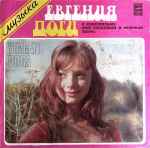
En la onda de Евгений Дога
Otros artistas afines, con vinilo.