Jeanne Pruett
Jeanne Pruett (/ˈdʒiːni ˈpruːɪt/, JEE-nee PROO-it) (born Norma Jean Bowman; January 30, 1935) is an American country music singer and songwriter and author. Pruett had several major hits as a music artist, but became best-known for 1973's "Satin Sheets". The song topped the country music charts and helped her secure a membership in the Grand Ole Opry cast. Pruett was raised near Pell City, Alabama, and grew up with a large family. She performed with her family from an early age and learned several musical instruments. She married guitarist Jack Pruett before turning 20 years old. Soon after, the couple moved to Nashville, Tennessee, where he was hired to play guitar for country artist Marty Robbins. In the early 1960s, Pruett devoted more time to writing her own songs. Her material was heard by Robbins who recorded her early work. Her writing helped her gain her first recording contract with RCA Victor in 1963. After limited success she moved to Decca/MCA Records where 1971's "Hold on to My Unchanging Love" became her first charting single on the Billboard country list. Pruett's debut studio album was then released the following year. In 1973, Pruett recorded "Satin Sheets" and the song became her biggest hit. An album of the same name topped the country albums chart and she was nominated for several major awards from the Academy of Country Music and Country Music Association. In July 1973, Pruett was made a member of the Grand Ole Opry and became a frequent performer on the broadcast for several decades. She had further hits following "Satin Sheets" with the songs "I'm Your Woman" and "You Don't Need to Move a Mountain". During the remainder of the 1970s, Pruett continued releasing material with little success. In 1979, Pruett returned with her fifth studio album. The record spawned three songs that became top ten hits on the country charts, including 1980's "Temporarily Yours". Pruett continued recording and releasing music throughout the 1980s. Her sixth (and final) studio release was a self-titled effort in 1985. The following year, she was part of the Grand Ole Opry's first all-female segment. The same year, she began a second career as an author of cookbooks. In 1986, Pruett published the first in a series of works entitled Feedin' Friends. She also hosted her own cooking show on The Nashville Network during this time. Pruett continued performing into the early 2000s before officially retiring in 2006. Pruett was born Norma Jean Bowman outside of Pell City, Alabama, United States. She was raised on a farm and was one of 12 children. Pruett recalled the experiences of being raised on a farm in her 2017 autobiography. "The beauty of the farm, dotted with tall pine trees, sweet shrubs, and blooming dogwood trees, reminded me why they worked so hard, because there wasn't a more perfect sight in the world than that old farm," she explained. In 1947, the Bowman family farm caught fire which devastated the family. "The only sounds now were an occasional pop of the dying sparks and the sound of Mama softly crying, her tired arms holding on to Dad and the children," she recounted. With the support of neighbors, the Bowmans rebuilt their home on the same property within a year's time. In her childhood, Pruett often informally performed music with her family. They often sang together on the front porch of their farmhouse where she also learned to harmonize. At home, Pruett also learned how to play musical instruments. She learned how to first play guitar from the song "Down the Trail of Achin' Hearts". She also frequently listened to the radio. "It seemed to me that the voices of the DJs were as recognizable to me as the voices of my favorite singers of the day," Pruett said. Outside of the home environment, Pruett joined her school's choral group and formed a trio in high school called "The Super Suds". Pruett dropped out of high school in the tenth grade and got a job at a telephone company in Anniston, Alabama. While not working, she and her sister would attend dances at a local VFW hall. At these dances, she also became interested in performance opportunities. She started singing with the VFW's country band and appeared on a local television station. "Now the entertainment hook was really in my mouth," Pruett remembered. It was at these outings that she met guitarist Jack Pruett and they began dating. Jack enlisted in the military shortly after their relationship began. While awaiting his return, Jeanne moved into his sister's home. After Jack returned from the service, the couple married in 1955. Also in 1955, Jack became the touring guitarist for country artist Ray Price. In 1956, the pair moved to Nashville, Tennessee, so that Jack could continue performing in Price's band. The couple lived in a trailer park and were neighbors to country performers Lester Flatt, Hawkshaw Hawkins and Jean Shepard. While still living at the trailer, Pruett gave birth to their first child. Shortly after the birth, Jack Pruett accepted a job playing guitar in Marty Robbins' road band. After accepting the position, the family moved into a two-story house in Nashville. Pruett developed a songwriting hobby while raising her new family and became increasingly devoted to it once her children entered school. In 1963, her husband brought her songs to Marty Robbins, who signed her to his publishing company. While several of her songs were demoed by a male singer, Pruett sang the demo version of her self-penned "Count Me Out". Robbins was so impressed by the song, he later recorded it and had a country chart hit with it. He was also impressed by Pruett's singing and told her "I believe we've discovered a new girl singer!" Robbins brought Pruett's songs to the attention of producer, Chet Atkins, at RCA Victor Records who signed her to a recording contract with RCA in 1963. That year, her first single entitled "Just a Little After Heartaches" was issued by RCA. She recalled first hearing it on the radio the same day Patsy Cline was killed in a March 1963 plane crash. "I'm sure my song release was so overshadowed by the shocking news of their death that the only two people who heard and remembered my song was Grant Turner and me," she recalled. Pruett returned to domestic life after her RCA singles were unsuccessful, focusing on being a housewife and composing songs for Robbins's publishing company. In 1969, she signed a new recording contract with Decca Records after Robbins brought two of her songs to producer Owen Bradley. "This girl's got a housewife sound, and I can sell her," Bradley told Robbins. She had moderate success in 1971 with the single "Hold on to My Unchanging Love". It became Pruett's first chart entry, reaching number 66 on the US country songs chart. The following year, Pruett's self-penned "Love Me" was released and became her first top 40 entry on the US country chart. Robbins recorded the track shortly after the original and had a top-10 hit on the same chart. In October 1972, Pruett's debut studio album was released on the Decca label. It was reviewed by Billboard magazine the same month, who wrote, "A sterling, stirring effort for the debut of Jeanne Pruett." By 1973, Pruett's music career was gaining more momentum. She worked several dates overseas booked by agent, Hubert Long, and made several appearances on the Grand Ole Opry. The same year she released the John Volinkaty composition called "Satin Sheets". The song had first been cut as a duet between Bill Anderson and Jan Howard on their studio album Bill and Jan (Or Jan and Bill). Pruett's producer, Walter Haynes, believed the song could be a hit if the lyrics were modified. According to Pruett, she rewrote the introduction to help make the song more record-friendly. She then presented it to Haynes who was pleased with the track. Decca (now MCA Records) believed that "Satin Sheets" was too traditional in its production and chose not to promote it as a single. Instead, Pruett promoted it herself by
Discografía en vinilo
Ordenada por relevancia (lo más escuchado primero).
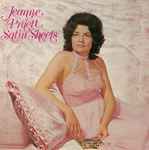



En la onda de Jeanne Pruett
Otros artistas afines, con vinilo.