Didier Malherbe
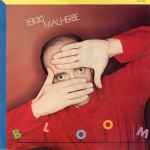
Didier Malherbe (born 22 January 1943) is a French musician and poet. He has played in several bands, including Gong and Hadouk. Malherbe plays the saxophone, flute, alto clarinet, ocarina, Laotian Khaen, Bawu flute, Hulusi, and other wind instruments. Since 1995, the duduk has been one of his preferred instruments. Didier Malherbe was born on 22 January 1943 in Paris, France. He began playing the saxophone at the age of thirteen after hearing Charlie Parker's "Bloomdido", a title he would eventually adopt as his nickname. After two years of formal training on the saxophone, he began to participate in jam sessions at various Paris jazz clubs with musicians such as Alby Cullaz, Eddy Louiss, and Jacques Thollot. He then moved away from jazz, stating, "I had grown puzzled about bebop because of so many rules. Then free jazz arrived, which got rid of all the rules [...] I decided I'd rather look elsewhere". In 1962, after listening to Ravi Shankar's first album, Malherbe traveled to India, where he discovered the bamboo flute and learned to play the Indian bansuri flute. Back in Paris, he studied ancient languages and classical flute at Sorbonne University. During 1964–65, he traveled around Morocco, staying in a community in Tangier and playing alongside other musicians, such as the guitarist Davey Graham. During this time, he learned the elements of Arabic music. In 1966, Malherbe played saxophone with Les Rollsticks in Marc'O's musical comedy Les Idoles. In 1968, the film version of Les Idoles was released. In the summer of 1968, Malherbe moved to Majorca in the Balearic Islands and lived on the property of the writer Robert Graves. During this period, he practiced flute and spent time with Kevin Ayers and Daevid Allen, two former members of Soft Machine. He later described their performance at the Fenêtre Rose festival in late 1967 as "a triggering event". In 1969, he returned to Paris and joined a raga-blues-folk trio named Morning Calm. He also played free jazz with American pianist Burton Green, appearing on his album recorded for the BYG label. The same label released Magick Brother (1969), the first Gong album, on which Malherbe performed alongside musicians from various pop and jazz backgrounds. Gong debuted at the Amougies festival in October 1969. Malherbe received the stage name "Bloomdido Bad De Grasse" from Daevid Allen, a combination of the title of the Charlie Parker standard and a comedic translation of his surname. The albums Camembert Electrique (1971) and Continental Circus (1972, the soundtrack to Jérôme Laperrousaz's movie of the same name) made Gong, alongside Magma, a part of the French underground scene of the early 1970s. Malherbe remained with Gong after line-up changes, even staying on after Daevid Allen quit in 1975 following the Radio Gnome Invisible trilogy, released by the later-fledgling Virgin label: Flying Teapot and Angel's Egg (1973), then You (1974). Following the departures in 1975 of Allen and Steve Hillage, Gong shifted to a more jazz-fusion style, influenced by Weather Report, with Malherbe adding a world-music flavor, as exemplified by "Bambooji" on the album Shamal (1976), an early suggestion to his later work as a solo artist. A final line-up with a percussion section and Allan Holdsworth on guitar recorded Gazeuse! (1977). In 1977, Malherbe formed the band Bloom, playing a fusion of jazz and rock. They recorded an eponymous album in 1978, and the band toured extensively in France. In 1981, it was replaced by smaller line-ups: Duo du Bas with Yan Emeric Vagh and Duo Ad lib with Jean-Philippe Rykiel. In 1978, Malherbe played on three songs for Gilli Smyth's Charly Records release Mother, also appearing on her LP Fairy Tales under the band name "Mother Gong", featuring guitarist Harry Williamson. In 1980, Malherbe recorded his first solo album, Bloom, which had a jazz-fusion sound and French vocals. In 1982, Malherbe began a partnership with Faton Cahen, former pianist with Magma and Zao, which they called Faton-Bloom. The band was made of Rémy Sarrazin (bass), Éric Bedoucha (drums) and Roger Raspail. An eponymous album released in 1986, accompanied by touring. During that period, Malherbe also worked with singer Jacques Higelin, on stage (the live album Casino de Paris in 1984) and in studio (the album Aï in 1985). He also played on the debut album by Equip'Out, a band led by ex-Gong drummer Pip Pyle, and joined Daevid Allen in a new line-up of Gong, which resulted in the album Shapeshifter (1992). In 1990, Malherbe released his second solo album, Fetish, with a cast of musicians, later calling the album "very scattered". He notably experimented with the Yamaha WX7, a wind synthesizer. He then signed with the Tangram label, releasing Zeff in 1992, which was met with critical and commercial success.[citation needed] The sound of the "Zeff", a harmonic bent PVC pipe, also was included in Vangelis's soundtrack for Ridley Scott's movie 1492: Conquest of Paradise and was featured on public TV channel France 3. This was followed by Fluvius (1994), with a quartet including Loy Ehrlich, Henri Agnel, and Shyamal Maïtra. In 1996, Hadouk was formed with Loy Ehrlich, named in reference to their respective instruments of choice, hajhouj (a.k.a. guembri or sintir; a bass of the Gnawas of Morocco) and duduk (a double-reed Armenian oboe). Also during the 1990s, Malherbe toured with Classic Gong in both Europe and the U.S. He left the band in 1999, but continued to appear occasionally as a guest star, both on stage (such as on the Subterranea DVD) and on the records Zero To Infinity and 2032. He also toured and recorded with Brigitte Fontaine on the CD Palaces and with acoustic guitarist Pierre Bensusan's Live at the New Morning CD in 1997. In 1999, the Malherbe/Ehrlich duo was joined by American percussionist Steve Shehan and released the album Shamanimal, credited as the Hadouk Trio. The trio appeared at festivals including Nancy Jazz Pulsations. In 2001, Djivan Gasparyan invited Malherbe to appear at the international duduk festival in Armenia, then in Moscow and Saint Petersburg. That same year, he published a book of sonnets on reeds, L'Anche des Métamorphoses, which he later turned into a solo show, mixing poetry reading and musical interludes. In 2003, the second Hadouk Trio CD, Now, was released. The trio appeared at the San Sebastián festival, at Jazz sous les pommiers, and released two live recordings – the double CD Live à FIP (2004) and the DVD Live au Satellit Café (2005) – which marked a partnership with Naïve Records. The release of the trio's third studio CD, Utopies (2006), coincided with an appearance at the Gong Unconvention in Amsterdam, a festival which peaked with the reunion of Gong's 1970s line-up. Two concerts at Paris's Cabaret Sauvage in May 2007 were documented on the live CD/DVD Baldamore. The trio's final release, Air Hadouk, released in 2010. It was followed by tours in Great Britain and India and an appearance at the Paris Jazz Festival. In 2013, Naïve Records reissued the first 4 Hadouk Trio CDs as a box set, which coincided with a concert at the Salle Gaveau on 2 February. In 2010, Malherbe formed a duo with guitarist Éric Löhrer. The following year, they released the double-CD Nuit d'Ombrelle, which mixed jazz standards on duduk with improvisations, arranged as a continuous suite. Since 2012, he has been playing with classical pianist Jean-François Zygel, appearing on his TV programme La Boîte à Musique on the channel France 2, and has been performing live as a trio with percussionist Joel Grare under the title A World Tour In 80 Minutes. The Hadouk Quartet formed in 2013 and evolved out of the Hadouk Trio. It consists of Malherbe and Ehrlich, as well as Eric Löhrer and Jean-Luc Di Fraya. The quartet released their debut CD, Hadoukly Yours, through Naïve Records on November 4, 2013, and added two Chinese wind instruments: Bawu and Hulusi. Didier Malherbe has published two books of sonnets:
Discografía en vinilo
Ordenada por relevancia (lo más escuchado primero).
En la onda de Didier Malherbe
Otros artistas afines, con vinilo.