井上陽水
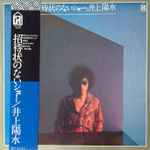
Yōsui Inoue (井上 陽水, Inoue Yōsui; born August 30, 1948) is a Japanese singer, lyricist, composer, guitarist and record producer, who is an important figure in Japanese music. He is renowned for his unique tone, eccentric lyrics, and dark sunglasses which he always wears. Under the stage name Andre Candre, Inoue debuted in 1969 and released a single "Candre Mandre" by CBS Sony Records. After he changed his stage name and signed onto Polydor, he recorded his first studio album Danzetsu in 1971, and the album was acclaimed by critics. Inoue gained recognition as a folk-rock singer-songwriter through his 1973 Kōri no Sekai album, which became the first long-playing record that sold more than a million copies in Japan alone. His early work has been compared with the music of Paul McCartney and Roy Orbison. Mark Anderson writes in the Encyclopedia of Contemporary Japanese Culture, "His music was smart, melancholy and melodic. [...] Inoue's work of the early 1970s [...] is widely thought to have been a significant influence on the development of Japanese pop rock". Inoue has released 22 solo studio albums, and also produced two albums with Tamio Okuda. He has been one of the most commercially successful Japanese male solo recording artists of the last 40 years, selling in excess of 10.9 million copies on the country's Oricon albums chart up to May 2009 and has had seven number-one albums; Kori no Sekai, Nishoku no Koma, Good Pages, Shoutaijou no Nai Show, 9.5 Carats, Under the Sun, and the compilation Golden Best which was released in 1999 and has shipped over two million units. On August 30, 1948, Akimi Inoue was born in Koubukuro, Kaho District, Fukuoka, Japan. His father, Wakami Inoue, was a dentist who had formerly worked as a surgeon for the Japanese army during World War II, and wanted his sole son to take over the business of his clinic. When Akimi was six years old, he moved to Itoda, Tagawa with his family, and spent his childhood there until he decided to become a musician. The existence of The Beatles inflated Inoue's interest in music at a young age. Around 1966, Inoue is said to have written his first song. This song has never been recorded, but Inoue has performed the song occasionally during his concerts. In 1969, he recorded the song "Candre Mandre" at his house, in order to be played on the radio program Smash!! 11 which was aired on RKB Mainichi Broadcasting. It received a lot of requests from listeners of the program but, in fact, most of them were from Inoue's friends. However, favorable reaction gave him an opportunity to make a debut. He moved to Tokyo and recorded "Candre Mandre" at the studio, with the arranger Hitoshi Komuro and his band, Rokumonsen. A newly recorded version of the song was released as a single by the CBS Sony label in September 1969, under the distinctive stage name "Andre Candre". He anticipated that "Candre Mandre" would gain success, but it did not receive any commercial reaction. Andore Kandore released three singles but, follow-ups "Beautiful Wonderful Birds" and "Hana ni sae, Tori ni sae (Let Our Hearts Be)" (composed by Takeshi Matsuyama and Kazuhiko Kato) also failed commercially. Though results of his earliest projects were not outstanding, close relationships with some musicians who worked with him at that time continued for years. Particularly, Hitoshi Komuro supported Inoue till he became a star. Then-unknown Kiyoshiro Imawano, a frontman of RC Succession, wrote several songs including "Kaerenai Futari" and "Machibouke" with Inoue. In 1971, Inoue contracted with the Polydor Records with the support of the company's director Hidenori Taga, and launched the recording of his first studio album entitled Danzetsu. The album features Takao Kisugi (who were still not debuted as a singer-songwriter) on guitar. He changed stage name to "Yosui Inoue", and debuted again under the Polydor in the following year. His first single was "Jinsei ga Nido Areba", a song later included on the Danzetsu album. It features his emotional vocals, akin to sobbing. Later material also feature similar extremely melancholic renditions. "Yume no Naka e", a song somewhat more accessible than his previous effort, was released as a single in March 1973 and became the first hit for Inoue, entering the top-20 on the Japanese Oricon chart. To promote Inoue's popularity, Polydor asked him to record a new album. Thereupon he recorded concerts held at Shinjuku Kosei Nenkin Kaikan on April 14, 1973. It was issued as the live album Modorimichi in that year's July. During the mid-1970s, the album was successful, owing to the hits of its follow-ups. It is still one of the best-selling live recording albums on the Japanese albums chart, selling over 800,000 copies. Kōri no Sekai, the third studio album recorded by Inoue and released in December 1973 led him to the stardom. It received unprecedented commercial success in the history of Japanese music industry at the time. Kōri no Sekai topped Oricon album chart for 35 weeks (longest ever), and remained the Top 10 for 113 weeks. The album retailed in excess of a million copies in 1975, becoming the first million-selling album in Japan. Nishoku no Koma, a follow-up to Kōri no Sekai released in 1974, also topped the chart, and retained its position for ten consecutive weeks. The album features harder arrangements than his early folk-oriented albums, enlisting the studio musicians including David T. Walker, Jesse Ed Davis, Ray Parker Jr., Harvey Mason, and Jack Nitzsche. Inoue reached the pinnacle of his popularity as a musician in the mid-1970s. The breakthrough providing him with the nickname "Emperor of Japanese Folk-rock", and introduced his more early efforts to listeners (the songs including "Jinsei ga Nido Areba", "Ai wa Kimi", "Kasa ga Nai", "Tsumetai Heya no Sekai Chizu", "Yoru no Bus", "Natsu Matsuri", "Kannazuki ni Kakomarete", "Kami Hikouki", "Nokonoshima no Kataomoi" became popular particularly). His fifth studio album Shoutaijou no Nai Show was released in 1976, under the newly founded label For Life which was distributed by Canyon Records. Project of forming a record label was initiated by Hitoshi Komuro and Takuro Yoshida, and Inoue and Shigeru Izumiya joined as the co-founders. It was the first example that Japanese musicians came to control a record label. Inoue has released all their albums and singles through For Life for over 30 years, although the label has changed its distributing companies several times. Inoue contributed three songs for Seri Ishikawa (a singer married to him in 1978) on her 1977 Kimagure album. One of them, "Dance wa Umaku Odorenai" was later covered by an actress Mio Takaki and became a hit. The U.S. studio musicians who took part in the recording of Inoue's albums tempted him to take the drugs which were rigidly prohibited in his home country. In late July 1977, he purchased marijuana tobacco called Buddha Sticks. And he was arrested in September for possession of them, followed by other sixty Japanese celebrities because of similar suspicions. Inoue made his comeback as a musician laterin the same year and released an album called White in 1978, but his popularity was lost hugely owing to his law breaking. His 1980 album entitled Every Night is the effort that Katz Hoshi (an arranger who had worked on Inoue's works since Danzetsu album) did not participate in the recording for the first time. Production of his recording was radically changing at that time, featuring alternative arrangers including Masayoshi Takanaka (who participated in Inoue's 1979 Sneaker Dancer album) and Yuji Kawashima (also known by pseudonym "Banana", who has worked with Inoue since Ayashii Yoru wo Matte album released in 1981 and been one of the significant collaborators for him). Except for a hit single "Jealousy", most of Inoue's efforts after his comeback were not as successful as his previous works, but some materials like "Nazeka Shanghai", "Umi e Kinasai", "Tomadou Perican"
Discografía en vinilo
Ordenada por relevancia (lo más escuchado primero).





En la onda de 井上陽水
Otros artistas afines, con vinilo.