Roddy Frame
Roddy Frame (born 29 January 1964) is a Scottish singer-songwriter and musician. He was the founder of the 1980s new wave band Aztec Camera and has undertaken a solo career since the group's dissolution. In November 2013, journalist Brian Donaldson described Frame as: "Aztec Camera wunderkind-turned-elder statesman of intelligent, melodic, wistful Scotpop." Since the end of the Aztec Camera project, Frame has released four solo albums, the last of which is 2014's Seven Dials. Frame grew up in East Kilbride, South Lanarkshire, Scotland, and went to Canberra Primary School and Duncanrig Secondary School. Frame was surrounded by music from a very young age, as his older sisters were music fans and listened to a great number of artists, such as the Beatles and the Rolling Stones. He started to learn guitar playing at a very early age. During his early years playing guitar, Frame frequently listened to Wilko Johnson and was able to play many of Johnson's songs as a result. As a child and adolescent, Frame was inspired by a variety of musical influences, including David Bowie, the Velvet Underground, the Byrds and Love. Following the advent of the punk subculture, Frame states that he was drawn to it, as "it said, 'Anyone can do it. You can form a band.' ... It was liberating." He cited John McGeoch's guitar playing with Magazine and Siouxsie and the Banshees as one of his main influences. Frame was attracted to the fashion sense of punk bands like the New York Dolls and the Sex Pistols, but was subsequently inspired by the look of the Fall's Mark E. Smith. Frame isolated Bowie as a seminal influence, revealing that he would play the song "Space Oddity" to his mother repeatedly. Frame's first band was called Neutral Blue. Then, at the age of 16, Frame joined the Postcard Records roster—alongside Orange Juice and Josef K—and his next band, Aztec Camera, began to record a series of low-budget singles, such as "Just Like Gold" and "Mattress of Wire". The music of Aztec Camera drew attention from both John Peel, a presenter on BBC Radio 1, and the New Musical Express (NME). In 1983 Aztec Camera released High Land, Hard Rain, their first album on Rough Trade Records, which did not include the first two Postcard singles, aside from a re-recording of "We Could Send Letters", which had been the b-side of "Just Like Gold". The album's opening song, "Oblivious", was a hit single and Aztec Camera were consequently recognised as one of the key acts on the Rough Trade label. On tracks such as "Walk Out to Winter" and "Back on Board", Frame sang poetic lyrics about love, both lost and found, themes that he would revisit on subsequent Aztec Camera albums. The album also garnered attention for the band in the United States, and American magazine Creem published a review following its initial release that proclaimed: "The world ain't perfect. But High Land, Hard Rain comes close." After High Land, Hard Rain, Frame spent a significant amount of time living in New Orleans, US, listening to Bob Dylan's album Infidels. Upon reading that Dire Straits' guitarist and singer Mark Knopfler produced the album, Frame began writing songs based on a sound that he thought Knopfler could work with. Frame then signed the band to the WEA record label and managed to hire Knopfler to produce Aztec Camera's second album, Knife, which was released in 1984. The duration of the titular song is nearly nine minutes, while "All I Need is Everything" received radio airplay. Around this time, Frame became somewhat of a recluse, living in a remote wooden shack in Hollywood, Marple Bridge, in the hills above Manchester, "going through periods of good and bad mental health," while continuing to write music for Aztec Camera's next album, including the lyric "From Westwood to Hollywood" in the song "Somewhere in My Heart". Aztec Camera's third album, 1987's Love, was recorded in the US with soul, R&B and pop producers such as Michael Jonzun, Tommy LiPuma and Rob Mounsey. By this stage of the band's history, Frame represented its single driving force and he explained in 2014: "... I was young and I wanted to do things like go to America and make a sort of Jimmy Jam & Terry Lewis record". The album was engineered by Eric Calvi, who had previously worked with Afrika Bambaataa and Al Jarreau, and featured the backing vocals of soul and R&B singers such as Dan Hartman and Tawatha Agee. One of the radio singles from Love, "Somewhere in My Heart", was Aztec Camera's first "top 10" chart hit and Frame later explained that his inspiration at the time of writing the song was Bruce Springsteen. The diversity of Frame's musical influences was further exhibited in 1990's Stray, for which he performed a duet with musical hero Mick Jones of the Clash on the song "Good Morning Britain". The single release of the song featured a live performance at the Glasgow Barrowland venue, where Jones also performed, and a cover photograph by Bleddyn Butcher. Frame then recorded the next Aztec Camera album, Dreamland, with Japanese composer Ryuichi Sakamoto. Released in 1993, the album was mixed by Julian Mendelsohn, who had previously worked with the band. For Frame's final album under the Aztec Camera moniker, and the last original studio recording for the WEA label, Frame worked with renowned production team Langer-Winstanley, who had previously worked with Madness and Elvis Costello. Frestonia was released in 1995 and the Reprise Records label issued it in the US. All six Aztec Camera studio albums were reissued in August 2012 by the Edsel Records label, which had previously completed the same process for the studio albums of Everything But The Girl. The reissued editions included bonus tracks and live recordings. The following year, the Domino Recording Company reissued High Land, Hard Rain to commemorate the album's 30th anniversary, including a vinyl pressing of the album that was released in the second half of 2013. A white cotton T-shirt with the album's cover art was produced by and sold on Frame's website. Frame performed a series of live shows in the UK, at which High Land, Hard Rain was played in its entirety with the support of a backing band. According to a media report on 28 August 2013, none of the original band members was involved with the shows and the anniversary event was not an Aztec Camera reunion. Following Frestonia, Frame pursued a solo career under his own name from 1995 onwards. His first solo album, The North Star, was released in 1998 on the Independiente label and featured the single "Reason For Living". Frame appeared on Jools Holland's Later television show in 1998 to play "Bigger, Brighter, Better", from North Star. In 1999 Frame appeared alongside Neil Finn and Graham Gouldman as part of the BBC Four's Songwriters' Circle series, and played both Aztec Camera and solo songs. Frame's second solo album, Surf (2002), is a collection of acoustic songs. In a 2002 Guardian interview, Frame explained that he had "written an album about day-to-day life in London; about being 38 and wondering what you're going to do next." The album's cover image is a photograph taken from atop Burwash House in London, UK, by Hannah Grace Deller, Frame's girlfriend at the time, and depicts the city's skyline. Following the album's April 2014 reissue, arts journalist Philip Cummins wrote: Not since Paul Simon’s Hearts and Bones nor Bruce Springsteen’s Tunnel of Love has there been an album by a singer-songwriter that has explored themes of love, heartbreak and identity as skilfully and masterfully as Roddy Frame has on Surf. It is hard to think of an LP from the last 10 – 15 years that is so masterfully crafted, so fully realised, so enviably achieved ... Surf is, quite simply, one of the most moving, spellbinding and memorable collection of songs I have heard in recent years. The song "Small World" was used as the theme music for the BBC Television comedy series Early Doors (2003–2004). Frame explained at a 2012 live
Discografía en vinilo
Ordenada por relevancia (lo más escuchado primero).


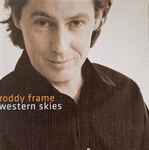
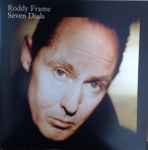
En la onda de Roddy Frame
Otros artistas afines, con vinilo.