Luiz Melodia
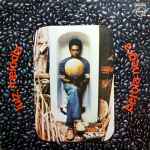
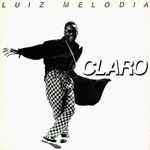
Luiz Carlos dos Santos (7 January 1951 – 4 August 2017), widely known by his stage name Luiz Melodia, was a Brazilian singer-songwriter whose music was a characteristic crossover of multiple music genres including Música popular brasileira (MPB), rock music, blues, soul music and samba. He has been described as 'one of the most important Brazilian-born musicians.' Son of samba music dilettante Oswaldo 'Melodia' (whose epithet he took on as a stage name), Melodia grew up on a morro (a slum that stretches over a hillside, typical in Rio de Janeiro) in the Estácio district—often referred to as the 'birthplace [or cradle] of samba'. Melodia's first LP record, Pérola negra (Black Pearl), was released in 1973. He married fellow singer-songwriter and record producer Jane Reis, a Bahia native, in 1977; their only son, rapper Mahal Reis, was born in 1980. Melodia had another son, Iran, from a previous relationship. He has expressed pride in his Black identity. Over the course of his career, Melodia released several studio albums and performed extensively in both Brazil and Europe. In 1987, he sang in Châteauvallon, France, and Bern, Switzerland. In 1992, he appeared at the III Folcalquier Music Festival, again in France, and, in 2004, at the Montreux Jazz Festival. In 2012, Melodia went on a big band tour throughout Europe, having performed in a number of cities including London, Paris and Berlin. He also played in Denmark, Switzerland and Portugal.[citation needed] In 2015, Melodia was awarded Best Singer in the 26th Brazilian Music Awards. The 29th edition of the prize saw a posthumous tribute to his life's work, with the likes of Caetano Veloso and Maria Bethânia, among several others, performing famous Melodia songs. He was ranked 45th out of the 100 best Brazilian musicians and 27th out of the 100 best Brazilian voices by Rolling Stone. Melodia enjoyed listening to Chet Baker, John Coltrane, and Jovem Guarda, a Brazilian pop music movement that originated in the early 1960s. He also worked briefly as an actor, appearing in the Globo soap opera "Bang-Bang." Melodia was born Luiz Carlos dos Santos in the Estácio district, Rio de Janeiro, on 7 January 1951. The only son of Oswaldo, a civil servant and amateur samba musician, and Eurídice, a seamstress, he first discovered music through his father, who played at home: "I would fetch his viola, try out a few chords and keep an eye on him. He never let me touch the 4-string viola, which really was a conversation piece, very beautiful. I learned a few things on it, though." In light of his early affinity with music, Melodia decided to defy his father's wishes for him to finish school and pursue higher education. In 1963, alongside drummer-vocalist Walmir Lucena (aka Mizinho), Melodia started what would become a lifelong musical career. At the time, he took day jobs as a typographer, salesperson, and counter attendant while also working as a nightclub musician. After dropping out of middle school, likely in 1964, Melodia spent his teenage years writing songs (never recorded) and playing Jovem Guarda and bossa nova hits with his newly-formed band Os Instantâneos (The Swift Boys; could be intended as a pun for The Snapshots) alongside friends Manoel, Nazzareno and Mizinho. He was also in another band, Os Filhos do Sol (The Sons of the Sun); they played at parties, often singing in impromptu made-up English to fire up partygoers. Soon, well-connected morro scene habitués, Tropicália-related poet Waly Salomão and journalist Torquato Neto brought Melodia closer to the mainstream music industry. Over this period, he was partnered with vocalist Marquinhos Sathan, who went on to become a relatively successful singer a few years later. A short lyrics excerpt is extant from his early period: 'Amo o céu e terra / e também o mar / amo a vontade que tenho de amar.' ('I love the sky and the earth / And the sea as well / I love this will to love that I have.') Thanks to the introductions Salomão and Neto got him, Melodia was able to approach singer Gal Costa with song Presente cotidiano (My everyday present), but due to official censorship in force at the time, Costa was prevented from performing it at her regular Copacabana concerts—the song was however recorded by Costa for her 1973 album Índia (Indian) and by Melodia himself in 1978 for album Mico de circo (Circus Monkey). Instead, Melodia offered Costa another song, Pérola negra (Black Pearl), which she live-recorded for album -Fa-Tal- Gal a Todo Vapor (Fatal—Gal at Full Steam). The song was an immediate hit. In 1972, singer Maria Bethânia recorded Melodia's Estácio, holly Estácio (untranslatable; it is a reference to his birthplace Estácio and what seems to be a play on words with 'holy' and/or 'holiday') for her album pt:Drama - Anjo Exterminado (Drama—Exterminated Angel). In 1973, Melodia, who by then already went by his stage name, released his first studio album pt:Pérola negra (álbum) (Black Pearl). The album is described by pt:Rolling Stone Brasil (Brazil's edition of Rolling Stone magazine) as a 'contemporary wonder' (perhaps as an allusion to his second LP record's name; see below) and a 'masterpiece'. The album is consistently ranked as one of the best in Brazilian music history. (It was ranked 32nd out of 100 by Rolling Stone Brasil.) The title track, with its sleek arrangement for brass, double bass, voice and piano, was depicted as a 'tormented love song which stands as a hallmark to Melodia's oeuvre'. Melodia's public personality was described as insubordinate, irreverent, and restless, thought to be a reflection of his samba scene background. This contributed to his developed reputation as a maudit (accursed) artist among critics, alongside others like Raimundo Fagner and João Bosco. Melodia stated: 'We weren't people that simply obeyed. You could say that we sidestepped the record label's house rules; we simply broke away from situations that weren't convenient. I have always believed in what I do." In 1975, with song Ébano (Ebony), Melodia reached the finals of Festival Abertura (Start-out Festival), a singing-songwriting contest hosted by television channel Rede Globo. Backing him up on the occasion were members of an incipient Banda Black Rio (Black Rio band), as well as Azymuth's keyboardist Jose Roberto Bertrami. Melodia's next album, Maravilhas contemporâneas (Contemporary Wonders) (1976), became popular thanks to song Juventude transviada (Deviant Youth), which featured in the soundtrack of Rede Globo's telenovela Pecado Capital (Capital Sin) by author Janete Clair. Starting in 1977, Melodia became a contributor to Projeto Pixinguinha, sharing the stage with singers Zezé Motta and Marina Lima in tours around Brazil. Mico de Circo, another landmark, was released in 1978. During the 1970s, Melodia was reported as leading a licentious life, having no papers or a bank account for some time, and carelessly spending all his money earned from performances. Melodia released four albums between 1980 and 1991: Nós (We) (1980), Felino (Feline) (1983), Claro (Of Course) (1985) and Pintando o sete (Fooling Around) (1991). In Pintando o sete, Melodia included a version of hit song pt:Codinome Beija-Flor (I Go by Hummingbird), made legendary by singer Cazuza. In 1991, the song featured in the soundtrack of Dono do mundo (Owner of the World), another Rede Globo telenovela. 1995 saw the release of Relíquias (Mementos). In the same year, Melodia made a guest appearance on album Guitarra brasileira (Brazilian Guitar) by musical partner Renato Piau, being credited on two of the tracks. In 1997, Melodia released 14 Quilates (14-carat). A year later, in 1998, he was featured on tribute album Balaio do Sampaio (Sampaio's Pouch) by pt:Sérgio Sampaio, who similarly to Melodia was known as a maudit artist. In 1999, he released a live acoustic album (Luiz Melodia: acústico, ao vivo) featuring guitarists pt:Renato Piau and Perinho Santana, which would result in a namesake
Discografía en vinilo
Ordenada por relevancia (lo más escuchado primero).


En la onda de Luiz Melodia
Otros artistas afines, con vinilo.