Terry Reid
Terrance James Reid (13 November 1949 – 4 August 2025), who was nicknamed Superlungs, was an English musician, songwriter and guitarist, best known for his emotive style of singing in appearances with high-profile musicians as vocalist, supporting act and session musician. As a solo recording and touring artist he released six studio albums and four live albums. Described as an "artists' artist" by Rolling Stone, Reid was recognised by his contemporaries as an eminent talent in English rock music, both as a guitarist and a vocalist. Robert Plant praised his vocal "flexibility, power and control" and Graham Nash was quoted as saying he should have been "a gigantic star". Reid's music career began in the early 1960s. While performing in a local British club, he was invited to join Peter Jay and the Jaywalkers as lead vocalist and opened for The Rolling Stones on their 1966 tour. In the later '60s, Reid was solo supporting act for Rolling Stones, Cream, Jethro Tull and Fleetwood Mac tours. He turned down offers from Jimmy Page to be lead vocalist of the band that became Led Zeppelin, and from Ritchie Blackmore to front Deep Purple. Terrance James Reid was born in 1949 in Paxton Park Maternity Home, Little Paxton, St Neots, Huntingdonshire, England, the only child of Walter Reid, a salesman of cars and agricultural equipment, and Grace. He lived in the fens village of Bluntisham and attended St Ivo School, St Ives. He listened to classical music, Bulgarian folk and jazz, and was particularly inspired by the sound of American R&B and soul singers such as Otis Redding and Marvin Gaye. He bought his first guitar at the age of ten; he formed his first group, the Redbeats, at the age of 13, and they played in village halls and youth clubs. The other band members were in their late teens. At 14 he wrote his first song, "Without Expression", which Crosby, Stills, Nash and Young later recorded. His father was supportive and persuaded his mother to allow him to pursue music as a career instead of "picking up potatoes in a muddy field", drove him to gigs, bought guitars and later accompanied him on tours. After leaving school at the age of fifteen, Reid joined Peter Jay and the Jaywalkers after being spotted by the band's drummer, Peter Jay. At the time, Reid was playing for a local band, The Redbeats, who regularly performed at the River Club in St Ives. In 1966 The Jaywalkers were named as a support act for the Rolling Stones during their 23-show British Tour, from September to October 1966. At the concert at the Royal Albert Hall, Graham Nash of The Hollies became friends with Reid and suggested The Jaywalkers sign up with UK Columbia Records, an EMI label, to record with producer John Burgess. Their first single, the soul-inspired "The Hand Don't Fit the Glove" was a minor hit in 1967, but by then The Jaywalkers had disbanded. Reid came to the attention of producer Mickie Most, who became his manager and who was in partnership with Peter Grant at the time. His first single with Most, "Better by Far", became a radio favourite. His debut album, Bang Bang, You're Terry Reid, was released in 1968. With accompanying musicians Eric Leese on organ and Keith Webb on drums, a 1968 tour of the United States with Cream did much to gain Reid a loyal following. His final performance of the tour at the Miami Pop Festival received positive reviews from the music press. The song "Without Expression", from Bang Bang, You're Terry Reid, was written by Reid at age 14 and later recorded under different titles. The Hollies released it as "A Man with No Expression" in 1968, Crosby, Stills, Nash and Young recorded it as "Horses Through a Rainstorm" in 1969 (with Graham Nash once again singing lead), and REO Speedwagon covered it in 1973 as "Without Expression (Don't Be the Man)." John Mellencamp also included it on his greatest hits album The Best That I Could Do: 1978–1988. "Horses Through a Rainstorm" was slated to appear on Déjà Vu before being replaced at the last minute by Stephen Stills's "Carry On". Both versions were not released until years later. The style of what he was doing, that kind of opening up, he had a flexibility and power and control. So he could go, as Esther Phillips said, from a whisper to a scream in split seconds. — Robert Plant Yardbirds guitarist Jimmy Page, managed by Peter Grant, became interested in Reid's work. When The Yardbirds disbanded, Page wanted Reid to fill the vocalist spot for his proposed new group, the New Yardbirds, which later became Led Zeppelin. Reid had already committed to go on the road for two tours with the Rolling Stones and another with Cream (as an opening act on the 1968 US Tour). Reid suggested to Page that if he were compensated for the gig fees he would lose, and if Page would call Keith Richards to explain why Reid had to pull out of the US tours, Reid would try some things out with Page. It never happened, and Reid told Page to consider a young Birmingham-based singer, Robert Plant, having previously seen Plant's Band of Joy as a support act at one of his concerts. Reid also suggested that Page check out their drummer, John Bonham. Reid also rejected offers from Ritchie Blackmore to replace departing singer Rod Evans in Deep Purple; he said the music was "too metal" and not really his style. When questioned by music journalists about his passing up of Led Zeppelin and Deep Purple, Reid said he did not regret his decisions and was satisfied with his own career. He was reported in 2019 as saying "I don't sit around going over old coals". In 1969, Reid played support on British tours, notably by Jethro Tull and Fleetwood Mac. Reid, Solley and Webb toured the United States again when he opened for the Rolling Stones on their 1969 American Tour. Reid did not appear at the Rolling Stones concert at Altamont Music Festival. Also in 1969, he released his second solo album, the self-titled Terry Reid, which spent five weeks on the Billboard Top LPs chart. "Friends", a song from this album, first appeared as a segue with his version of "Highway 61 Revisited". "Friends" was later covered by Arrival, and became a UK Top 10 hit for them in January 1970. In December 1969, Reid fell out with producer Mickie Most, who wanted him to become a balladeer and follow Most's own formula. Before this, Reid had toured extensively in major venues in the US, including two tours with the Rolling Stones and another with Cream. In a contract dispute with Most and unable to record or release his music for four years, Reid concentrated on live work, mostly in the US, whilst awaiting the outcome of litigation. He lived in a "beach shack" in the hills of California and made sporadic UK performances during that period. In 1970, he returned briefly to England to perform at the Isle of Wight Festival with bass player Lee Miles, a former member of Ike & Tina Turner's band whom Reid met while touring the US with the Stones, and David Lindley and Tim Davis. He took part in the second Atlanta International Pop Festival in 1969, opened and closed the first Glastonbury Fayre in 1970 and was filmed performing at Glastonbury in 1971. He performed at Mick and Bianca Jagger's wedding in Saint-Tropez in 1971 in front of The Beatles, David Bowie and Brigitte Bardot. Reid's fascination with Brazilian music and Latin rhythms began in 1969 when Gilberto Gil and Caetano Veloso were exiled by the military dictatorship of Brazil. Reid's attorney arranged for Gil to come to London, where he stayed at Reid's apartment in Notting Hill with a group of Brazilian musicians, who slept on his floor. When Reid performed at the Isle of Wight Festival on 27 August, Gilberto Gil and Caetano Veloso played on the same bill that night. That same year, Reid was signed by Ahmet Ertegun to Atlantic Records, with his band consisting of David Lindley, Lee Miles and Alan White. They began recording in the UK and later switched to the US. White left to join Yes and Lindley left to tour with
Discografía en vinilo
Ordenada por relevancia (lo más escuchado primero).

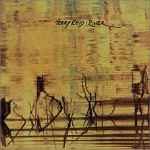


En la onda de Terry Reid
Otros artistas afines, con vinilo.