Vinilogy Explorar Por vibra ✦
Garland Jeffreys

Garland Jeffreys

person US

De Garland Jeffreys no hay ningún disco en vinilo a la venta ahora mismo en las 6 tiendas independientes de España que seguimos.

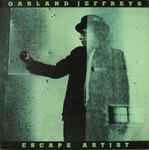
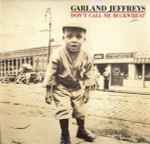
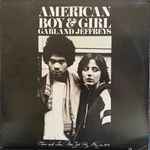
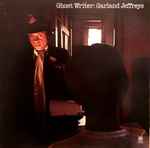
Garland Jeffreys (born 1943) is an American musician, singer and songwriter. He emerged as part of a distinct, mid-1970s New York rock sound that included artists like Bruce Springsteen, Southside Johnny and Willie Nile. Hallmarks of Jeffreys's music are autobiographical songwriting and an eclectic, hard-to-categorize style that embraces rock-and-roll, reggae, soul, doo-wop, blues, jazz and folk. His songs revolve around signature themes: race and inclusivity, New York City and urban life, romance and family. Critics contend that Jeffreys's category-defying music and multiracial identity often perplexed American record labels, radio stations and audiences, hampering the marketing and reach of his work. Rock writer Kurt Loder described Jeffreys as "a unique voice in American music—a racial and cultural outsider with a first-hand, hard-knocks knowledge of all the various Big City scenes and scams, and a striking ability to render even the grittiest incidents concisely into songs." Jeffreys sustained a following in New York from the 1970s forward, however his broader fan base grew more strongly in Europe than in the United States. In the US, he is best known for the albums Ghost Writer (1977), Escape Artist (1981) and The King of In Between (2011), and the widely covered underground single, "Wild in the Streets"; in Europe, he is also known for the album American Boy & Girl (1979) and hit single "Matador." In 2023, a documentary on Jeffreys's life and career came out, Garland Jeffreys: The King of In Between. Jeffreys was born William Garland Jeffreys in 1943 and grew up in Sheepshead Bay, Brooklyn, a child of black, white and Puerto Rican heritage. A difficult childhood included his father leaving when Jeffreys was two, an abusive stepfather, and a neighborhood that was intolerant of racial diversity. He was involved in music from an early age, taking piano lessons at seven, singing doo-wop on street corners, and sneaking into Greenwich Village jazz clubs in his early teens. In the early 1960s, his stepfather worked two jobs to send him to Syracuse University, where he majored in art history. While there he befriended fellow students and music fans Lou Reed and Felix Cavaliere and received a scholarship to study art in Florence—a formative experience. After completing his studies in 1966, Jeffreys began playing at Manhattan nightclubs like Gerde's Folk City and The Bitter End, sometimes partnering with Reed and John Cale. His performances then—and later at Reno Sweeney—often combined cabaret with racial themes, employing props, makeup, blackface masks and a rag doll persona he called "Ramon." In 1969, Jeffreys played guitar and contributed the song "Fairweather Friend" to John Cale's 1969 debut solo album, Vintage Violence. He also founded the band Grinder's Switch with pianist Stan Szelest, guitarist Ernie Corallo and percussionist Sandy Konikoff. Before dissolving in 1970, they released a self-titled album overseen by Astral Weeks-producer Lewis Merenstein, which Robert Christgau and others noted for Jeffreys's songwriting and a sound reminiscent of The Band. Jeffreys's solo music fuses diverse styles, personal songwriting and lyrics that can be confrontational, observational or elliptical, within albums often focused around a topic. Recurrent subjects include race, identity, his struggle to find a place in the white world of 1970s–1980s rock, troubled youth, and in later work, hard-won wisdom and mortality. His work also serves as a long-running chronicle of the appeal, struggle and danger of urban life across New York City's five boroughs. Rock critic Jay Cocks wrote: "A Jeffreys record is like a fast cruise across the radio band. Reggae, jazz and full-tilt rock all blend with casual finesse. This is big-city soul music born of tough beginnings and hard realities. Soul music for sole survivors." Jeffreys's musical eclecticism is matched by vocal versatility that critics suggest can range from swagger to cool intimacy. Rolling Stone's Jim Farber wrote that Jeffreys blended "the sardonic cadence of Lou Reed" and the "theatrical blast" of Bruce Springsteen; others note a relaxed register recalling Johnny Nash or Bill Withers. New York Times rock critic Robert Palmer contended that performance lay at the heart of Jeffreys's music: an energetic style "compounded of reggae influences, basic guitar rock, Mick Jaggerish self‐delectation, New York City street references, and a willingness to parade his private humiliations and victories before an audience in a potentially self-lacerating way." In addition to Jagger, Jeffrey's stage presence has been likened to the prowling authority of Arthur Lee of Love. Despite the commercial failure of the Grinder's Switch record, Jeffreys landed a solo contract with Atlantic Records, which yielded the folk- and jazz-flavored album Garland Jeffreys (1973), with guests Dr. John, David Bromberg and David Newman. It more fully introduced his writing in songs that critics characterized as witty, mordant observations of urban blight and bittersweet experience—among them, "Harlem Bound," the identity-themed "Ballad of Me," and the early reggae tune, "Bound to Get Ahead Someday!" Shortly after, he released the single, "Wild in the Streets". Both album and single received positive critical attention but were commercially unsuccessful; four years later the track would become his best-known and most-played song. After a stint on the Arista label produced only a failed single, Jeffreys signed with A&M Records. With the release of Ghost Writer (1977), the mainstream music press—Rolling Stone ("most promising artist" of 1977), The Village Voice ("top ten"), PBS Soundstage—declared Jeffreys poised for breakout stardom. The album was a harder-rocking mixture paralleling his heritage, with confident reggae cut with explorations of flamenco ("Spanish Town") and soul (the hometown ode "New York Skyline"), and the FM staples "Wild in the Streets" and "Rough and Ready". Critics identified an overriding theme of determination that united the collection's strongly autobiographical subjects: coming of age and making it in the city ("Ghost Writer"), racial separatism ("Why-O"), interracial romance ("I May Not Be Your Kind"), and the pain of urban childhood ("Cool Down Boy"). Robert Hilburn likened the album "to a cross-town bus ride" with "social dissection reminiscent at times to James Baldwin's Another Country or Martin Scorsese's Mean Streets"; Stephen Holden called it possibly "the quintessential New York rock record." Jeffrey's follow-up, One-Eyed Jack (1978) struggled to live up to the expectations set by Ghost Writer, receiving mixed reviews. Dedicated to his boyhood idol, Jackie Robinson, the album presented a tonal contrast. Side one offered brighter, optimistic pop-oriented tracks focused on the search for love, like the soul-disco-flavored "She Didn't Lie." Side two included personal, urban songs with biting lyrics (e.g., "Been There and Back") that tapped into 1960s rock ("Oh My Soul"), funk ("Scream in the Night") and reggae. Critics regarded American Boy & Girl (1979) as a more energetic comeback album that updated the Ghost Writer theme of troubled children. Songs like the title track, "City Kids" and "Night of the Living Dead" centered on tough portraits of teen runaways and outsiders taking refuge in drugs and crime in order to survive abuse, neglect and street life. Jeffreys balanced those songs with soothing, emotive tunes of hope and inspiration, such as "Shoot the Moonlight Out" and "Matador," a European hit that charted in several countries' top fives and spurred a successful tour. Jeff Nesin of Creem characterized the album as "urban and urbane," difficult, and slow to reveal. Escape Artist (1981, Epic Records), yielded Jeffreys's first U.S. commercial success, making the top forty chart, garnering FM airplay for the songs "Modern Lovers," "R.O.C.K." and a cover of the garage-rock classic "96 Tears" (#5 on the US rock

Escuchar en Spotify

Discografía en vinilo

Ordenada por relevancia (lo más escuchado primero).
En la onda de Garland Jeffreys

Otros artistas afines, con vinilo.