Travis Tritt
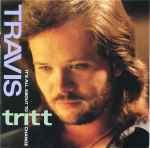
James Travis Tritt (born February 9, 1963) is an American country singer, songwriter, and actor. Seven of his albums (counting the Greatest Hits) are certified platinum or higher by the Recording Industry Association of America; the highest-certified is 1991's It's All About to Change, which is certified triple-platinum. Tritt has also charted more than 40 times on the Hot Country Songs charts, including five number ones—"Help Me Hold On", "Anymore", "Can I Trust You with My Heart", "Foolish Pride", and "Best of Intentions"—and 15 additional top-10 singles. Tritt's musical style is defined by mainstream country and Southern rock influences. He has received two Grammy Awards, both for Best Country Collaboration with Vocals, in 1992 for "The Whiskey Ain't Workin'", a duet with Marty Stuart, and again in 1998 for "Same Old Train", a collaboration with Stuart and nine other artists. He has received four awards from the Country Music Association and has been a member of the Grand Ole Opry since 1992. James Travis Tritt was born on February 9, 1963, in Marietta, Georgia, to James and Gwen Tritt. He first took interest in singing after his church's Sunday school choir performed "Everything Is Beautiful". He received his first guitar at age eight and taught himself how to play it; in the fourth grade, he performed "Annie's Song" and "King of the Road" for his class and later got invited to play for other classrooms in his school. When he was 14, his parents bought him another guitar, and he learned more songs from his uncle, Sam Lockhart. Later on, Tritt joined his church band, which occasionally performed at other churches nearby. Tritt began writing music while he was attending Sprayberry High School; his first song composition, entitled "Spend a Little Time", was written about a girlfriend with whom he had broken up. He performed the song for his friends, one of whom complimented him on his songwriting skills. He also founded a bluegrass group with some of his friends and won second place in a local tournament for playing "Mammas Don't Let Your Babies Grow Up to Be Cowboys". During his teenaged years, Tritt worked at a furniture store and later as a supermarket clerk. He lived with his mother after his father and she divorced; they remarried when he was 18. He worked at an air conditioning company while playing in clubs, but gave up the air conditioning job at the suggestion of one of his bandmates. Tritt's father thought that he would not find success as a musician, while his mother thought that he should perform Christian music instead of country. Through the assistance of Warner Bros. Records executive Danny Davenport, Tritt began making demonstration recordings (demos). The two worked together for the next several years, eventually putting together a demo album called Proud of the Country. Davenport sent the demo to Warner Bros. representatives in Los Angeles, who in turn sent it to their Nashville division, which signed Tritt in 1987. Davenport also helped Tritt find a talent manager, Ken Kragen. At first, Kragen was not interested in taking an "entry-level act", but decided to sign on as Tritt's manager after Kragen's wife convinced him. Tritt's contract with Warner Bros. meant that he was signed to record six songs, and three of them were to be released as singles. According to the contract, he would not be signed on for a full album unless one of the three singles became a hit. His first single was "Country Club". Recorded in late 1988 and released on August 7, 1989, the song spent 26 weeks on the Hot Country Singles and Tracks charts, peaking at number nine. It was the title track to his 1990 debut album Country Club, produced by Gregg Brown. The month of its release, Tritt burst a blood vessel on his vocal cords, and had to take vocal rest for a month. His second single, "Help Me Hold On", became his first number-one single in 1990. The album's third and fifth singles, "I'm Gonna Be Somebody" and "Drift Off to Dream", respectively, peaked at numbers two and three on the Hot Country Singles and Tracks charts, and number one on the Canadian RPM country charts; "I'm Gonna Be Somebody" also went to number one on the U.S. country singles charts published by Radio & Records. "Put Some Drive in Your Country", which was released fourth, peaked at 28 on Hot Country Songs. Country Club was certified platinum by the RIAA in July 1991 for shipments of one million copies, and no medals since in 1996. In 1990, he won the Top New Male Artist award from Billboard. The Country Music Association (CMA) also nominated him for the Horizon Award (now known as the New Artist Award), which is given to new artists who have shown the most significant artistic and commercial development from a first or second album. Brian Mansfield of AllMusic gave the album a positive review, saying, "Put Some Drive in Your Country" paid homage to Tritt's influences, but that the other singles were more radio-friendly. Giving the album a B-minus, Alanna Nash of Entertainment Weekly compared Tritt's music to that of Hank Williams, Jr. and Joe Stampley. In 1991, Tritt received a second Horizon Award nomination, which he won that year. He also released his second album, It's All About to Change. The album went on to become his best-selling one, with a triple-platinum certification from the RIAA for shipments of three million copies. All four of its singles reached the top five on the country music charts. "Here's a Quarter (Call Someone Who Cares)" and the Marty Stuart duet "The Whiskey Ain't Workin'", respectively, the first and third singles, both reached number two, with the number-one "Anymore" in between. "Nothing Short of Dying" was the fourth single, with a peak at number four on Billboard; both "The Whiskey Ain't Working" and it went to number one on Radio and Records. "Bible Belt", another cut from the album (recorded in collaboration with Little Feat), appeared in the 1992 film My Cousin Vinny (the lyrics for the song, however, were changed for the version played in the movie to match the story line). Although not released as a single, it peaked at number 72 country based on unsolicited airplay and was the B-side to "Nothing Short of Dying". "Bible Belt" was inspired by a youth pastor whom Tritt had known in his childhood. Stuart offered "The Whiskey Ain't Workin' Anymore" to Tritt backstage at the CMA awards show, and they recorded it as a duet through the suggestion of Tritt's record producer, Gregg Brown. The duet won both artists the next year's Grammy Award for Best Country Collaboration with Vocals. Tritt and Stuart charted a second duet, "This One's Gonna Hurt You (For a Long, Long Time)", which went to number seven in mid-1992 and appeared on Stuart's album This One's Gonna Hurt You. This song won the 1992 CMA award for Vocal Event of the Year. In June 1992, Tritt received media attention when he criticized Billy Ray Cyrus' "Achy Breaky Heart" at a Fan Fair interview, saying that he did not think that Cyrus' song made a "statement". The following January, Cyrus responded at the American Music Awards by referring to Tritt's "Here's a Quarter". Tritt later apologized to Cyrus, but said that he defended his opinion on the song. Tritt and Stuart began their No Hats Tour in 1992. In August of that same year, Tritt released the album T-R-O-U-B-L-E. Its first single was "Lord Have Mercy on the Working Man", a song written by Kostas. This song, which featured backing vocals from Brooks & Dunn, T. Graham Brown, George Jones, Little Texas, Dana McVicker (who also sang backup on Tritt's first two albums), Tanya Tucker, and Porter Wagoner on the final chorus, peaked at number five. Its follow-up, "Can I Trust You with My Heart", became Tritt's third Billboard number one in early 1993. The album's next three singles did not perform as well on the charts: The title track (a cover of an Elvis Presley song), peaked at 13, followed by "Looking Out for Number One" at number 11 and "Worth
Discografía en vinilo
Ordenada por relevancia (lo más escuchado primero).


En la onda de Travis Tritt
Otros artistas afines, con vinilo.