阿川泰子
Yasuko Agawa (Japanese: 阿川 泰子, Hepburn: Agawa Yasuko; born 16 October 1951) is a Japanese singer, actress, and television personality. Born in Kamakura, she drew inspiration from music that she listened to while recuperating from a childhood illness. After spending a year at the Bungakuza Theatre Institute, she had a brief acting career before leaving due to creative differences. She became a jazz vocalist for clarinetist Shoji Suzuki, before releasing dozens of solo albums with Victor Entertainment. She has achieved widespread popularity in the Japanese jazz scene, and her music has attained enduring popularity among DJs and appeared in several city pop compilations. She was also a regular on the Nippon Television talk show Oshare 30-30 [ja]. Yasuko Agawa was born Yasuko Satō (佐藤 康子, Satō Yasuko). on 16 October 1951 in Kamakura, the only daughter of a Yōga painter based in the city. She often moved schools, being raised in Yuigahama and, from the third grade of elementary school onward, Naka-ku, Nagoya. Initially, she aspired to become a competitive swimmer and enrolled in Sugiyama Jogakuen Junior High School [ja]—a prestigious institution renowned for its swimming program. She often stayed home due to her childhood illness, listening to music that would inspire her future career; in a Town News interview, she recalled: "For humans, negatives can become positives. Even the jazz and FEN (Far East Network) that I listened to while holed up at home have become fuel for my current work". She subsequently graduated from Sugiyama Jogakuen Senior High School [ja]. Agawa studied at the Bungakuza Theatre Institute, where she was part of the 12th class and was a classmate of Yūsaku Matsuda, but withdrew after one year. She began an acting career, portraying Keiko Nonomiya in Evil of Dracula [ja] (1974), Kida's daughter in Prophecies of Nostradamus (1974), and Yuri Yamamoto in Terror of Mechagodzilla (1975). She also had minor roles in Karei-naru Ichizoku (1974) and Seishun no Mon [ja] (1975). She also appeared in television dramas, including Taiyō ni Hoero!. Her stage name was Tomoe Mari (麻里 とも恵, Mari Tomoe). However, she eventually quit the acting profession, stating, "I detest being a minor player who is made to appear nude—especially when I am not even the lead actress". After receiving recognition for performing at a film wrap party, Agawa started a career as a jazz singer. One of her earliest jobs in jazz music was as a singer for clarinetist Shoji Suzuki, before debuting as a solo singer. Her first album Yasuko: Love-Bird was released by Victor Entertainment in 1978, and she subsequently released dozens of albums with them. Released in 1980, her fourth album Journey achieved sales of 90,000 copies—driven primarily by an audience of office workers. She beat the record hold by Kimiko Kasai at 50,000; around that time, domestic music albums outside of the new music genre rarely sold well, with even kayōkyoku star Kenji Sawada seeing album sales fall short of 50,000 copies. Her album Sunglow was selected as a Best Ten Album at the 23rd Japan Record Awards. She also appeared on the Nippon Television talk show Oshare 30-30 [ja] as a regular. Agawa's music became popular among DJs in the 1990s, particularly those specializing in jazz music. It gained popularity in London, where Dingwalls' Patrick Forge and Gilles Peterson were among those who spun her records. Her song "Skindo-Le-Le", a cover produced by its original performer - Brazilian-American group Viva Brasil - become popular in the DJ scene, becoming "treasured as a definitive 'killer track' by club-jazz DJs" and "an anthem of the London club jazz scene". In 2007, Tatsuo Sunaga [ja] released a remixed album of Agawa's music, named Re-mode: Club Jazz Digs Yasuko Agawa. In addition to her dozens of albums with Victor Entertainment, Agawa released two albums from Nippon Crown in December 2004: Anklet and Tiara. She has made two appearances at the Jazz in Kamakura festival, including in 2012. In September 2014, she performed at a dinner show whose organizers donated 50,000 yen worth of proceeds to the Kids Support Project Committee. She currently hosts a Crossover Night concert series in conjunction with Billboard Live. Writing for Mikiki, Waltzanova said that Agawa's music "incorporated elements of Latin, Brazilian, and AOR styles, refusing to be confined solely within the 'jazz' category". Waltzanova described Agawa's 1982 cover of "New York Afternoon" as "the definitive prototype for the many 'salon jazz vocal' interpretations that would follow." Her music collaborators included Ivan Lins, Sérgio Mendes, Pino Palladino, Joe Sample, Al Schmitt, and Yann Tomita. Agawa relied on television programming and commercials as a medium for sustaining her widespread popularity during the 1970s and 1980s; writing for Tower Records' Bounce magazine, Shuichi Iketani attributed her popularity to her "glamorous presence and subtly sweet singing style". In 1982, Weekly Asahi reported that she was one of the key figures responsible for sparking the jazz boom of her era. Agawa recalled of her growing demand as a singer: "There were times I would hop between five different jazz clubs in a single night to sing. Since most bands' vocal sets consisted of only about three songs, people used to tease me, saying, 'If you've got a repertoire of three songs, you can make a living just fine!'" Retrospectively, Toru Hashimoto called her "Japan's most famous female jazz singer", and Sadao Watanabe described her as a "leading figure in Japan's jazz and fusion boom". Other nicknames she has been described by include the "Sugar Voice" (シュガー・ボイス), the "Idol of the Salaryman Set" (ネクタイ族のアイドル) and the "Idol of the Gentlemen's Crowd" (オジサマ族のアイドル). Agawa was among several artists re-evaluated as part of the city pop genre in the 2010s. In 2019, Victor Entertainment released Free Soul: Yasuko Agawa as part of its Free Soul series. Her song "L.A. Night" appeared on the 2019 city pop compilation Pacific Breeze: Japanese City Pop, AOR and Boogie 1976–1986. She was one of several artists featured in the Light Mellow Deluxe compilation series released in December 2025. Agawa is a fan of baseball player Yutaka Enatsu, as well as the Yomiuri Giants baseball team; reportedly, magazine articles centered around her would resemble game reports. She is also a fan of the Karatsu Kunchi festival in Karatsu, Saga. In 2010, she attended the Bungakuza Theatre Institute's 50th anniversary, where she reunited with other Bungakuza alumni. Karei-naru Ichizoku (1974) Evil of Dracula [ja] (1974), Keiko Nonomiya Prophecies of Nostradamus (1974), Kida's daughter Seishun no Mon [ja] (1975) Terror of Mechagodzilla (1975), Yuri Yamamoto Taiyō ni Hoero! When she made her debut in 1978, her management agency—acting on its own directives—listed her birth year as 1953. テレビ・タレント人名事典(第6版). Nichigai Associates. 2004. p. 17. ISBN 978-4-8169-1852-0. Weekly Asahi, 17 September 1982 issue、p. 42-46 "Jazz Reminiscence|阿川泰子特集!". AuDee (in Japanese). Retrieved 17 April 2026. Satō, Masaya (1982). データ・バンク にっぽん人. Gendaishorin. p. 103. "2月11日、12日(土日)に行われる「Jazz in 鎌倉」に特別ゲストとして出演する 阿川 泰子さん 扇ガ谷在住 | 鎌倉 | タウンニュース". www.townnews.co.jp. 3 February 2012. Retrieved 17 April 2026. Weekly Asahi, 12 June 1981 issue、p. 136-138 "樹木さんも黒柳さんも…文学座研究所が50年記念同窓会 - 演劇 - 舞台". Asahi Shimbun (in Japanese). 20 March 2010. Retrieved 16 April 2026. allcinema. "阿川泰子". allcinema (in Japanese). Retrieved 13 April 2026. waltzanova. "橋本徹(SUBURBIA)が語る阿川泰子『Free Soul Yasuko Agawa』". Mikiki by TOWER RECORDS (in Japanese). Retrieved 16 April 2026. Encyclopedia of Godzilla: Mechagodzilla Edition. Gakken Mook. Gakken. 10 December 1993. p. 129. Nomura, Kōhei; Fuyukado, Ninoji (23 November 2016). "10月16日 / 10月17日". Godzilla 365-nichi. Eiga Hihō Collection. Yōsensha. p. 295. ISBN 978-4-8003-1074-3. Nishida, Hiroshi (15 September 2022). "Vol.31 「ネクタイ族のアイドル」生んだ女性ジャズシンガー・ブーム". 読売新聞 (in Japanese). Retrieved 24 April 2026.
Discografía en vinilo
Ordenada por relevancia (lo más escuchado primero).
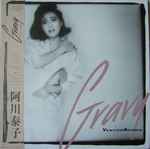
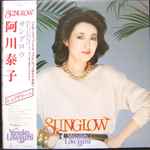


En la onda de 阿川泰子
Otros artistas afines, con vinilo.