Ioan Gyuri Pascu
Ioan Gyuri Pascu (Romanian pronunciation: [iˈo̯an ˈɡjuri ˈpasku]; also credited as Ioan Ghiurico Pascu, Gyuri Pascu, and Ghyuri Pascu; August 31, 1961 – September 26, 2016) was a Romanian pop music singer, producer, actor, and comedian, also known for his participation in the comedy group Divertis and for his activity in Romanian cinema and television. Moving between rock music, rhythm and blues, reggae, and jazz, the multi-instrumentalist Pascu founded a number of bands and registered success particularly during the early 1990s, when he was the lead singer of a group known as The Blue Workers. Pascu was the manager of several alternative music acts with his label Tempo Music and remained an outspoken critic of Romanian commercial radio. Noted for his impressions and musical acts within Divertis' political satire shows, Pascu was also a successful actor, appearing in film productions such as Lucian Pintilie's An Unforgettable Summer and Cristian Mungiu's Occident, and portraying known characters in Romanian theater in various stage adaptations. He also wrote sports columns and was a writer of Christian literature. He received an offer from Walt Disney Pictures, and he provided the voice of King Louie in 2006 for the Romanian version of the film, The Jungle Book. Pascu was a native of Agnita (at the time part of Brașov Region, now in Sibiu County), where he graduated from primary school. He was born to an ethnic Romanian father and a half-Hungarian mother; on his mother's side, he was also the descendant of Poles and Slovaks. His mother was a Roman Catholic and his father, like Gyuri, was a Romanian Orthodox. His name reflects his complex heritage: Ioan was chosen as his Romanian name; his second name was the Hungarian Gyurika, but it was recorded as Ghiurico in his birth certificate and personal documents ever since—as Pascu later indicated, this was because neither his father nor the notary were familiar with Hungarian phonology. Pascu, who was fluent in the Hungarian language, preferred the hypocoristic Gyuri. Pascu began to study piano when he was nine years old, and sang soprano in his school choir, entertaining his friends with impressions of well-known pop singers. During fifth grade, he started playing handball with an amateur team, discarding piano lessons and contemplating a career in acting. He also taught himself guitar. At age fourteen, Pascu's voice changed. He was still a soprano in the choir, but had to use his head voice. As a high school student, Pascu had to enlist in the Union of Communist Youth (UTC), the Romanian communist regime compulsory youth organization. In 1976, he enrolled at the Agnita High School, which later became the Agro-Industrial High School. The same year, he gave up handball and began a more formal study of guitar music, using the Maria Boeru textbook as his guide. He debuted as an amateur actor in 1977, with a school theater performance at the Agnita House of Culture. Pascu was also interested in the Cenaclul Flacăra concerts, an outlet for American folk-inspired and folk rock, tolerated under communism. He became familiar with Western music acts such as Olivia Newton-John and Queen, and active in the UTC's cultural brigade, wrote and performed his first folk-rock numbers. In May 1978, Pascu attended an International Workers' Day celebration in Mediaș, where he befriended brothers Septimiu and Horia Moldovan, who were in the same band as pop singer Elena Cârstea. According to Pascu's official site, they played Western rock hits for him, including Deep Purple's "Child in Time" and Uriah Heep's "July Morning". Between 1978 and 1980, Pascu sang with the Moldovans' band Trandafirii Negri, and was invited to perform with them at wedding parties and similar festivities. With the money he earned, he purchased his first acoustic guitar directly from the factory in Reghin, and taught himself to play drums. He composed one of his first published songs, "Melancolie" ("Melancholy"), in 1979. In 1980, Pascu applied for Târgu Mureș' Szentgyörgyi István Drama School, but failed the entry exam. He worked in a state-owned factory as a lathe operator, and for several months in 1980, was conscripted into the Romanian Land Forces, where he met other amateur musicians who were undergoing military training. Together they founded the rock band Fundal, with Pascu as lead singer and drummer. They performed in the nationwide Cântarea României festival. In 1982, their military term over, Pascu and Fundal returned to Mediaș, where Pascu was discovered by Romanian Radio's Radio Vacanța station. He was invited to perform at the station's youth concerts, where he met and befriended Teo Peter, bass player for Compact, and music promoter Andrei Partoș. During 1982, Pascu also played Cenaclul Flacăra concerts, and was billed for the UTC's Scînteia Tineretului shows. He later described his mentoring by rock singers Cristi Minculescu, Liviu Tudan, Adi Ordean and Vladi Cnejevici as his "third real school". In 1980, Pascu also discovered and became influenced by reggae music. He was introduced to the reggae style by The Police and its reggae fusion sessions, then became a fan of reggae numbers played by African diaspora students in Romanian universities. Twenty years later, Pascu told reporters: "Between 1980 and 1985, I was mad about Bob Marley." In 1984, Pascu moved to Cluj-Napoca, and was admitted into the Cluj University Faculty of Letters, studying Romanian and Spanish. He had applied for the similar faculty at the University of Bucharest twice, but failed the entry exam. Soon after admission, he joined the university's theatrical company Ars Amatoria și Fiii, mentored by literary critic Ion Vartic. He performed radio comedy and parody theater during this time, and was involved in Vartic's Echinox literary club. Pascu continued his interest in sports, particularly soccer, and was a noted fan of the college soccer team FC Universitatea Cluj. In 1986, while Ars Amatoria was touring Bucharest with an adaptation of Ion Luca Caragiale's plays, Pascu met and befriended members of the comedic ensemble and student group Divertis, which performed subtle political satire against Nicolae Ceaușescu's communist rule. Pascu had been a Divertis fan since 1982 and recalled, "I met with the Divertis boys after a show. They liked me [and] asked me to join the group". His first performance with Divertis took place in 1987, at Izvoru Mureșului resort in Harghita County. Pascu resumed his musical career, and also in 1987, was invited by Partoș to sing at a summer festival in Deva. In 1988–1989, upon graduation, Pascu taught Romanian language and literature at a primary school in Ulmu, Călărași County, but gave up to pursue his singing career. Late in 1989, he was in Semenic, where he met Mircea Baniciu, former member of Romania's leading rock band Phoenix (later Transsylvania Phoenix). He was a guest in Baniciu's home just as the anti-communist Revolution erupted in Timișoara. He rejoined Divertis in Iași, but their scheduled show there was broken up by the communist authorities. With the end of communism, Pascu diversified his career as an entertainer. After performing a solo music recital in February 1990, he renewed his contract with Divertis, and toured the country with them. Later that year, Divertis performed for the first time in a series of comedy shows airing on Romanian Television channels. The group worked with filmmaker and Traffic Police officer Virgil Vochină, adding comedy bits to his serialized road safety campaign, Reflecții rutiere ("Roadside Reflections"). From December 1990 to 1992, Pascu was employed as a program editor by the same station. In 1992, with Mircea Rusu, Pascu released the extended play recording Ar putea fi ("It Could Be"). In partnership with his girlfriend Daniela Marin, he founded Tempo Music, which claimed to be Romania's first independent music label. Pascu also founded his own band, The Blue Workers. Pascu recalled that
Discografía en vinilo
Ordenada por relevancia (lo más escuchado primero).
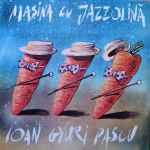
En la onda de Ioan Gyuri Pascu
Otros artistas afines, con vinilo.