Peter Yarrow
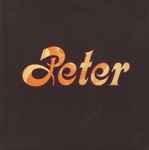
Peter Yarrow (May 31, 1938 – January 7, 2025) was an American singer and songwriter who found fame as a member of the 1960s folk trio Peter, Paul and Mary along with Paul Stookey and Mary Travers. Born in Manhattan in 1938, he attended New York's High School of Music and Art as a teenager and was then accepted at Cornell University. During his last year at Cornell in 1959, he began his music career as a student guitar instructor there, and after graduating, met the manager and impresario Albert Grossman. Grossman's idea of a musical trio eventually led to Yarrow forming a folk band with Stookey and Travers. Peter, Paul and Mary's early hits included "Lemon Tree" and "If I Had a Hammer", which was followed by their self-titled debut studio album in 1962. Yarrow co-wrote (with Lenny Lipton) one of the group's best known hits, "Puff, the Magic Dragon" (1963). He was also involved in the civil rights movement, performing for the March on Washington and Selma to Montgomery marches. In 1970, Yarrow was convicted of sexually abusing 14-year-old Barbara Winter and was imprisoned for three months. He further received a federal pardon by president Jimmy Carter in 1981. Initially claiming that the act was consensual, Yarrow later apologized for the incident. Other allegations of sexual assault were made against him in 2021. Yarrow pursued a solo career in the 1970s, releasing his debut album Peter in 1972. He received awards for his continued activism. In the 2000s, he engaged in anti-bullying efforts in schools, for which helped start Operation Respect. He died in 2025 at his Upper West Side apartment at the age of 86 of bladder cancer. Peter Yarrow was born in Manhattan on May 31, 1938, the son of Vera Wisebrode (née Vira Burtakoff) and Bernard Yarrow. His parents were educated Ukrainian Jewish immigrants whose families had settled in Providence, Rhode Island. Bernard Yarrow (1899–1973) attended the Jagiellonian University (Kraków) and the Odesa University (Odesa) before emigrating to the United States in 1922 at age 23. He anglicized his surname from Yaroshevitz to Yarrow, obtained a Bachelor of Science degree in 1925 from Columbia University, where he joined Phi Sigma Delta fraternity, and graduated from Columbia Law School in 1928. He then maintained a private law practice in New York City until 1938, when he was appointed an assistant district attorney under Thomas E. Dewey. He was recruited into the Office of Strategic Services, where he served with distinction, in 1944. After the war, Bernard joined Sullivan & Cromwell, the Dulles brothers' law firm. He was a founding board member of the National Committee for a Free Europe, an anti-Communist organization. He became a senior vice-president of the CIA-funded Radio Free Europe, an organization he helped found, in 1952. Yarrow's mother, Vera (1904–1991), who had come to the United States at the age of three, became a speech and drama teacher at New York City's Julia Richman Education Complex for girls. She and Bernard divorced in 1943, when Peter was five. Vera subsequently married Harold Wisebrode, the executive director of the Central Synagogue in Manhattan. Bernard married his wartime London OSS partner Silvia Tim and converted to Protestantism. Peter spent the summers of 1951 and 1952 at Interlochen's Music camp. He graduated second in his class among male students from New York City's High School of Music and Art, where he had studied painting and received a physics prize. He was accepted at Cornell University, where he began as a physics major but soon switched to psychology, graduating with a Bachelor of Arts in 1959. Among his Cornell classmates were Lenny Lipton and Richard Fariña. Yarrow began singing in public during his last year at Cornell while participating in Harold Thompson's popular American Folk Literature course, colloquially known on campus as "Romp-n-Stomp". The course was "a highlight of late-1950s student life at Cornell," Yarrow later recalled, and singing and guitar-playing skills were prerequisites for enrollment. Thompson would lecture on a given topic for 20 or 30 minutes and afterwards a student would sing songs related to his theme. Yarrow served as a student instructor for the class and was paid a stipend of $500 (equivalent to about 20% of his tuition fees), leading students in the songs. These included traditional folk songs and murder ballads, Dust Bowl songs made popular by Woody Guthrie, and songs associated with the civil rights movement. Upon graduation, Yarrow played in New York City folk clubs, appeared on the CBS television show Folk Sound USA, and performed at the Newport Folk Festival, where he met manager and musical impresario Albert Grossman. One day, the two were at Israel Young's Folklore Center in Greenwich Village discussing Grossman's idea for a new group that would be "an updated version of the Weavers for the baby-boom generation ... with the crossover appeal of The Kingston Trio." Yarrow noticed a picture of Mary Travers on the wall and asked Grossman who she was. "That's Mary Travers," Grossman said. "She'd be good if you could get her to work." The Kentucky-born Travers was well connected in Greenwich Village folk circles. While still a student at Elizabeth Irwin High School in Manhattan, she had been selected by Elizabeth Irwin's chorus leader, Robert De Cormier, to join "The Song Swappers" trio in backing up Pete Seeger in the 1955 Folkways LP reissue of The Almanac Singers' Talking Union and two other albums. In addition to performing twice with Seeger at Carnegie Hall, Travers had performed the role of a folksinger in The Next President, a short-lived Broadway play, starring satirist Mort Sahl, but she was known to be painfully introverted and loath to sing professionally. To draw Travers out, Yarrow went to her apartment on MacDougal Street, across from The Gaslight Cafe, one of the principal folk clubs. They harmonized on 'Miner's Lifeguard,' a union song, and decided that their voices blended well. To fill out the trio, Travers suggested Noel Stookey, a friend doing folk music and stand-up comedy at the Gaslight. They chose "Peter, Paul and Mary" as the name for their group, since Noel Stookey's middle name was Paul, and rehearsed intensively for six months, touring outside New York before debuting in 1961 as a polished act at The Bitter End nightclub in Greenwich Village. There, the singers quickly developed a following and signed a contract with Warner Bros. Warner released Peter, Paul and Mary's "Lemon Tree" as a single in early 1962. The trio then released "If I Had a Hammer", a 1949 song by Pete Seeger and Lee Hays, written to protest the imprisonment of Harlem City Councilman Benjamin J. Davis Jr. under the Smith Act. "If I had a Hammer" garnered two Grammy Awards in 1962. The trio's first album, the eponymous Peter, Paul & Mary, remained in the Top 10 for ten months and in the Top 20 for two years; it sold more than two million copies. The group toured extensively and recorded numerous albums, both live and in the studio. In June 1963, Peter, Paul and Mary released a 7" single of "Blowin' in the Wind" by the then-relatively unknown Bob Dylan, who was also managed by Grossman. "Blowin' in the Wind" sold 300,000 copies in the first week of release; by August 17, it was number two on the Billboard pop chart, with sales exceeding one million copies. Yarrow recalled that when he told Dylan he would make more than $5,000 (equivalent to $53,000 in 2025) from the publishing rights, Dylan was speechless. On August 28, 1963, Peter, Paul and Mary appeared on stage with the Reverend Martin Luther King Jr. at the March on Washington where their performance of "Blowin' in the Wind" established it as a civil rights anthem. Their version also spent weeks on Billboard's easy listening chart. By 1964 the 26-year-old Yarrow had joined the Board of the Newport Folk Festival, where he had performed as an unknown just four years earlier. Yarrow's
Discografía en vinilo
Ordenada por relevancia (lo más escuchado primero).


En la onda de Peter Yarrow
Otros artistas afines, con vinilo.