L. Subramaniam
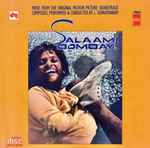
Lakshminarayana Subramaniam (born 23 July 1947) is an Indian violinist, composer, and conductor trained in the traditions of Carnatic music and Western classical music. On 23 July 1947, Subramaniam was born in Madras, Madras Presidency, British India, to V. Lakshminarayana Iyer and Seethalakshmi, both accomplished musicians. He spent his early years in Jaffna, where he began his music studies at the age of five. Under the guidance of his father, Professor V. Lakshminarayana, who is known by fellow musicians and his family as "Mani", he started training in violin. He gave his first public performance at the age of six. His uncles are Ramnad Raghavan and Ramnad Krishnan. His brothers are the violinist-composers L. Shankar (also known as Shenkar), and the late L. Vaidyanathan. He has released recordings with both. Subramaniam developed an early interest in both music and science. He pursued medical studies and earned his M.B.B.S. degree from Madras Medical College. After registering as a general practitioner, he chose to focus on music as a full-time career. He later obtained a master's degree in Western classical music from the California Institute of the Arts. He was first married to Viji Subramaniam (née Vijayashree Shankar), who died on 9 February 1995. He has four children with Viji — Gingger Shankar, Bindu Subramaniam, Dr. Narayana Subramaniam and Ambi Subramaniam. Since November 1999, he is married to the Indian playback singer Kavita Krishnamurthy. Subramaniam performs with his daughter, Bindu Subramaniam, and plays violin duets with his son, Ambi Subramaniam. He has also recorded and performed with Kavita Krishnamurthy. These musical collaborations have led to them being collectively referred to as the "Subramaniam Gharana." He has also performed with his eldest son, Dr. Narayana Subramaniam. Since 1973, Subramaniam has amassed over 200 recordings, releasing several solo albums, recording collaborations with musicians Yehudi Menuhin, Stéphane Grappelli, Ruggiero Ricci and Jean-Pierre Rampal. He has also made albums and performed with artists like Ruggiero Ricci, Herbie Hancock, Joe Sample, Jean-Luc Ponty, Stanley Clarke John Handy, George Harrison and several others. He has accompanied several vocalists in Carnatic music on stage including Chembai Vaidyanatha Bhagavatar, K. V. Narayanaswamy, Semmangudi Srinivasa Iyer, M. Balamuralikrishna, M. D. Ramanathan, and Alathur Srinivasa Iyer. He has also performed many concerts with Palghat Mani Iyer on the Mridangam, in addition to collaborating with musicians of North Indian Hindustani music and artists of other music systems. He was among the early South Indian classical musicians to perform a jugalbandhi with a Hindustani musician when he played with Ustad Ali Akbar Khan in the late 1970s. Subramaniam has written works for orchestras, ballets and Hollywood film scores, and written books on music, such as Euphony, in addition to his compositions. In 1983, he composed a Double Concerto for violin and flute which combined western scales with micro intervals. In 1985, he composed the popular Fantasy on Vedic Chants which was premiered with the New York Philharmonic, conducted by Maestro Zubin Mehta (in September '85) and later performed with the Mariinsky Theatre Orchestra, conducted by Djemal Dalgat. Subramaniam's first symphonic piece, Spring–Rhapsody, composed in 1986, was an homage to Bach and Baroque music. He then composed Turbulence which was performed with The Swiss Romande Orchestra, "The Concert of Two Violins" performed with the Oslo Philharmonic, and Global Symphony that the Berlin State Opera performed (broadcast live to 28 nations). He has also performed a concert tour of China, with the Beijing Symphony Orchestra in Beijing. To date, he has composed ten symphonies and most of his orchestral works have been published by Schott Music. His compositions have been used in stage presentations of dance companies such as the San Jose Ballet company and the Alvin Ailey American Dance Theater. Subramaniam composed the piece "Shanti Priya" for the Mariinsky Ballet in 1988. The album Global Fusion (1999) contributed significantly to Subramaniam’s international reputation and gave him critical recognition for his works. He founded and directs the Lakshminarayana Global Music Festival, which he established in 1992 in memory of his father and guru, V. Lakshminarayana. In 2004, the festival toured internationally, with concerts in New York, Perth, Singapore, Penang, and Kuala Lumpur. Performing with Subramaniam at the festival in January 2005 were violin maestro Arve Tellefsen, the Oslo Camerata, jazz legends Stanley Clarke, George Duke, Al Jarreau, Earl Klugh and Ravi Coltrane. In September 2007, Subramaniam premiered his "Freedom Symphony" with the Fairfax Symphony Orchestra at the George Mason University Center for the Arts. Subramaniam is on the advisory board of composer A. R. Rahman's KM Music Conservatory in Kodambakkam, Chennai. In 2011, he was invited to perform at the United Nations. On 24 October 2012, he performed as a Special Guest Artist with Stevie Wonder at the latter's Message of Peace concert at the UN. Yehudi Menuhin said of Subramaniam: "I find nothing more inspiring than the music making of my very great colleague Subramaniam. Each time I listen to him, I am carried away in wonderment." When asked about his musical accomplishments, Subramaniam has said: "Music is a vast ocean and no one can claim to know it all. The more you know, the more you realise how little you know. It is an eternal quest." Subramaniam is regarded as a pioneer in global symphonic composition. He was the first Indian to compose major symphonies that were premiered by orchestras, and often bridges Indian classical music with Western orchestral traditions in his works. Among these works is Fantasy on Vedic Chants, premiered in 1985 by the New York Philharmonic under the baton of Zubin Mehta. His symphony Shantipriya was premiered by the Kirov Orchestra in New Delhi in 1988. In 1996, his Global Symphony was presented at Madison Square Garden in New York by the New York String Players with singers from the Metropolitan Opera, the first time his symphonic works were presented at the venue. Subramaniam has composed approximately twenty full orchestral works. His repertoire includes symphonies, concertos, double concertos, orchestral works with choirs, compositions featuring non-Western soloists, chamber groups with orchestra, and even pioneering works where solo instruments can be replaced. He also reintroduced improvisational cadenzas into symphonic form, allowing for technical improvisation within the orchestral framework. His notable works include: The Double Concerto for Violin and Flute, blending Western scales with micro-intervals Spring–Rhapsody, an homage to Bach and Baroque traditions Astral Symphony, commissioned by Norway’s NRK P2 Award, written for full orchestra with replaceable soloists from different musical traditions Freedom Symphony, commemorating 60 years of Indian independence, featuring Indian voices and texts in five languages Subramaniam has collaborated with more than fifty orchestras worldwide, including the London Symphony Orchestra, Berlin Opera Orchestra, Oslo Philharmonic, Beijing Symphony Orchestra, Singapore Symphony Orchestra, and the Royal Oman Symphony Orchestra, among others. His works have been performed in venues such as Lincoln Center, Madison Square Garden, Beijing National Centre for the Performing Arts, Tchaikovsky Concert Hall, and the Gewandhaus. He has worked with conductors including Maestro Zubin Mehta, Vladimir Fedoseyev, Jean-Claude Casadesus, Tan Lihua and Li Xincao, among others. On many occasions, entire concert evenings have been dedicated exclusively to his compositions. He has had over 150 live performances of his orchestral works and numerous audio-video releases. He composed the film scores for the films Salaam Bombay (1988) and Mississippi Masala (1991)
Discografía en vinilo
Ordenada por relevancia (lo más escuchado primero).
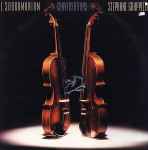
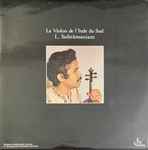
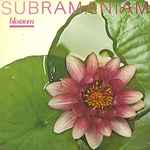
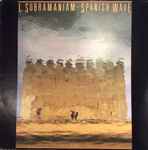
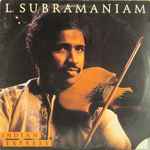
En la onda de L. Subramaniam
Otros artistas afines, con vinilo.