山口百恵
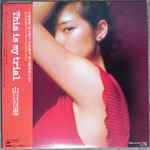
Momoe Miura (Japanese: 三浦 百恵, Hepburn: Miura Momoe; born 17 January 1959), known by her maiden name Momoe Yamaguchi (Japanese: 山口 百恵, Hepburn: Yamaguchi Momoe), is a Japanese former singer, actress, and idol whose career lasted from 1972 to 1980. Often simply referred to by her given name "Momoe", Yamaguchi is one of the most successful singers in Japanese music, releasing 32 singles, including three number one hits, and 21 studio albums. She also starred in 15 feature films and several television serial dramas. At age 21, Yamaguchi retired at the height of her popularity to marry her frequent costar, Tomokazu Miura; she has never performed or made a public appearance since. Therefore, she is called a legendary idol in Japan. Momoe Yamaguchi was born on 17 January 1959 at Tokyo Metropolitan Hiroo Hospital in Ebisu, Shibuya, Tokyo. Not long afterwards she was left in the care of her maternal grandparents. At around four, she returned to her parents and the family then moved to Yokohama. Her father, a medical doctor who was married to another woman with children, was never married to her mother. The family moved once again to Yokosuka. Her mother raised Momoe and her younger sister Toshie by herself. Toshie Yamaguchi studied in the US from partway through high school to college while Momoe made a life in Japan. Momoe has a niece in the US whom she has never met. Yamaguchi began a career in show business while she was still a student in junior high school. At the end of 1972, at the age of 13, Yamaguchi, along with many of her schoolmates, applied by postcard to appear on the idol talent search television show Star Tanjō!. After a series of successful preliminary auditions, she appeared on the show covering a hit song "Kaiten Mokuba", by Yumi Makiba earlier that year (itself a cover of "Prima Vera" written by The Ventures). Though she finished second, Yamaguchi received offers from several music producers, and signed with Hori Productions. Her family moved to Tokyo. Yamaguchi transferred to Shinagawa Joshi Gakuin, and then attended Hinode Joshi Gakuin High School, a school which allows its students to carry on careers in show business. Initially she was promoted together with two other singers, Junko Sakurada and Masako Mori, as the Hana no Chūsan Torio (meaning "The lovely trio of third-year middle school students") since they were all in the third year of middle school (chūsan). Her first single, "Toshigoro", coupled with her first movie of the same title, did not fare well in the charts, peaking at 37 on the Oricon singles chart. But her second single "Aoi Kajitsu" peaked at number 9. Japanese pop culture historians[who?] have credited its success to its suggestive lyrics. The refrain goes "If that's what you want, I'm okay with anything you do to me; I'm all right with rumors that I'm a bad girl". Her early songs were written for her by the Hori Productions songwriting team of composer Shunichi Tokura and lyricist Kazuya Senge. One of her biggest hits was her 5th single "Hito Natsu no Keiken" ("One Summer's Experience"), which includes lyrics like "I shall offer you a girl's most precious possession" and "We all experience, just once, the sweet snare of seduction". The suggestive lyrics attracted widespread press interest. The young singer was frequently asked salacious questions such as "What do you think a girl's most precious possession is?", to which she replied magokoro ("her devotion"). By the end of 1974, her phenomenal popularity was demonstrated by her being invited to be the opening female singer for the 25th Kōhaku Uta Gassen, Japan's most popular musical show, with the song Hito Natsu No Keiken. She would continue to appear in this show every year until her retirement. But what really launched Momoe to stardom and signaled the second stage of her career were the songs written for her by husband-wife team of lyricist Yoko Agi and composer Ryudo Usaki. These so-called "punk" (tsuppari) songs, including "Yokosuka Story" and "Playback Part 2," proclaimed that Momoe was no longer a girl who could be used by men, but a woman ready to stand on her own two feet and take charge of her own life. Initially Momoe's agency and record company had opposed using this pair, saying that their music didn't fit her image, but she had insisted- and changed her image instead. — Mark Schilling, An Encyclopedia of Japanese Pop Culture With her increasing popularity, Yamaguchi gained more control over her career and was able to select her own songwriters. One of her choices was Ryudo Uzaki. She chose him because she liked his song "Secret Love", recorded by the Down Town Boogie Woogie Band [ja]. Their first collaboration resulted in the single "Yokosuka Story" in 1976, written by Uzaki with lyrics by his wife, Yoko Aki. Aki was inspired to write the song because both she and Yamaguchi, whom she had never met when the song was originally ordered, had both lived in Yokosuka. "Yokosuka Story" was Yamaguchi's biggest hit, selling more than 600,000 copies, and peaked at number one on the charts. This was the beginning of a collaboration with the husband and wife songwriting team which only ended with Yamaguchi's retirement. Songs were also written for her by writers such as Masashi Sada, who wrote one of her most popular hits, "Cosmos". Her popularity as a singer was paralleled by rising success in a series of films and television programs. Her second film, Izu no Odoriko, paired her with actor Tomokazu Miura, chosen because he had previously done a commercial for Glico with her. Although Yamaguchi was 15 while Miura was 22, they had great screen chemistry, and became known as the Momoe-Tomokazu "golden combi". They starred together in a total of 14 of her 17 movies, one every winter and summer. As she became popular, her father, Kubo, decided to cash in on her success. He held bogus "press conferences" unauthorized by either Yamaguchi or her management company, and in various ways disrupted her career. Since Yamaguchi was still a minor, he sued for the right of parental authority. The court case ended in a victory for her mother. Yamaguchi declared in her autobiographical book that she ended her relationship with her father, and would never acknowledge his existence again. She also expressed the regret that if she had not become famous, this would not have happened. By the end of her career, Yamaguchi's music became more sophisticated. Her 12th and 18th albums, Golden Flight and L.A. Blue, were recorded in London and Los Angeles respectively, using local musicians and production staff. Her 21st album, Phoenix Densetsu, was written as a rock opera. Because she wanted to make a rock song before she ended her career, Uzaki and Aki wrote "Rock 'n Roll Widow" for her, which was included on the concept album Moebius's Game. When her television series were broadcast in China in the 1980s, she also became hugely popular as an actress there. In China she is known as 山口百惠 (the final character is slightly different from that used in Japan), pronounced "Shan Kou Bai Hui". According to a 2000 poll by the "News Station" news magazine programme, she was the Japanese person known most widely among the Chinese.[citation needed] With the on-screen romances between Yamaguchi and Tomokazu Miura, an off-screen romance grew. During a trip to Hawaii in early 1979, Miura proposed to Yamaguchi. She accepted, and she also said that she would retire from entertainment to marry him. Yamaguchi announced their relationship at a concert in October 1979, and the announcement about their marriage date and her retirement was made in March 1980. Billboard magazine stated in 1980 that the farewell concert by Momoe Yamaguchi was expected to gross $22.2 million. She performed the farewell concert at the Nippon Budokan on 5 October 1980, released her last album This is my trial on 21 October 1980, and released her last single "Ichie" on 19 November 1980. By the time of her retirement, Yamaguchi was
Discografía en vinilo
Ordenada por relevancia (lo más escuchado primero).


En la onda de 山口百恵
Otros artistas afines, con vinilo.