
Emitt Rhodes
Emitt Lynn Rhodes (February 25, 1950 – July 19, 2020) was an American singer-songwriter, multi-instrumentalist and recording engineer. A cult figure of baroque pop and power pop, he is best known for his solo albums, released from 1970 to 1973, on which he played every instrument and pioneered home recording techniques. He was nicknamed the "One-Man Beatles" due to his musical and vocal style. At the age of 14, Rhodes began his career as the drummer of the Palace Guard. He later formed the band The Merry-Go-Round for which he was the leader and primary songwriter on the band's only album, The Merry-Go-Round (1967). In 1969, Rhodes left the band and began a solo career. His self-titled 1970 album, recorded in his parent's garage and on which Rhodes played all instruments, was acclaimed upon release. After its first single "Fresh as a Daisy" reached number 54 on the Billboard pop charts, A&M Records released an album of Rhodes's The Merry-Go-Round songs as The American Dream (1970), credited solely to Rhodes and released without his input. Rhodes recorded and released two more albums, Mirror (1971) and Farewell to Paradise (1973). However, he could not meet demands required by his contract with ABC/Dunhill Records and quit performing after 1973 to work as a recording engineer and producer. In 2014, Rhodes began working with producer Chris Price on new music. Rainbow Ends (2016), his first album in 43 years, features Rhodes with a backup band. Emitt Lynn Rhodes was born on February 25, 1950, in Decatur, Illinois. Around the age of four, he moved with his parents to Hawthorne, California. His father, a machinist, was "lured" to California by the aerospace industry. Rhodes attended Hawthorne High School. Rhodes was interested in music from a young age. At the age of 14, he became the drummer of the garage band the Emerals, made up of friends from his high school. He became the drummer largely because his parents had a garage that the band could practice in. Rhodes attended the same school as the Beach Boys drummer Dennis Wilson (Rhodes was a freshman during Wilson's senior year) and joked that "[Wilson] borrowed my drums and broke a drum pedal and owes me one of those. I've yet to receive it." By 1965, the band was known as The Palace Guard. They were musically influenced by the Byrds and the Beatles, and dressed in the red uniform of royal British guardsmen. The band reguarly played two shows a night, six nights a week at the Hullabaloo on the Sunset Strip. Rhodes was given one solo spot per show—performing the Beatles song "Michelle", originally sung by Paul McCartney. In 1966, The Palace Guard released their single "Falling Sugar". The Palace Guard were briefly the backing band for Don Grady. Rhodes left the band after Russ Shaw, son of music publisher Eddie Shaw at A&M Records, caught Rhodes singing "Michelle" and convinced him to sign with A&M. By the age of 16, Rhodes was the leader and primary songwriter of the psychedelic pop band The Merry-Go-Round, and signed a contract with A&M. The band was a West Coast take on British Invasion music. Their 1967 self-titled album charted at #190, and their single "Live", written by Rhodes, reached number 63 on the Billboard Hot 100. They also had the top 100 hit "You're a Very Lovely Woman". The band featured on the ABC television variety show "The Hollywood Palace". Around this time, Rhodes appeared on The Dating Game. A&M left the band in 1969, and the group disbanded the same year. Rhodes pursued a solo career. In 1969, he signed a contract with ABC/Dunhill Records which called for an album every six months for three years. Rhodes nor his parents showed the contract to an attorney before Rhodes signed it. With a $5,000[citation needed] advance from A&M, Rhodes turned his parents' garage into a home recording studio. Using a four-track Ampex tape recorder and three microphones, he started recording his planned debut solo album. Rhodes played every instrument and sung every vocal part on the album, which he also produced, with engineering help from Keith Olsen. Rhodes used a four-track recorder for the instruments for Emitt Rhodes and transferred those to an eight-track recorder to add the vocals.[citation needed] Rhodes later bought a house across the street from his parents and established a studio in its garage. According to The Guardian, Rhodes's "home-recording approach was influential on generations of independent and lo-fi musicians." The Independent stated in 2020 that Rhodes "practically creat[ed] the idea of the home studio." "I was a drummer and I had a piano and I had a guitar and I just started there. The next thing I knew I wanted to play the violin and the sax and the flute and the harmonica and the banjo and everything. I’m a tinkerer. I would buy an instrument and an instructional book, and just play scales for an hour a day until I felt comfortable doing it." — Rhodes in 2001 His self-titled album Emitt Rhodes released in 1970 to critical success. Billboard called Rhodes "one of the finest artists on the music scene today" and in 1996 called the album one of the "best albums of the decade". It reached number 29 on the Billboard charts. The single "Fresh as a Daisy" reached number 54 on the pop chart and stayed there for nine weeks. Rhodes's musical style was considered so similar to the Beatles and Paul McCartney that some listeners thought the album was a secret Beatles or McCartney record. He was later dubbed the "one-man Beatles". On comparisons, Rhodes stated in 2002: "It was really flattering. Those guys were my idols." To bank off the success of "Fresh as a Daisy", A&M released The American Dream (1970), a compilation of tracks Rhodes had recorded with studio musicians during his time in The Merry-Go-Round to fulfill his contract with A&M. Rhodes did not approve of the album's release and was allowed little input. The release of both albums around the same time confused record buyers and stunted Rhodes's career momentum. Prior to his first solo show Emitt broke in his new material with his backing band, Jim Leitch on bass and Lee Carroll on guitar, at high school sock hops around the San Fernando Valley. Rhodes opened for the week at the Troubadour nightclub on February 9, 1971 with Leitch and Carroll, concurrent with a large earthquake that struck the Los Angeles area. An ad that ran in Billboard said "That wasn't an earthquake, that was Emitt Rhodes opening at the Troubadour!" Dan Hicks was the opening act for the week.[citation needed] Rhodes was reluctant to tour, but could barely tour anyway in the rush to record a second album to meet the demands of his contract. Rhodes's solo album Mirror released in 1971 and reached the top 200 on the Billboard charts.[citation needed] Rhodes toured the country to support the album. Rhodes's next album Farewell to Paradise released in 1973. Rhodes used an eight-track recorder for Mirror and Farewell to Paradise. The mixdown engineer on Farewell to Paradise was Curt Boettcher.[citation needed] Rhodes had signed away his songs' royalty rights "in perpetuity". Dunhill sued Rhodes for $250,000 and withheld royalties because of his failure to deliver albums on the timescale required by the contract. The schedule was one that Rhodes struggled to meet, due to writing all of the songs and recording each instrument and vocal individually by himself. Rhodes was a perfectionist, and Emitt Rhodes took nearly a year to record. After Farewell to Paradise, Rhodes stepped away from performing. He continued to record his songs in his studio, but they were unreleased except for the song "Isn't It So" on Listen, Listen.[better source needed] He worked as a recording engineer and record producer for Elektra Records. Rhodes produced an album for the Canadian performer Bim, as well as the 1976 novelty single "Up Your Nose" by Gabe Kaplan. In 1978 Rhodes had begun work on a solo album for Elektra Records, but abandoned it after the A&R man he was working with was
Discografía en vinilo
Ordenada por relevancia (lo más escuchado primero).
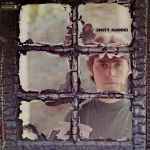


En la onda de Emitt Rhodes
Otros artistas afines, con vinilo.