西城秀樹
Hideki Saijō (西城 秀樹, Saijō Hideki; originally Tatsuo Kimoto (木本 龍雄, Kimoto Tatsuo); April 13, 1955 – May 16, 2018) was a Japanese singer, composer, actor, drummer, voice actor, and television and radio show host. Due to his numerous pioneering achievements throughout Asia in the 1970s and 1980s, he is considered an icon amongst Shōwa era idols. With on-stage vivacity and highly acclaimed vocals as his defining trademarks, Saijō quickly came to dominate the Japanese charts of the 1970s. He was consistently promoted as part of the Shin-Gosanke (新御三家, "New Big Three") idol trio alongside two other soloists who debuted around the same time: Goro Noguchi and Hiromi Go. Almost seven years into his career, his 28th single "YOUNG MAN (Y.M.C.A.)" (a Japanese cover of the Village People song of the same name) became a social phenomenon in Japan, selling over 1.8 million copies. Hideki Saijō was born as Tatsuo Kimoto on 13 April 1955 in Atago-machi, Higashi-ku, Hiroshima City (now Higashi-ku), Hiroshima Prefecture, as the youngest of three siblings to parents Saburō and Toshiko Kimoto. In April 1959, he enrolled in Rissho Kindergarten. As a child, he often sang "Black Petals," a popular song at the time, much to the distaste of his teacher who advised that he sing more childish songs. In April 1962, he entered Onaga Elementary School in Hiroshima City. Influenced by his father, who had played jazz guitar as a hobby, he became familiar with Western music from an early age and began attending Hiroshima Central Jazz School. He initially studied electric guitar, followed by bass guitar, but eventually settled on drums. In 1965, while in fourth class, he formed a rock and roll band called "Beggars" with his older brother. Through Beggars, he began performing as a drummer while still in primary school. In April 1968, he entered Futaba Junior High School in Hiroshima City. He performed on stage at the school's annual festival when his brother was in third year and he was in first year. He was greatly influenced by western musicians such as The Ventures, The Rolling Stones, Jimi Hendrix, Janis Joplin, and Chicago. This deep knowledge and appreciation of Western music later became a distinctive feature that set him apart from other idol singers. In 1969, while in second year of secondary school, Beggars underwent a member change and the band was re-named "Gypsy". In April 1971, he entered the commerce department of Sanyō Secondary School. It was then that Kimoto became the lead vocalist of Gypsy. Until then, he had aimed to succeed in the world of rock as a drummer, but after hearing Kiyohiko Ozaki's song "Until We Meet Again", his perception of pop music shifted and he decided to become a singer. With Gypsy, he participated in the first and second Yamaha Light Music Contests and won in the China category of the competition. Around this time, he regularly performed at an R&B cafe called "Punch", and while singing there, he was scouted by a manager who had travelled down from Tokyo. On 3 October 1971, despite facing opposition from his father against entering the entertainment industry, he ran away from home via an overnight train from Hiroshima and arrived at Tokyo Station the following morning. From there, he joined the talent agency "Geiei" and transferred to a night secondary school in Tokyo. He began living with his manager in a small room only 5.4m x 2.7m in size and practiced intensely each day. In December, he was recognised by RCA director Robbie Wada, at last making his professional debut definite. Each section is subtitled with the singles that Saijō released during each timespan, mostly translated into English. For the titles in romaji, refer to the discography section down below. Kimoto, hereinafter referred to by his stage name Hideki Saijō, made his professional debut on 25 March 1972 with the single "Loving Season", released by Victor Japan's RCA label (currently JVCKenwood Victor Entertainment Corporation). While it was not a major hit, peaking at only number 42 on the Oricon chart, national interest in Saijō's career gradually increased from this work onwards. The release of his second single, "Promise of Love", on 25 July fared better, reaching number 18 and selling an estimated 140,000 copies. On 8 August, Saijō held his first concert "The Wild 17 Year-Old" at Tokyo Postal Savings Hall. His debut album of the same name was released on 5 November. On 26 November, he was selected as one of the five nominees for the Best New Artist Award at the 14th Japan Record Awards. He received 19 votes, but with that being just one vote short of the 20 votes necessary to win, he narrowly missed out on the award. On 4 December, he appeared on popular music programme "Night Hit Studio" for the first time, singing his third single "Chance Comes Only Once". The intense and dramatic television performances typically associated with Saijō originated from this broadcast. Saijō started 1973 with the release of his fourth single "Let's Bet On Youth" on 25 February, reaching number 16 on the Oricon chart. His second album, bearing the same name, was released on 25 March. The following day, Saijō held a concert titled "Hideki on Stage" at Osaka Mainichi Hall to commemorate the first anniversary of his debut. The release of his fifth single, "Storm of Passion", on 25 May sent his career to new heights as it propelled him to the top ten of the Oricon chart for the first time, peaking at number six and selling an estimated 246,000 copies. The most significant milestone of Saijō's early career wouldn't be until 24 September, however, when his sixth single, "Fractured Love", topped the Oricon chart, with him becoming the first male idol who debuted in the 1970s to achieve this feat. Fractured Love stayed at number 1 for four consecutive weeks and sold an estimated 475,000 copies. It was also the first instance of a Hideki Saijō single incorporating dialogue into a song, a trait that went on to appear in several of his future hits. Saijō's advertisements for "House Vermont Curry" began airing in November, leading his catchphrase in the advertisements, "Hideki, kangeki!" (meaning, "Hideki, I'm impressed!"), to become a familiar phrase to the general public. Although it was presumed that he would perform at NHK's annual music special Kōhaku Uta Gassen for the first time that year, he had not been selected to appear. Nonetheless, Saijō ended the year on a high note, winning the Vocal Award at the 15th Japan Record Awards for Fractured Love on 31 December. From 16 January, he appeared as a main cast member on popular television series, "The Kantarō Terauchi Family". His eighth single, "Chain of Roses", was released on 25 February and featured microphone stand-themed choreography. On 25 May, his ninth single, "Intense Love", was released to great success, selling 584,000 copies, the highest sales of his career so far and the second-highest of his career overall. Although it only peaked at #2 on the Oricon chart, it maintained that ranking for four consecutive weeks and is still considered one of Saijō's signature songs today. "The Legend of Love & Sincerity", starring Saijō as teenage delinquent Makoto Taiga, was released in cinemas on 8 June. As it was met with great popularity, plans were made for it to be the start of a lengthy film franchise featuring Saijō as Makoto, in a similar vein to the Otoko wa Tsurai yo series. In the end, this did not come to fruition due to Saijō's busy schedule, with the rest of the trilogy featuring different actors as Makoto instead. On 3 August, Saijō held his first solo stadium concert at Osaka Stadium. This was notable for the fact that he was the first Japanese soloist to achieve this feat and the second Japanese act to do so overall, following The Tigers' landmark Korakuen Stadium concert in 1968. From 1974, Saijō continued to perform live at Osaka Stadium for ten consecutive years. On 6 October, Saijō made a triumphant return to his home
Discografía en vinilo
Ordenada por relevancia (lo más escuchado primero).
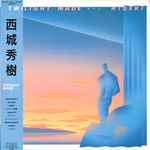

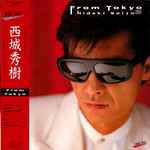
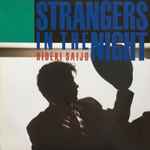
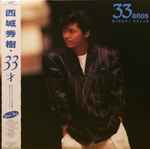
En la onda de 西城秀樹
Otros artistas afines, con vinilo.