Lucy Ann Polk
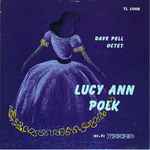
Lucy Ann Polk (May 16, 1927 – October 10, 2011) was an American jazz singer who performed with Les Brown's orchestra in the 1950s. She was also known for singing with Bob Crosby, Kay Kyser, Tommy Dorsey, Jerry Fielding, and Dave Pell. Polk was born on May 16, 1927 in Sandpoint, Idaho to Charles Adolph Polk (1899 - 1981), a dairy and bakery delivery driver and Malena Edna Young Polk (1904–1962). Polk had three siblings: brothers Gordon Leroy Polk and Vernon Charles Polk and sister Elva Irene Polk Shanahan. Polk began her music career with her sister and brothers in a quartet named the Four Polks, which was eventually changed to the Town Criers, with Lucy providing the lead vocals and her brothers and sister providing backing vocals. They performed at various Spokane movie theatres and by the age of 9, Lucy was singing on Spokane's KHQ radio station, with the Four Polks securing their own radio program in 1936. Their first public performances occurred in community settings across Idaho and Washington, starting locally in Spokane around the mid-1930s and progressing to broader regional gigs by the early 1940s, including radio appearances and theater shows in 1942. These early outings encompassed church events and community halls, where the quartet entertained audiences with upbeat tunes and family-oriented charm, navigating the logistical hurdles of wartime rationing that limited travel and resources for young performers. The quartet's close familial bonds fostered tight-knit performances, but early challenges included balancing school with gigs and coping with gas and tire shortages during World War II, which restricted their movements to nearby states like Idaho and Washington. This period solidified Lucy Ann's vocal style, blending innocence with swing-era sophistication, setting the foundation for her future prominence. The group also performed with big bands led by Les Brown, Lionel Hampton, and Kay Kyser until they disbanded in 1948. In 1947, Polk joined Tommy Dorsey's orchestra as a featured vocalist, recording several solo tracks on Bluebird/RCA Victor labels, including "Baby, Baby All the Time" (1947, arranged by Jerry Fielding) and "You Know What the Trouble Is, Baby" (1948). These sessions showcased her warm delivery in big band swing contexts until 1949 when she became the lead vocalist with the Les Brown Orchestra. Her musical sessions with the band produced several standout tracks, including "Sentimental Thing" (a playful take on "Sentimental Journey") recorded in Hollywood on May 26, 1950, and "Waitin' at the Station" from 1949 as well as other tracks such as "Sometimes I'm Happy," "How High the Moon," "Sabre Dance," and "Boptized". Polk's tenure with Les Brown involved extensive touring across the United States, including high-profile engagements at major venues such as the Hollywood Palladium, where the band recorded live performances in 1953 that showcased her contributions. The orchestra also participated in USO shows to entertain troops, aligning with Brown's long history of such efforts, during which Polk's vocals added to the band's dynamic swing repertoire. These tours and appearances helped solidify her presence in the post-World War II big band scene, emphasizing energetic live presentations suited to diverse audiences. From 1952 to 1954, she was named Best Girl Singer with Band by Down Beat magazine. She also landed in the top 15 in Metronome Magazine's Best Female Singer poll from 1951 to 1953. After leaving the Les Brown band, Lucy Ann began a solo career with the Dave Pell Octet, releasing the album Lucy Ann Polk with the Dave Pell Octet (Trend, 1954), followed by Lucky Lucy Ann (Mode, 1957; reissued by Interlude under the name Easy Livin in 1959). The latter album featured arrangements by Marty Paich. On both albums, she sang jazz and traditional pop songs by Duke Ellington, Billy Strayhorn, Hoagy Carmichael, Cole Porter, Sammy Cahn, Jule Styne, and Jimmy Van Heusen. She also performed at local gigs in the Los Angeles area with her husband's band. In addition, Lucy Ann also performed several sessions for Starlite Records in 1955 and provided vocals for Jerry Fieldings' compositions on Decca Records in 1957. However, her reluctance to tour limited her visibility, resulting in only casual local engagements and a gradual reduction in performances by the late 1950s. Lucy Ann ended her singing career in 1959, settling in the San Fernando Valley, focusing on family life rather than the demands of the entertainment industry. In 1946, Polk married Dick Noel, who played trombone with Les Brown's orchestra and who provided accompaniment to some of her recordings. The couple purchased a home in California's San Fernando Valley in 1950, marking a shift toward greater personal stability amid Polk's demanding career. By the late 1950s, Polk had stepped back from extensive touring to prioritize home life, a decision influenced by the couple's long separations during road engagements; Noel secured a position with the Hollywood NBC staff orchestra, enabling them to spend more time together in Los Angeles. The couple had no children, and following the end of their marriage, Lucy Ann resided in the Los Angeles area, including Glendale, California, where she maintained connections with her siblings. 1949-57 - Imagination (SSJ, 2013) (w Les Brown Orchestra) 1950-53 - With the Les Brown Orchestra 1950–1953 (Olfert Dappers, 1997) 1954 - With the Dave Pell Octet (Trend, 1954) 1956 - The Dave Pell Octet Plays Burke & Van Heusen (Kapp, 1956) 1957 - Lucky Lucy Ann (Mode, 1957) Yanow, Scott. Jazz: a Regional Exploration. Page 77. Greenwood Press, 2005. tributes.com "Crosby Orchestra Here Next Sunday". The Daily Times. Ohio, New Philadelphia. April 10, 1947. p. 13. Retrieved July 15, 2016 – via Newspapers.com. "(Tommy Dorsey ad)". The Lincoln Star. Nebraska, Lincoln. September 7, 1947. p. 28. Retrieved July 15, 2016 – via Newspapers.com. Hatshing, Ed (December 21, 1949). "The Note Book". The Hollywood Reporter. p. 9. ProQuest 2322757163. Lucy Ann Polk and Jerry Fielding slice a foursome tonight for Victor "Record Reviews". The Billboard. February 4, 1950. p. 36. Retrieved December 7, 2024. "Lucy Ann Polk". Discography of American Historical Recordings. Retrieved 2026-05-20. "Four Polks, The". nwmusicarchives.com. Retrieved 2026-05-20. "Pretty vocalist booked for dance". Tulsa Daily World. August 20, 1950. p. 7. Retrieved November 23, 2024 – via Newspapers.com. "Les Brown Concert At The Palladium Vol 2 UK Vinyl LP". RareVinyl.com. Retrieved 2026-05-20. McGee, David (4 September 2015). "The Girl Singers That Time Forgot". The Absolute Sound. Retrieved 2 May 2017. Klauber, Bruce (22 November 2012). "Fresh Sound Records and the Legacy of Recorded Jazz". All About Jazz. Retrieved 2 May 2017. https://www.worldradiohistory.com/Archive-All-Music/DownBeat/50s/53/Down-Beat-1953-12-30-20-26.pdf https://www.worldradiohistory.com/Archive-All-Music/DownBeat/50s/54/Down-Beat-1954-12-29-21-26.pdf https://www.worldradiohistory.com/Archive-All-Music/DownBeat/50s/51/Down-Beat-1951-12-28-18-26.pdf https://www.worldradiohistory.com/Archive-All-Music/DownBeat/50s/52/Down-Beat-1952-12-31-19-26.pdf Ankeny, Jason. "Lucky Lucy Ann - Lucy Ann Polk". AllMusic. Retrieved 2 May 2017. "Brown Band Good As Ever". The Hutchinson News. Kansas, Hutchinson. February 9, 1951. p. 10. Retrieved July 16, 2016 – via Newspapers.com. Audio of Lucy Ann Polk on The Les Brown Show
Discografía en vinilo
Ordenada por relevancia (lo más escuchado primero).

En la onda de Lucy Ann Polk
Otros artistas afines, con vinilo.