Josipa Lisac
Josipa Lisac (pronounced [jɔ̌sipa lǐːsat͡s]; born 14 February 1950) is a Croatian and Yugoslav singer whose work has spawned many different genres, from rock and pop to jazz and ethnic music. Known for her unique contralto, Lisac is widely considered one of the most notable female vocalists of the Yugoslav popular music scene. Starting her professional career as the vocalist for the rock band O'Hara in 1967, Lisac immediately gained the attention of the Yugoslav audience and the media. In 1968, she moved to the band Zlatni Akordi, starting her solo career during the same year. During the initial phase of her solo career, she performed on Yugoslav pop festivals, gaining large attention of the public. After a series of 7-inch singles, she released her debut album Dnevnik jedne ljubavi in 1973, today widely considered one of the best albums in the history of Yugoslav popular music. The album featured songs composed by her husband Karlo Metikoš, who continued to play a pivotal role in her career in the following years. After her second studio release, a jazz rock album recorded with B.P. Convention Big Band International, and her third studio album, Made in U.S.A., featuring songs written by a number of prominent American songwriters, Lisac turned to contemporary rock sound. Her following releases, despite bringing several hit songs, did not repeat the commercial and critical success of her debut. In the mid-1980s, she turned to performing on Yugoslav pop festivals, appearing in extravagant and flamboyant costumes, the new phase of her career reaching its highlight with the 1987 album Boginja. Following Meikoš's death in 1991, she organized tribute concerts in his honor, three of them released on live albums, and has released three more studio albums, the 2009 album Živim po svom being her latest studio release. During her career, Lisac has collaborated with a number of acts of the Croatian and Yugoslav music scenes and has received a number of awards for her work. Josipa Lisac was born in Zagreb on 14 February 1950. She started her singing career in 1961, as a member of RTV Zagreb's children choir. In 1967, Lisac became the vocalist for the band O'Hara, replacing Marcela Munger. With the arrival of Lisac, the band started to turn away from their trademark polyphonic singing and to emphasize Lisac's vocals. During this period, Lisac made one of her earliest TV appearances, performing with O'Hara in the popular TV Belgrade show Koncert za ludi mladi svet (Concert for the Crazy Young World), performing covers of the songs "One Day" and "I Can't See Nobody". In 1968, Lisac and O'Hara organist and leader Frano Parać moved to the band Zlatni Akordi, O'Hara thus disbanding. With Zlatni Akordi, Lisac appeared on the 1968 edition of the prominent Youth Festival, held in Subotica, with the song "Sunce sja za nas" ("The Sun Shines for Us"). During the same year, Lisac made her discographic debut, on Zlatni Akordi's second EP Halo taxi, the title track originally performed on the 1968 edition of the festival Vaš šlager sezone (Your Schlager of the Season). Lisac made her solo debut on the 1968 Opatija Festival, where she performed the song "Što me čini sretnom" ("What Makes Me Happy"), written by Arsen Dedić and performed on the same festival by Bisera Veletanlić (in accordance with the rules of 1960s Yugoslav music festivals, which demanded a competing songs to be performed by two different singers). The song was polled the third best song by the festival audience. After the performance, in the autumn of the same year, Lisac left Zlatni Akordi to start her solo career. In 1969, Lisac appeared on the festival Slovenska popevka (Slovenian Song), performing the songs "Prazna obećanja" ("Empty Promises"), written by Arsen Dedić, and "Po nalogu zelenih očiju" ("After the Order of the Green Eyes"), written by Jure Robežnik. During the same year, she released her first solo record, a 7-inch single with the songs "Nitko nije kao ti" ("No One Is Like You") and "Naša ljubav" ("Our Love"), through Jugoton record label. For her second single, released during the same year, she recorded the songs "Živim samo za tebe" ("I Live Only for You") and "Prijatelji" ("Friends"), both written by her former O'Hara and Zlatni Akordi bandmate Frano Parać. During the initial phase of her career, Zlatni Akordi would often play as her backing band on studio recordings and live performances. Lisac continued her breakthrough by appearing on Yugoslav festivals with the songs "Oluja" ("Storm"), "Kapetane moj" ("My Captain"), written by Zdenko Runjić, "Krenule su lađe" ("The Ships Have Sailed Out") and "Život moj" ("My Life"), written by Arsen Dedić. In 1971, Lisac met singer and songwriter Karlo Metikoš on their joint concert in Petrinja. Metikoš had already gained fame in Yugoslavia and France as a rock and roll singer. The two soon started a relationship, Metikoš deciding to abandon his career as a performer and dedicate himself to writing songs for Lisac. After a series of 7-inch singles, Lisac released her first solo album, Dnevnik jedne ljubavi (The Diary of a Love), in 1973. The songs on the album were composed and the album was produced by Metikoš, the songs lyrics were written by Ivica Krajač, and the arrangements were written by Branislav "Labmert" Živković. The album was recorded with the members of the jazz rock band Time and a number of musicians from the Zagreb jazz scene. The recording featured Time members Dado Topić (on tambourine), Vedran Božić (guitar), Mario Mavrin (bass guitar), Tihomir "Pop" Asanović (organ) Branislav "Lambert" Živković (piano, electric piano, flute) and Ratko Divjak (drums), as well as Indexi member Slobodan "Bodo" Kovačević (acoustic guitar), singers Dubravka Zubović and Zdenka Kovačiček (backing vocals), and several other musicians. The album artwork was designed by Krajač, and the first letters of the songs' opening lines formed the acrostic "JOSIPA LISA" (as there was no eleventh song beginning with "C"). Dnevnik jedne ljubavi was an immediate commercial and critical success, the Yugoslav music press describing it as emotional and sophisticated. The album's biggest hits were the songs "O jednoj mladosti" ("About One Youth"), "Srela sam se s njim" ("I Met With Him"), "Sreća" ("Happiness"), "Plačem" ("I'm Crying") and "Ležaj od suza" ("Bed Made of Tears"). Following the album release, Lisac, alongside the bands Time and Porodična Manufaktura Crnog Hleba, represented Yugoslavia at the 10th World Festival of Youth and Students in East Berlin. In 1974, Lisac released her second album, Najveći uspjesi '68./ '73. (Greatest Hits '68 / '73), the compilation of hit songs from her 7-inch singles. In 1975, she starred in the first Yugoslav rock opera Gubec-beg, portraying Jana. The opera was created by Karlo Metikoš, Ivica Krajač and Miljenko Prohaska and was inspired by August Šenoa's 1887 novel The Peasant Revolt. It premiered on 8 March 1975, and was later performed around Yugoslavia, as well as in Budapest, Trieste, Rome, and Saint Petersburg, and released on the album Gubec-beg. The aria "Ave Maria" would become the opera's most famous tune and would continue to be a part of Lisac's concert repertoire until present day. In 1976, Lisac released her second studio album, recorded with vibraphone player Boško Petrović and his Convention Big Band International, and entitled Josipa Lisac & B.P. Convention Big Band International. The album featured jazz rock covers of classics such as "My Funny Valentine" (entitled "Moj smiješni dječače"), "You Are the Sunshine of My Life" (entitled "Ti si sunce mog života"), "Something" (entitled "Nešto"), "Son of a Preacher Man" (entitled "Čovjek s tisuću mana", transl. "A Man With a Thousand Flaws") and others. In 1977, Lisac and Metikoš travelled to the United States, where they recorded the album Made in U.S.A.. The album featured songs written by American songwriters, including Richard Supa, Stuart Scharf, Allee Willis, Bruce
Discografía en vinilo
Ordenada por relevancia (lo más escuchado primero).

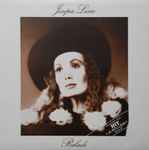


En la onda de Josipa Lisac
Otros artistas afines, con vinilo.