Keith Godchaux
Keith Richard Godchaux (July 19, 1948 – July 23, 1980) was an American pianist best known for his tenure in the rock group the Grateful Dead from 1971 to 1979. Following their departure from the Dead, he and his wife Donna formed the Heart of Gold Band in 1980, but Godchaux died from injuries sustained in a car accident shortly after their first concert. Godchaux was born in Seattle, Washington, and grew up in Concord, California, a regional suburban center within the East Bay of the San Francisco Bay Area. He began piano lessons at age five at the instigation of his father (a semi-professional musician) and subsequently played Dixieland and cocktail jazz in professional ensembles as a teenager. According to Godchaux, "I spent two years wearing dinner jackets and playing acoustic piano in country club bands and Dixieland groups...I also did piano bar gigs and put trios together to back singers in various places around the Bay Area...[playing] cocktail standards like 'Misty' the way jazz musicians resentfully play a song that's popular – that frustrated space... I just wasn't into it... I was looking for something real to get involved with – which wouldn't necessarily be music". He met and married former FAME Studios session vocalist Donna Jean Thatcher in November 1970; their son Zion, of the band BoomBox, was born in 1974. The couple introduced themselves to Jerry Garcia at a concert in August 1971; coincidentally, ailing keyboardist/vocalist Ron "Pigpen" McKernan (who would go on to play alongside Godchaux from December 1971 to June 1972) was unable to handle the rigors of the band's next tour. At the time, Godchaux was largely supported by his wife and irregularly employed as a lounge pianist in Walnut Creek, California. While he was largely uninterested in the popular music of the era and eschewed au courant jazz rock in favor of modal jazz, bebop, and swing, several sources[who?] claim that he collaborated with such rock acts as Dave Mason and James and the Good Brothers, a Canadian trio acquainted with the Grateful Dead. According to Godchaux, "I first saw [the Grateful Dead] play with a bunch of my old lady's friends, who were real Grateful Dead freaks. I went to a concert with them and saw something I didn't know could be really happening... It was not like a mind-blowing far out, just a beautiful far out. Not exactly a choir of angels but some incredibly holy, pure and beautiful spiritual light. From then on, I was super turned-on that such a thing existed. This was about a year and a half ago, when I first met Donna... I knew I was related to them." He was also known to Betty Cantor-Jackson, a Grateful Dead sound engineer, who produced James and the Good Brothers' debut album in 1970. Remembering their initial meeting, drummer Bill Kreutzmann writes, "Then, around the same time that Pigpen entered the hospital, Jerry gave me a call telling me to get my ass down to the rehearsal space. He said there was a guy down there with him that I simply had to hear. Nobody else from the band was around, but almost immediately after I arrived, I knew that Jerry was right—this guy could really play piano." Although the band had employed several other keyboardists (including Howard Wales, Merl Saunders and Ned Lagin) as session musicians to augment McKernan's limited instrumental contributions following the departure of Tom Constanten in January 1970, Godchaux was invited to join the group as a permanent member in September 1971. He first performed publicly with the Dead on October 19, 1971, at the University of Minnesota's Northrup Auditorium. After playing an upright piano and increasingly sporadic Hammond organ on the fall 1971 tour, Godchaux primarily played acoustic grand piano (including nine-foot Yamaha and Steinway instruments) at concerts from 1972 to 1974. Throughout this period, Godchaux's rented pianos were outfitted with a state-of-the-art pickup system designed by Carl Countryman. According to sound engineer Owsley Stanley, "The Countryman pickup worked by an electrostatic principle similar to the way a condenser mic works. It was charged with a very high voltage, and thus was very cantankerous to set up and use. It had a way of crackling in humid conditions and making other rather unmusical sounds if not set up just right, but when it worked it was truly brilliant." The control box also enabled Godchaux to use a wah-wah pedal with the instrument. He added a Fender Rhodes electric piano in mid-1973 and briefly experimented with the Hammond organ again on the band's fall 1973 tour; the Rhodes piano would remain in his setup through 1976. In 1975, he acquired a Mu-Tron Phasor I, which can be heard best on the 1975 studio album, Blues For Allah. Following the group's extended touring hiatus, he continued to use contractually-stipulated nine-foot Steinways furnished by the band's venues in 1976 and early 1977 before switching exclusively to the Yamaha CP-70 electric grand piano in September 1977. The instrument's unwieldy tuning partially contributed to the shelving of the band's recordings of their 1978 engagement at the Giza Plateau for a planned live album. Initially, Godchaux incorporated a richly melodic, fluid and boogie-woogie-influenced style that intuitively complemented the band's improvisational approach to rock music; critic Robert Christgau characterized his playing as "a cross between Chick Corea and Little Richard." According to Garcia in a 1980 interview with Mark Rowland conducted shortly before Godchaux's death, "Keith is one of those guys who is sort of an idiot savant of the piano. He’s an excellent pianist but he didn’t really have a concept of music, of how the piano fit in with the rest of the band. We were constantly playing records for him and so forth but that wasn’t his gift. His gift was the keyboard, the piano itself." Bassist Phil Lesh lauded his ability to "fit perfectly in the spaces between [our] parts," while Bill Kreutzmann was inspired by his "heart of music." Increasingly frayed from the vicissitudes of the rock and roll lifestyle, Godchaux gradually became dependent upon various drugs, most notably alcohol and heroin. Throughout the late 1970s, he was frequently embroiled in violent domestic conflicts with Donna, who also developed an alcohol use disorder. Following the Grateful Dead's 1975 hiatus, he largely yielded to a simpler comping-based approach with the group that eschewed his previously contrapuntal style in favor of emulating or ballasting Garcia's guitar parts. Despite occasional flirtations with synthesizers (most notably a Polymoog during the group's spring 1977 tour), this tendency was foregrounded by the reintegration of second drummer Mickey Hart, resulting in a heavily percussive sound with little sustain beyond Garcia's leads. However, Godchaux's playing in the Jerry Garcia Band – which had fewer instrumentalists and hence a more "open" sound – retained more elements of his earlier work with the Grateful Dead during this period. In early 1978, rhythm guitarist Bob Weir began to perform slide guitar parts with an eye toward variegating the group's sound palette, with Weir concluding that "desperation is the mother of invention." Garcia biographer Blair Jackson has also asserted that "the quality of Keith’s playing in the Dead fell off in ’78 and early ’79. It no longer had that sparkle and imagination that marked his best work (’72–’74). Much of what he played in his last year was basic, blocky, chordal stuff. I don’t hear many wrong notes but he’s not exactly out there on the edge taking chances and pushing the others, as he frequently did, in his own quiet way, in his peak Grateful Dead years. I guess the worst thing you could say about later-period Keith is that he was just taking up sonic space in the Dead’s overall sound. Did this affect the others? No doubt, though it can’t be measured." Eventually, according to Donna Jean Godchaux, "Keith and I decided we wanted to get out and
Discografía en vinilo
Ordenada por relevancia (lo más escuchado primero).
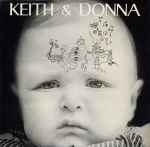
En la onda de Keith Godchaux
Otros artistas afines, con vinilo.