Nona Hendryx (American vocalist, record producer, songwriter, musician, author and actress)
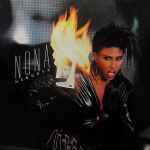
Nona Bernis Hendryx (born October 9, 1944) is an American vocalist, record producer, songwriter, musician, and author. Hendryx is known for her work as a solo artist as well as for being one-third of the trio Labelle, who had a hit with "Lady Marmalade". In 1977, Hendryx released her self-titled debut solo album, a commercial failure that resulted in Hendryx being released from her recording contract. In the early 1980s, Hendryx sang with experimental funk group Material, achieving the hit "Busting Out". Material produced her second album, Nona (1983), containing the modest Top 30 R&B and Dance charts hit "Keep It Confidential". The album cut "Transformation" became a Hendryx signature song. In 1985, Hendryx wrote and recorded the Grammy nominated song "Rock This House" with Keith Richards from her fourth solo album The Heat (1985). Hendryx went on to record the theme for Moving Violations and "I Sweat (Going Through the Motions)", a commercial hit for Hendryx from the Jamie Lee Curtis film Perfect. She also took part in the Artists United Against Apartheid project with the international hit, "Sun City", from the album of the same title. Hendryx's 1987 single "Why Should I Cry?", from her fifth album became a Top 10 R&B chart hit. She recorded "Transparent" from the 1988 Eddie Murphy vehicle, Coming to America. Hendryx received an Emmy nomination as a composer of People: A Musical Celebration in 1996 for Outstanding Music and Lyrics. She has also appeared on the third season of The L Word. Her music has ranged from soul, funk, and R&B to hard rock, new wave, and new-age. She stated in an interview that her family's last name was originally spelled with an 'i' and that she is a distant cousin of guitarist Jimi Hendrix. Nona Bernis Hendryx, who is of African American heritage, was born on October 9, 1944, in Trenton, New Jersey. There, she met fellow New Jersey native Sarah Dash and later met Philadelphia-born singer Patricia Holte (Patti LaBelle). After a short-lived tenure as a member of the Del-Capris, Hendryx and Dash formed a singing group with Holte (once the lead singer of a girl group in Philadelphia called The Ordettes). In 1961, Cindy Birdsong, from Camden, New Jersey, became the fourth member of the group, who became the Bluebelles and signed their first deal with Newtown Records. After the release of their debut hit, 1962's "I Sold My Heart to the Junkman", their name altered again to Patti LaBelle and the Bluebelles. Hendryx's husky alto differed from Dash's sharp soprano, LaBelle's mezzo-soprano and Birdsong's second soprano. During this tenure, the group became known for their emotional live performances and their renditions of classic standards such as "You'll Never Walk Alone", "Over The Rainbow", and "Danny Boy". The group often found themselves competing against girl groups such as the Chantels, Shirelles, and the Supremes. In 1967, Hendryx, LaBelle, and Dash were shocked to discover that Birdsong had secretly joined the Supremes after Florence Ballard was ousted from the group by Motown. Different members of the group were in touch with Birdsong over the years. Birdsong's relationships with the Bluebelles healed and they came together again for the ceremony when the group won an R&B Foundation Lifetime Achievement Award in 1999. For the next three years, the group struggled to compete against the changing musical landscape for which their girl group sound had fallen out of favor with popular audiences. In 1971, they moved to England, where they had a cult fan base, and on the advice of Vicki Wickham, changed their name to Labelle and ditched the dresses and bouffant wigs for jeans and Afros. Releasing transitional albums including 1971's Labelle and 1972's Moon Shadow, the group recorded material that included sexual and political subject matter – unheard of for an all-female black group. The transition was hard for lead singer LaBelle, who was a fan of the group's early-era ballads, but she eventually gave in. Member Dash remained neutral throughout the tenure of the group. Shortly after releasing Labelle, the group became the opening act for The Who, whose producer Kit Lambert had produced the group's Warner debut. They also opened for Laura Nyro during that same time and sang backup on her album Gonna Take a Miracle. Beginning with the Moon Shadow album, Hendryx became the chief songwriter for most of the group's records while LaBelle and Dash occasionally wrote their own material. After successfully opening for the Rolling Stones during the group's American tour in 1973, the group released Pressure Cookin', where they once again adopted a new look as "glam rock, space-age divas". As a songwriter, Hendryx subsequently wrote powerful ballads ("You Turn Me On" and "Nightbird" from Nightbirds, "Going Down Makes Me Shiver" from Labelle's final album, Chameleon), and a wealth of more uptempo numbers ("Space Children", "Messin' with My Mind", "Gypsy Moths", and "Who's Watching the Watcher"). Her themes were unconventional, diverse, and often experimental. Her composition "A Man in a Trenchcoat (Voodoo)" from Chameleon also marked Hendryx's first time singing lead vocal on an album. In 1974, the group hit gold with the release of Nightbirds following the release of the smash hit "Lady Marmalade". In her memoir Don't Block the Blessings, Labelle frontwoman Patti LaBelle attributed the band's 1976 breakup to musical and personal tensions within the group. Labelle, Dash, and Hendryx all embarked on solo careers; Wickham stayed on with Hendryx to manage her solo career. In 1977, Hendryx released her first solo album, a self-titled collection. A blend of soul and hard rock, it contained notable tracks such as her cover of "Winning" and the ballad "Leaving Here Today". It quickly disappeared from the shelves, and Hendryx was dropped from Epic. Subsequently, she recorded four singles for Arista (London), which also did not achieve chart success. She did find success doing session work during this period, most notably providing background vocals for Talking Heads and touring with them, appearing first at the major Heatwave festival in August 1980. She contributed to Dusty Springfield's album It Begins Again in 1978 (the first of Springfield's multiple attempts at a comeback) by writing the song "Checkmate". In the early 1980s, Hendryx fronted her own progressive art rock group, Zero Cool, which included guitarist Naux (China Shop, Richard Hell), bassist Michael Allison (Darshan Ambient), guitarist Kevin Fullen and drummer Jimmy Allington. Simultaneously, she sang with experimental funk group Material, achieving a giant club hit with "Busting Out". She had two other major club hits soon after: a dance remake of The Supremes' "Love Is Like an Itching in My Heart", and, in a lead vocal guest spot for the Cage, "Do What You Wanna Do". Material also produced her second album Nona in 1983. The hip, contemporary dance sound of this album proved to be more charts-compatible, with the disco music times, and the single "Keep It Confidential" becoming a modest R&B hit written by Ellie Greenwich, Jeff Kent, Ellen Foley, and a remix of "B-boys" finding major success on the dance charts. "Transformation" became a Hendryx staple, and later was covered by Fierce Ruling Diva. Another particularly noteworthy track on the album is the ballad "Design for Living", which featured guests Laurie Anderson, Gina Shock of The Go-Go's, Valerie Simpson of Ashford & Simpson, Tina Weymouth of Tom Tom Club and Talking Heads, Nancy Wilson of Heart, and former bandmate Patti LaBelle. In the mid-1980s, Hendryx was recruited by RCA to record songs for various soundtracks, including the theme for Moving Violations; "I Sweat (Going Through the Motions)", a commercial hit for Hendryx from the Jamie Lee Curtis film Perfect; and "Transparent" from the Eddie Murphy vehicle, Coming to America. Her album The Art of Defense was released in 1984. In 1985, Hendryx wrote and recorded
Discografía en vinilo
Ordenada por relevancia (lo más escuchado primero).


En la onda de Nona Hendryx
Otros artistas afines, con vinilo.