Joe Tex (American southern soul musician)
Yusuf Hazziez (born Joseph Arrington Jr.; August 8, 1935 – August 13, 1982), known professionally as Joe Tex, was an American singer and musician who gained success in the 1960s and 1970s with his brand of Southern soul, which mixed the styles of funk, country, gospel, and rhythm and blues. His career started after he was signed to King Records in 1955 following four wins at the Apollo Theater. Between 1955 and 1964, he struggled to find hits, and by the time he finally recorded his first hit, "Hold What You've Got" in 1964, he had recorded 30 previous singles that were deemed failures on the charts. He went on to have four million-selling hits: "Hold What You've Got" (1965), "Skinny Legs and All" (1967), "I Gotcha" (1972), and "Ain't Gonna Bump No More (With No Big Fat Woman)" (1977). Tex was nominated for the Rock & Roll Hall of Fame six times, most recently in 2017. Joe Tex was born Joseph Arrington, Jr. in Rogers, Texas, in Bell County to Joseph Arrington and Cherie Sue (Jackson) Arrington. He and his sister Mary Sue were initially raised by their grandmother, Mary Richardson. After their parents divorced, Cheri Arrington moved to Baytown. Tex played baritone saxophone in the high-school band and sang in a local Pentecostal church choir. He entered several talent shows, and after an important win in Houston, he won $300 and a trip to New York City. Joe Tex took part in the amateur portion of the Apollo Theater, winning first place four times, which led to his discovery by Henry Glover, who offered him a contract with King Records. His mother's wish was that he graduate from high school first, and Glover agreed to wait a year before signing him at age 19. Tex recorded for King Records between 1955 and 1957 with little success. He later claimed he sold musical rights to the composition "Fever" to King Records staff to get money to pay his rent. The song's credited songwriters, Otis Blackwell (who used the pseudonym John Davenport) and Joe Cooley, disputed Tex's claims. Labelmate Little Willie John had a hit with "Fever", which inspired Tex to write the first of his answer songs, "Pneumonia". In 1958, he signed with Ace and continued to have relative failures, but he was starting to build a unique stage reputation, opening for artists such as Jackie Wilson, James Brown, and Little Richard. He perfected the microphone tricks and dance moves that defined the rest of his career. Many, including Little Richard, claim that Tex's future nemesis James Brown stole Tex's dance moves and microphone tricks. In 1960, he left Ace and briefly recorded for Detroit's Anna Records label, scoring a Bubbling Under Billboard hit with his cover version of Etta James' "All I Could Do Was Cry". By then, Tex's use of rapping over his music was starting to become commonplace. In 1961, he recorded his composition "Baby You're Right" for Anna. Later that year, James Brown recorded a cover version, though with different lyrics and a different musical composition, gaining songwriting credit, making it a hit in 1962, and reaching number two on the R&B chart. During this time, Tex first began working with Buddy Killen, who formed the Dial Records label behind Tex. After a number of songs failed to chart, Killen decided to have Atlantic Records distribute his recordings with Dial in 1964. By the time he signed with Atlantic, Tex had recorded 30 songs, all of which had failed to make an impact on the charts. Tex recorded and finally scored his first hit, "Hold What You've Got", in November 1964 at FAME Studios in Muscle Shoals, Alabama. He was unconvinced the song would be a hit and advised Killen not to release it. However, Killen felt otherwise and released the song in early 1965. By the time Tex got wind of its release, the song had already sold 200,000 copies. The song eventually peaked at number five on the Billboard Hot 100 and became Tex's first number-one hit on the R&B charts, staying on the charts for 11 weeks and selling more than a million copies by 1966. Tex placed six top-40 charted singles on the R&B charts in 1965 alone, including two more number-one hits, "I Want To (Do Everything For You)" and "A Sweet Woman Like You". He followed that with two successive albums, Hold On To What You've Got and The New Boss. He placed more R&B hits than any artist, including his rival James Brown. In 1966, five more singles entered the top 40 on the R&B charts, including "The Love You Save" and "S.Y.S.L.J.F.M." or "The Letter Song", which was an answer song to Wilson Pickett's "634-5789 (Soulsville, U.S.A.)". His 1967 hits included "Show Me", which became an often-covered tune for British rock artists and later some country and pop artists, and his second million-selling hit, "Skinny Legs and All". The latter song, released off Tex's pseudo-live album, Live and Lively, stayed on the charts for 15 weeks and was awarded a gold disc by the Recording Industry Association of America (RIAA) in January 1968. After leaving Atlantic for Mercury, Tex had several more R&B hits including "Buying a Book" in 1970 and "Give the Baby Anything the Baby Wants" in 1971. The intro saxophone riffs in his 1969 song, "You're Right, Ray Charles" later influenced Funkadelic's "Standing on the Verge of Gettin' It On". "Tex is a novelty artist whose subject is morality ... all over some very punchy dance tracks by James Brown out of Stax-Volt." — Christgau's Record Guide: Rock Albums of the Seventies (1981) Tex recorded his next big hit, "I Gotcha", in December 1971. The song was released in January 1972 and stayed on the charts for 20 weeks, staying at number two on the Hot 100 for two weeks and sold more than 2 million copies, becoming his biggest-selling hit to date. Tex was offered a gold disc of the song on March 22, 1972. The parent album reached number 17 on the pop albums chart. The song would later be included in director Quentin Tarantino's 1992 film debut Reservoir Dogs. Following this and another album, Tex announced his retirement from show business in September 1972 to pursue life as a minister for Islam. Tex returned to his music career following the death of Elijah Muhammad in 1975, releasing the top-40 R&B hit, "Under Your Powerful Love". His last hit, "Ain't Gonna Bump No More (With No Big Fat Woman)", was released in 1977 and peaked at number 12 on the Hot 100 and number 2 in the UK. His last public appearances were as part of a revised 1980s version of the Soul Clan in 1981. After that, Tex withdrew from public life, settling at his ranch in Navasota, Texas, and watching football games by his favorite team, the Houston Oilers. The feud between Tex and fellow label mate James Brown allegedly originated sometime in the mid-1950s, when both artists were signed to associated imprints of King Records, when Brown reportedly called out on Tex for a "battle" during a dance at a local juke joint. In 1960, Tex left King and recorded a few songs for Detroit-based Anna Records; one of the songs he recorded was the ballad "Baby, You're Right". A year later, Brown recorded the song and released it in 1961, changing the lyrics and the musical composition, earning Brown co-songwriting credits along with Tex. By then, Brown had recruited singer Bea Ford, who had been married to Tex but had divorced him in 1959. In 1960, Brown and Ford recorded the song, "You've Got the Power". Shortly afterward, Tex got a personal letter from Brown telling him that he was through with Ford and if Tex wanted her back, he could have her. Tex responded by recording the diss record "You Keep Her" in 1962. In 1963, their feud escalated when Tex and Brown performed a concert in Macon, Georgia. Tex, who opened the show, imitated Brown by appearing in a torn, tattered cape and rolling around on the floor screaming, "Please—somebody help get me out of this cape!" Brown, already angry with Tex over the song "You Keep Her", left the club and returned with guns. Tex had left the club before the shooting commenced. The incident led
Discografía en vinilo
Ordenada por relevancia (lo más escuchado primero).
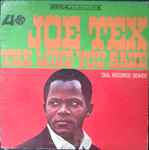
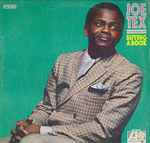

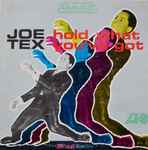
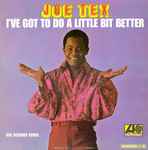
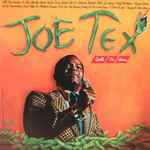


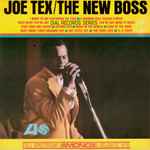
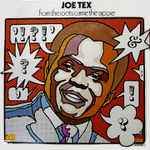
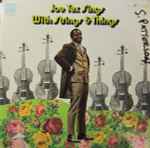

En la onda de Joe Tex
Otros artistas afines, con vinilo.