
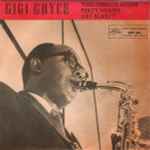
Gigi Gryce
Gigi Gryce (born George General Grice Jr.; November 28, 1925 – March 17, 1983), later in life changing his name to Basheer Qusim, was an American jazz saxophonist, flautist, clarinetist, composer, arranger, and educator. While his performing career was relatively short, much of his work as a player, composer, and arranger was quite influential and well-recognized during his time. However, Gryce abruptly ended his jazz career in the 1960s. This, in addition to his nature as a private person, has resulted in little knowledge of Gryce today. Several of his compositions have been covered extensively ("Minority", "Social Call", "Nica's Tempo") and have become minor jazz standards. Gryce's compositional bent includes harmonic choices similar to those of contemporaries Benny Golson, Tadd Dameron and Horace Silver. Gryce's playing, arranging, and composing are most associated with the classic hard bop era (roughly 1953–1965). He was a well-educated composer and musician, and wrote some classical works as a student at the Boston Conservatory. As a jazz musician and composer he was influenced by the work of Charlie Parker and Thelonious Monk.[page needed] George General Gryce Jr. was born in Pensacola, Florida on November 28, 1925. Gryce spent most of his early life in Hartford, Connecticut. His family's strong emphasis on music, manners, and discipline had a tremendous effect on him as a child and into his later career. Gryce's parents were of modest means: his father owned a small cleaning and pressing service, and his mother, Rebecca Rials, was a seamstress who also helped her husband run the business. The family belonged to the African Methodist Episcopal Church and attended services diligently. Especially as the Great Depression began to take its toll on the family's financial welfare, the Gryces did their best to instill the value of discipline and hard work in their children. Music was much emphasized in the Gryce household. The family had a piano, which Gigi and his siblings (four older sisters and one younger brother) were encouraged to play. Mostly church music was performed in the Gryce home, while pop and jazz was mostly frowned upon. (Later, however, when Gigi pursued jazz as a career, his mother and older sisters would support him personally and financially.) Many of the Gryce children were encouraged to pursue vocal performance at church, school, and other community; for a time the family even held weekly recitals in their home. The early 1930s saw tragedy and hardship for the Gryce family. In 1931, as the economic crisis of The Great Depression began to take hold, the Gryces were forced to sell their cleaning business. Two years later, Gigi's father, George Sr., died after suffering a heart attack. Rebecca Gryce was forced to raise the children as a single mother, relocating the family in order to rent out the house. Even through this hardship, however, Rebecca continued to motivate her children for success through strict but supportive parenting, encouraging musical development, hard work, discipline, and Christian morals. Gigi applied his family's sense of discipline to his developing passion for music. As a youth Gigi was described as bright but reserved, extremely polite, studious, and formal in nature. It is unclear exactly when Gigi first began learning the clarinet – it is rumored he may have started as early as age 9 or 10, but the first evidence for his pursuit appears later as he entered high school. The under-resourced, and at this time, mostly black Booker T. Washington High School had a series of music teachers through the Federal Music Project; Gigi first studied with Joseph Jessie and later Raymond Shepard. As it was for many, a musical instrument would have been a crippling expense for the Gryces during the Depression; when Gigi and his brother Tommy studied clarinet with Shepard they allegedly borrowed the same clarinet from a friend directly before each lesson. Eventually, Gigi's mother was able to buy him his own Cavalier metal clarinet, with which Gigi became quite successful as a high school student, winning school and state competitions. At school Gigi was also able to study music theory, which he enjoyed and continued to explore on the piano at home. Gryce graduated from high school in 1943, working at the shipyard and playing in Raymond Shepard's professional band for a time before being drafted by the navy in March 1944. Gryce continued to pursue music during his two-year term, making his way into the navy band and earning the rank of musician second class. While stationed in Great Lakes, Illinois, Gryce spent time in Chicago during leaves and became more acquainted with the sound of bebop. It was at this time that he bought his own alto saxophone and, in Chicago, that he met musicians Andrew "Goon" Gardner and Harry Curtis. Gryce may have even briefly studied at the Chicago Conservatory of Music. After completing his time in the navy, Gryce decided to continue his musical education, financially supported by the G.I. Bill as well as his mother and older sisters. He moved to Hartford to live with his sister Harriet and her husband in 1946, and the following year enrolled at the Boston Conservatory. At the Boston Conservatory Gryce developed his theoretical background and studied classical composition, writing three symphonies and a ballet in addition to other works. He was inspired and influenced by the work and philosophy of Boston Conservatory composer Alan Hovhaness, a musical eclectic whose passion was for melodicism and lyricism. During his time at the conservatory Gryce also developed connections in the Hartford, Boston, and New York jazz scenes which would have a tremendous effect on his later career as a jazz musician, composer, and arranger. While New York was best known for cutting edge jazz of the time, both Boston and Hartford were also the sites of active and innovative jazz scenes. Gryce traveled between the two cities, and arranged for local bands including those of Sabby Lewis, Phil Edmonds, and Bunky Emerson. While Gryce developed his theoretical background and a passion for the works of Bartok and Stravinsky, he simultaneously developed an obsession for the work of Charlie Parker and Thelonious Monk, with whom, around 1949, he became acquainted and also performed. Gryce developed a reputation as a well-trained and talented artist, and became relatively well known in the local Boston and Hartford scenes. He also began to explore the New York scene, where he would eventually find himself in the early fifties. Gryce is rumored to have traveled to Paris on a Fulbright scholarship in 1951 to study with Nadia Boulanger and Arthur Honegger. However, there is much confusion and rumor surrounding this period in Gryce's life, and there is no evidence to suggest that Gryce did receive a Fulbright or formally study with the two composers. Gryce did take two semesters off to study in Europe, but little is known about his travels. It is possible that he studied with the composers privately. While Gryce did propagate the Fulbright rumor himself to substantiate his credentials, Gryce had little else to say about this time in his life. After graduating with a degree in composition in 1952, Gryce relocated to New York City, where he would enjoy much success in the mid fifties. In 1953 Max Roach recorded one of Gryce's charts with his septet, and soon after Gryce recorded with Howard McGhee and wrote for Horace Silver's sextet as well. Gryce was influenced by Tadd Dameron, with whom he played in 1953 at the Paradise Club. Gryce had not yet reached his peak as a musician or soloist, but was developing a reputation as a versatile and talented composer and arranger. Later in 1953 Gryce also contributed a tune, "Up in Quincy's Place" to Art Farmer's Prestige recordings. While this recording was rather inconsequential, Farmer would become one of Gryce's closest colleagues. One of the most important connections Gryce made in
Discografía en vinilo
Ordenada por relevancia (lo más escuchado primero).



En la onda de Gigi Gryce
Otros artistas afines, con vinilo.