Silvana Armenulić (Bosnian folk singer)
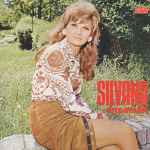
Zilha Armenulić (née Bajraktarević; 10 February 1939 – 10 October 1976), professionally known as Silvana Armenulić, was a Yugoslav singer, songwriter, and actress. Dubbed the “Queen of Sevdalinka” (“kraljica sevdalinke”), she was one of the most prominent performers of sevdalinka and folk music in the former Yugoslavia. She was known for her distinctive singing style and recognizable vocal timbre. Her song “Šta će mi život” (1970), written by her friend and contemporary Toma Zdravković, is regarded as one of the best-selling singles in the former Yugoslavia. Born Zilha Bajraktarević in Doboj, Kingdom of Yugoslavia, she was the third of thirteen children in a Bosnian Muslim family. Her father was Mehmed Bajraktarević (1909–1966), owner of a local cake shop called Jagoda (Strawberry), and her mother was Hajrija (1916–2008). Zilha survived a bout with diphtheria as a child shortly after World War II. Zilha had a brother named Hajrudin who died about two weeks after being mauled by a dog in the 1940s. After her brother's death, her father found solace in alcohol and solitude, neglecting the family and his business. After her father's cake shop closed, the family suffered greatly. Some of her earliest memories were of her father's absence and the World War II, when mother Hajrija and the children hid in the basement from the Ustasha troops. The family of thirteen children included Zilha's sisters Mirsada, Hajrudina, Abida, and Ševka, and brothers Hajrudin, Muhamed, Izudin, Abudin, and Ismet. Her sister Ševka's son Sabahudin Bilalović became a professional basketball player who died at age 43 of a heart attack on the beach while swimming with his son. Ten years later, Ševka and her husband Lutvo both died of natural causes in September 2013, just days apart.[citation needed] Zilha began singing at an early age and she would later say that she got her voice from her father, a bohemian. As a child, she would sing to him while sitting in his lap. But when she had thoughts of pursuing a professional singing career, her father was not supportive. Then one day, after coming home hung over from a night of drinking, and with the wave of a hand, he said "Go! If you really want to be a singer, go." In 1947, she was enrolled into elementary school, where she learned to play the mandolin, which was a gift from her parents. After that, she played the mandolin and sang more and more, but her grades in school kept declining. By the time she reached the eighth grade, all interest in school had been lost and she had made a name for herself locally as prominent kafana singer.[citation needed] Zilha met her husband, tennis player Radmilo Armenulić, in 1959 when she was singing at the Grand Casino in Belgrade. They married two years later on 26 October 1961 and their daughter Gordana was born on 13 January 1965. After seven years of marriage, Radmilo allegedly cheated on Zilha with her friend, singer Lepa Lukić. After that she recorded a song called "Sedam godina ljubavi" (Seven Years of Love). She and her husband were believed to have divorced, although many years later, Radmilo revealed that they had separated but stayed legally married until her death. Zilha was an ethnic Muslim and her husband Radmilo was a Serb, making theirs an ethnically mixed marriage in multiethnic Yugoslavia. Radmilo's mother Gordana disapproved of the marriage as did Zilha's father Mehmed who even refused to speak to his daughter. In fact, Zilha was not allowed into his home until his death in 1965, when she returned to Doboj for his funeral. After her marriage ended, many men vied for her affection, including politicians Stane Dolanc and Branko Pešić. Sometime in 1953, a young Zilha was heard singing in a Doboj kafana by Aca Stepić, and it was a voice he did not forget. They met again six years later in 1959, at the Hotel Bristol in Belgrade, after she started singing professionally. She was performing with the orchestra of Jovica Marinović and the singer/drummer was Cune Gojković. After that, she began singing with Aca in the Grand Casino in Belgrade, where she met her future husband Radmilo. Zilha moved to Sarajevo at the age of sixteen in 1954, where she lived with her aunt and sang in local kafanas for money. One night Zilha met accordionist Ismet Alajbegović Šerbo in the Sarajevo suburb of Ilidža. Delighted with her voice, he wanted to make her part of his orchestra, but the girl was underage and needed her parents permission. Of course, they gave consent and Šerbo promised her that she would have food, a place to stay and a salary of 20,000 dinars monthly. There, she entered the professional world of showbusiness. On a cold night in Leskovac in spring 1958, Zilha was taking walk through a park before a performance at the garden of a restaurant called Hisar in a hotel, when she saw a young man sleeping on a bench. It was Toma Zdravković. She approached him, woke him up, sat down and started a conversation. She asked him "Where are you from? What do you do?". He told her he was from a village, and had come to the city looking for a job. He couldn't find a job, and was broke with no way to pay his fare back home. Zilha wished to help him. She brought him to her performance, even handing her microphone over to him at one point. When she heard Toma sing, she was amazed, according to Za društvo u ćošku, written by Aleksandar Gajović, a journalist and cultural worker. She begged the manager of the hotel to help Toma find a job. Toma began singing with her, and later she got him his own record deal and he began recording and touring on his own. The two became legends of the former Yugoslavia. Eventually she moved to Belgrade, the capital of Yugoslavia, to further her singing career. There she adopted the mononymous stage name "Silvana" after the Italian actress Silvana Mangano. When she was a young girl, her friends would jokingly call her Silvana after watching the film Bitter Rice (1949), because she resembled the actress. While in Belgrade, Silvana frequently performed in the bohemian neighborhood Skadarlija. During this time, she was offered several recording contracts from the incredibly competitive Yugoslav record labels. The first song she ever recorded was the Bosnian sevdalinka "Nad izvorom vrba se nadvila" (Over the Spring, the Willow Tree Hung), although it wasn't officially released until her 1968 album Otiš'o si bez pozdrava (You Left Without Saying Goodbye), three years after her first album was released. After recording a single record for the label Diskos in Aleksandrovac, she was invited by the label PGP-RTB to record in the then-popular duet format. Silvana recorded duet albums with singers Petar Tanasijević, Aleksandar Trandafilović, Slavko Perović and Dragan Živković in the 1960s. After both companies competitively issued her records for a period of time, Silvana grew "tired" of singing in duets. The opportunity to record as a soloist came from the Zagreb-based record label Jugoton. Her career had taken off rapidly and she became one of the biggest commercial folk stars in Yugoslavia. This led to numerous and well-publicized country-wide singing engagements. She also appeared in many popular TV sitcoms such as Ljubav na seoski način (Love in the Rural Way) with famous Serbian comedian Miodrag Petrović Čkalja and folksy movies such as Građani sela Luga (Citizens of the Village Luga). In 1969, she and singer Toma Zdravković sang in the same group, and Zdravković wrote her biggest hit "Šta će mi život, bez tebe dragi" (What Do I Need a Life for, Without You Darling): ...While touring, we ran into one another a lot in different towns all over Yugoslavia, and in 1969, we even sang in the same band. I was already a well known and sought-after composer. She was completely down. She was constantly depressed and wanted me to write a song for her. But I didn't really know what. All of my songs were inspired by women I fancied and love-life, but we were good ol' friends. I had no
Discografía en vinilo
Ordenada por relevancia (lo más escuchado primero).


En la onda de Silvana Armenulić
Otros artistas afines, con vinilo.