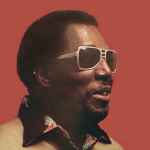
Clarence Carter
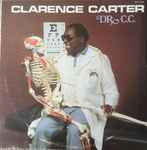
Clarence George Carter (January 14, 1936 – May 13, 2026) was an American singer, songwriter, musician, and record producer. His most successful songs include "Slip Away", "Back Door Santa" (both released 1968), "Patches" (1970), and "Strokin'" (1986). Born blind in Montgomery, Alabama, on January 14, 1936, Carter attended the Alabama School for the Blind in Talladega, Alabama, and Alabama State University in Montgomery, graduating in August 1960 with a Bachelor of Science degree in music. His professional music career began with friend Calvin Scott, signing to the Fairlane label to release "I Wanna Dance But I Don't Know How", as Calvin and Clarence, the following year. After the 1962 release of "I Don't Know (School Girl)", the pair joined Duke Records, renamed themselves the C & C Boys and released four singles for the label, though none were commercially successful. In 1965, the duo recorded "Step by Step" at Rick Hall's FAME Studios in Muscle Shoals; it was released on the Atlantic Records' subsidiary Atco label, but it also failed to chart.[better source needed] The duo performed regularly in clubs in Birmingham, Alabama, in 1966. After Scott was seriously injured in an auto accident, Carter continued as a solo singer, and recorded for the Fame label. In 1967 he recorded "Tell Daddy", which reached number 35 on the Billboard R&B chart and inspired Etta James's answer record, "Tell Mama", for which Carter was credited as writer. At the end of 1967, Carter joined Atlantic Records. He then began a string of hits on the R&B and pop charts, starting with "Slip Away" (number 2 R&B, number 6 pop), which has been described as "a superior cheating ballad spotlighting his anguished, massive baritone alongside the remarkably sinuous backing of Fame's exemplary backing band",[better source needed] and "Too Weak to Fight" (number 3 R&B, number 13 pop). Both of the preceding Atlantic singles were certified Gold by the Recording Industry Association of America. At the end of 1968, he had a seasonal pop hit with the raunchy and funky "Back Door Santa" (number 4 Christmas pop), and toured nationally.[better source needed] His backing singers included Candi Staton; they married in 1970 and had a son together, Clarence Carter Jr., before divorcing in 1973. Carter continued to have hits in 1969 and 1970, with "Snatching It Back", "The Feeling Is Right", "Doin' Our Thing", and "I Can't Leave Your Love Alone" all reaching both the U.S. pop and R&B charts. The B-side of "Snatching It Back" was a remake of a remake of James Carr's "The Dark End of the Street", titled "Making Love (At the Dark End of the Street)". Carter's biggest hit came in 1970 with his version of "Patches", first recorded by Chairmen of the Board, which was a UK number 2 hit and a U.S. number 4. The record sold over one million copies, and received a gold disc awarded by the R.I.A.A. in September 1970, just two months after its release, and won the Grammy Award for Best R&B Song in 1971. Following "Slip Away" and "Too Weak to Fight", it was Carter's third million-seller. However, Carter's later record releases were less successful, and he left Atlantic at the end of 1971 to rejoin the Fame label. In 1975 he signed to ABC Records, releasing three albums including Loneliness and Temptation.[better source needed] According to writer Brian Ward, Carter "virtually made a career from tales of unbridled love and illicit sex..." With the advent of disco in the mid-1970s, Carter's career suffered. 1981 saw the birth of another son, Herbert Deon Wilkerson. Then, in 1985, he signed with Ichiban Records and found a new audience beginning with 1986's Dr. C.C. album and its singles "Strokin'" and the title track. "Strokin'" was reputedly deemed too ribald for a public release or radio play, so the record company placed the records in jukeboxes, where bar patrons discovered the song. "Strokin'" was included in the Eddie Murphy remake of The Nutty Professor and in William Friedkin's film Killer Joe. The horn break from "Back Door Santa" was sampled in the Run-D.M.C. Christmas song "Christmas in Hollis". Carter's later songs continue to appeal to a primarily African-American working-class audience that is also interested in contemporary blues artists such as Denise LaSalle, Bobby Rush, Marvin Sease and Sir Charles Jones.[citation needed] He continued to record and released six albums for the Ichiban label from 1986 on. Carter also established his own Cee Gee Entertainment label. He also continued to tour regularly in the Southern states[citation needed] and internationally. Carter died at a hospice facility in Atlanta, Georgia, of complications from pneumonia on May 13, 2026, at the age of 90. He had also been recently diagnosed with prostate cancer. 1971 That's What Your Love Means to Me 1977 I Got Caught Making Love 1991 Dr. CC's Greatest Prescriptions: The Best Of 1994 Live with the Dr. 1995 Together Again 1997 Too Weak to Fight 2001 Live in Johannesburg 2003 All Y'all Feeling Alright 2005 One More Hit 2007 The Final Stroke 2007 I'm Easy 2009 On Your Feet 2010 A Christmas Party 2015 Dance to the Blues 2020 Mr. Old School One week at number 4 on separate Christmas chart Carter, Clarence. "Biography". Clarence Carter. p. 1. Archived from the original on July 5, 2008. Retrieved February 21, 2009. Ankeny, Jason. "Clarence Carter Biography". AllMusic. Archived from the original on April 3, 2019. Retrieved February 3, 2013. "Fame Studios website". Fame2.com. Archived from the original on March 15, 2010. Retrieved October 20, 2012. "Gold & Platinum". RIAA.com. Archived from the original on August 5, 2020. Retrieved April 20, 2016. Whitburn, Joel (2003). Top Pop Singles 1955-2002 (1st ed.). Menomonee Falls, Wisconsin: Record Research Inc. p. 111. ISBN 0-89820-155-1. Whitburn, Joel (1996). Top R&B/Hip-Hop Singles: 1942-1995. Record Research. p. 67. Friskics-Warren, Bill (May 14, 2026). "Clarence Carter, Singer of Lust-Filled Soul Hits, Dies at 90". The New York Times. ISSN 0362-4331. Retrieved May 14, 2026. Rice, Jo (1985). The Guinness Book of British Hit Singles (5th ed.). Murrells, Joseph (1978). The Book of Golden Discs (2nd ed.). London: Barrie and Jenkins. p. 301. ISBN 0-214-20512-6. Carter, Clarence. "Biography". Clarence Carter. p. 2. Archived from the original on February 12, 2012. Retrieved February 3, 2013. Ward, Brian (2012). Just My Soul Responding: Rhythm And Blues, Black Consciousness And Race Relations. Taylor & Francis. p. 374. ISBN 978-1857281392. "Strokin' by Clarence Carter". Songfacts. Archived from the original on June 2, 2013. Retrieved February 3, 2013. "Run-DMC's 'Christmas in Hollis' sample of Clarence Carter's 'Back Door Santa'". WhoSampled.com. Retrieved May 27, 2017. "Clarence Carter". Soul Blues Music. Archived from the original on June 30, 2013. Retrieved February 3, 2013. “Patches” and “Strokin'” hitmaker Clarence Carter dies Archived May 14, 2026, at the Wayback Machine Soul Tracks Beaumont-Thomas, Ben (May 14, 2026). "Clarence Carter, US soul star who had hits with Patches and more, dies aged 90". The Guardian. Retrieved May 14, 2026. Friskics-Warren, Bill (May 14, 2026). "Clarence Carter, Singer of Lust-Filled Soul Hits, Dies at 90". The New York Times. Retrieved May 14, 2026. Blistein, Jon (May 14, 2026). "Clarence Carter, Singer-Producer Who Scored Hits With 'Patches' and 'Strokin',' Dead at 90". Rolling Stone. Archived from the original on May 14, 2026. Retrieved May 14, 2026. "Clarence Carter, soul singer known for 'Patches' and 'Strokin',' dies at 90". AP. May 14, 2026. "Clarence Carter - Awards". AllMusic. Archived from the original on April 28, 2013. Retrieved October 29, 2023. "Clarence Carter Albums and Discography". AllMusic. Archived from the original on February 17, 2022. Retrieved February 17, 2022. Kent, David (1993). Australian Chart Book 1970–1992 (illustrated ed.). St Ives, N.S.W.: Australian Chart Book. p. 57. ISBN 0-646-11917-6.Ryan, Gavin (2011). Australia's Music
Discografía en vinilo
Ordenada por relevancia (lo más escuchado primero).




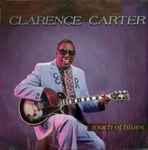
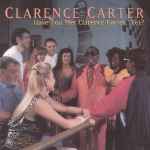
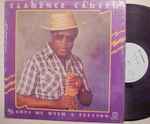
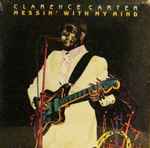


En la onda de Clarence Carter
Otros artistas afines, con vinilo.