André van Duin
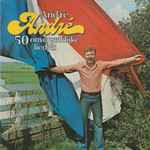
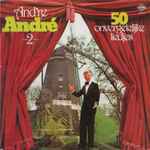
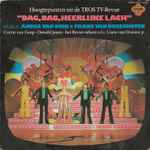
Adrianus Marinus Kyvon (né Kloot; 20 February 1947), known by his stage name André van Duin, is a Dutch comedian, singer-songwriter and television presenter. Van Duin is one of the Netherlands' best known entertainers, with a career spanning over six decades. Van Duin was born as Adrianus Kloot, but with "Kloot" being a Dutch slur, he took the name "André van Duin" instead, while his family officially changed their surname to "Kyvon". Van Duin grew up in Rotterdam, was interested in performing at a young age and developed an image as the class clown, partially due to his red hair. After primary school, he went to the LTS to become a machinist, but later worked as an office clerk and a warehouse employee. In 1962, fifteen-year-old Van Duin sent in several applications to the different public broadcasters in which he described his work and ambitions. Dear sirs, With this, I announce to you, that I am 15 years of age and that it is my ideal to become conferencier. I therefore ask you politely, if I am able to complete an ability test for your broadcaster. My repetoir consists amongst others of: conferences, songs, imitation, mimical expression with music and such. Waiting for your answer, I spend my time, Yours sincerely, André van Duin — Van Duin's application letter (English translation), KRO was one of the only two broadcasters to reply to Van Duin's letter, stating that they had been reading "his naughty little letter" with "great astonishment", adding that they highly doubted that Van Duin would be successful in his ambitions. Eventually, AVRO invited him to do a small performance on their youth radio show Minjon. In 1964, Van Duin achieved his great breakthrough. He entered AVRO's talent contest Nieuwe oogst, which purpose it was to showcase new musical talent to the Dutch public. Van Duin entered the show as recording parodist. During the first show, he playbacked to a self-made six-minute mixed recording of American and British hit songs, his own jokes and imitations of other artists, and hysterical laughter. Van Duin finished the act with imitating a chicken dance in a circle parodying "Surfin' Bird", which had been a hit the year before. Though Karel Prior commented that the performance was not "very original" and that Van Duin was entering a lane that was already occupied by Wim Sonneveld and Tom Manders, the performance however made a huge societal impact. Van Duin therefore eventually won the show, with 71 points, leaving a 13-point gap between himself and the runner-up. His prize was to perform his first single "Hé Hé, ik ben André" during the popular programme Zaterdagavondshow, hosted by father and daughter Willy and Willeke Alberti. Van Duin then became an apprentice of artists Theo Reggers and Huug Kok, who then formed the popular duo De Spelbrekers. In the latter half of the 1960s, Van Duin travelled along with the Snip en Snap Revue, where he learnt more about the revue theatre. Around the same time, Van Duin met Guus Verstraete jr. [nl], a Dutch television director. Together with Verstraete, Van Duin created his first own television show, titled Een avondje teevee met André, of which five episodes were broadcast. The show received a good critical response, with a Tubantia journalist called it "the highlight" of the Sunday evening television. After the good response to his first television show, theatre producer Joop van den Ende cast Van Duin for a revue production. Initially, Van Duin would play the straight man to Frans van Dusschoten [nl], but during the try-outs, Van den Ende decided that Van Duin was better suited to play the role of the everyman. Together with Ria Valk as the leading lady, Van Duin and Van Dusschoten toured with the revue 'n Lach in de ruimte in 1970. The revue received critical acclaim with a Nieuwsblad van het Noorden journalist stating that Van Duin could become a household name in the Dutch theatre world. In the theatre season of 1973–1974, Van Duin and Van Dusschoten toured the Netherlands with the revue programme Dag dag heerlijke lach, this time with Corrie van Gorp as the leading lady. While popular among the Dutch public, theatre and television critics branded the show as low culture. A televised version of the show won the Gouden Televizier-ring, the most important television prize as voted by the Dutch public. At the award ceremony of the Gouden Televizier-ring, Van Duin showed that he had pasted the critics' bad reviews onto a toilet roll and read them out loud in front of the press. A recording taken of that moment was restored and broadcast during the 2017 award ceremony of the ring. In 1972, André van Duin was asked by Radio Noordzee to host a weekly comedy show, which was first titled De Abominabele Top 2000. In that show, Van Duin parodied radio commercials and the Dutch stock office, but a segment with Van Duin's first real alter ego Dik Voormekaar became the most popular part of the show. After a few shows, Van Duin also started to involve his technician, Ferry de Groot, who played the alter ego of Mr. De Groot. After ten episodes, Van Duin and De Groot turned the show into the Dik Voormekaar Show, adding more characters to the broadcast too. However, after Van Duin and De Groot spoofed the board of Radio Noordzee, their show was taken off the air. Van Duin was fired. In 1974, Van Duin and De Groot signed a contract to continue the show on within NCRV's radio time on Hilversum 3. Until the show's end in 1985, the Dik Voormekaar Show received high listener ratings and was one of the most popular programmes on the Dutch radio. The show was also adapted to television between 1977 and 1979, with Van Duin and De Groot voicing puppet portrayals of their alter egos. An album dedicated to the show peaked at 8 in the Dutch album charts, and singles "Nee nou wordt ie mooi" and "Tingelingeling" reached top 10 places in the Dutch charts. In the 1970s, André van Duin frequently reached top chart positions with both comical songs and parodies of popular songs. Van Duin released his eponymous album in 1972, which reached No. 2 in the album charts. In 1974, Van Duin released "De tamme boerenzoon", which was a parody of Flemish Ivan Heylen's chart-topping single "De wilde boerndochtere". Van Duin's parody reached No. 2 in the single charts, behind the original, which held the top spot for several weeks. However, some of Van Duin's songs became more popular than the original version, which led to both praise from music critics and irritation from Dutch artists. In 1974, Van Duin's parody of Ramses Shaffy's "We Zullen Doorgaan", titled "Doorgaan", reached the top 10 in the charts, something the original had not managed. In 1980, Willy Alberti sang an ode to the abdicating Queen Juliana of the Netherlands, which was parodied by Van Duin in an answer song, in which Van Duin imitated Prince Bernhard of Lippe-Biesterfeld. Van Duin furthermore developed himself in the genre of carnavalskraker, a throwaway comic song with mass appeal often played at the caranaval parades in the Netherlands and Flanders. This resulted in his first chart-topping single, "Willempie", in 1976, which stirred controversy for his depiction of a retarded man. Van Duin had one more chart-topping carnavalskraker in the 1970s: "'k Heb hele grote bloemkoole", which he released as his alter ego Mr. De Bok. André van Duin also had success with more serious music and released two albums dedicated to a more serious image: And're André in 1977 and And're André 2 in 1978. In the 1970s, Van Duin also played roles in films and series on television. He debuted as an actor in Oebele in 1971. Van Duin played the lead role of Koos Overwater in Hotel de Botel, which served as the Dutch adaptation of Fawlty Towers in autumn 1976. André van Duin was the main presenter and commentator on Te land, ter zee en in de lucht from 1977 to 1979. In 1981, Van Duin became the central figure of his first motion picture comedy Ik ben Joep Meloen [nl], in which he
Discografía en vinilo
Ordenada por relevancia (lo más escuchado primero).









En la onda de André van Duin
Otros artistas afines, con vinilo.