Ed Bickert
Edward Isaac Bickert, CM (November 29, 1932 – February 28, 2019) was a Canadian guitarist who played mainstream jazz and swing music. Bickert worked professionally from the mid-1950s to 2000, mainly in the Toronto area. His international reputation grew steadily from the mid-1970s onward as he recorded albums both as a bandleader and as a backing musician for Paul Desmond, Rosemary Clooney, and other artists, with whom he toured in North America, Europe and Japan. Bickert was born in the small village of Hochfeld, Manitoba, a Plautdietsch-speaking community of Mennonites. His parents were Harry Bickert, a Russian Mennonite immigrant from Molotschna colony, and Helen Dyck of Plum Coulee, Manitoba. Bickert's parents were semi-professional musicians: his father played fiddle and his mother played piano. As a child, Bickert and his family moved to Vernon, British Columbia where his parents operated a chicken farm and had a small country dance band. When he was ten years old, Bickert started playing a guitar owned by his older brother, and he was soon performing at country dances with his parents. In his late teens, Bickert worked for a little over a year as a sound engineer at a local radio station near Vernon. In 1952, Bickert decided to move to Toronto with the thought of pursuing music as a career. Once in Toronto, he again took a job as a sound engineer at radio station CFRB to support himself. Bickert said of this period "I was really taken aback by the guitar players I heard [in Toronto]. I thought, 'Well, I'm not ready for this!' So I didn't play at all for a couple of years. I worked at CFRB as an engineer, and while I was doing that I gradually got a little fired up about music, met some musicians, played some sessions..." When saxophonist Jimmy Amaro Sr. offered Bickert a place in his band in 1955, Bickert felt confident enough to quit his radio job and try making music his career. By 1957, Bickert had joined two local jazz groups, one led by saxophonist Moe Koffman, the other by clarinetist Phil Nimmons. Bickert played on Koffman's North American hit record "Swinging Shepherd Blues", which made it to number 23 on Billboard's Top 40 chart during the spring of 1958. With Nimmons, he began appearing regularly on CBC radio broadcasts and on records released internationally by Verve Records and RCA. During this period, Bickert also joined the rhythm section of the Howard Cable Orchestra, which was featured on the "Showtime" program on CBC TV. By the end of the 1950s, Bickert was regularly working as a studio musician in Toronto, recording on commercial and jazz sessions. Bickert's commercial, radio, and television work increased through the 1960s, though he also continued to play jazz gigs at night. During these years, Bickert first worked with Rob McConnell and many of the Toronto jazz musicians who later became the core of McConnell's Boss Brass big band. The Boss Brass was a part-time band led by McConnell for more than thirty years. The group was first organized in 1968 to record instrumental pop music for radio broadcast and the easy listening LP market, in the wake of the success of Herb Alpert's Tijuana Brass group. By 1976, the Boss Brass had added a saxophone section and had evolved into a contemporary jazz big band that played occasionally in Canadian jazz clubs and festivals. Bickert played and recorded with the group until 1998, appearing on more than 15 of the group's jazz-focused albums, and on most of the group's early commercial sessions as well. During the 1970s Bickert also continued to play in Moe Koffman's group, and Koffman himself was a fellow member of the Boss Brass during the 1970s and 1980s. The rhythm section of Rob McConnell's Boss Brass—bassist Don Thompson, and drummer Terry Clarke—were frequent partners with Bickert at jazz gigs in Toronto in the early 1970s. By the mid-1970s, the trio of Bickert, Thompson, and Clarke was serving as the house band at Toronto's Bourbon Street nightclub, where visiting American jazz musicians would employ the group for extended engagements. In June, 1974, alto saxophonist Paul Desmond of the Dave Brubeck Quartet played a two-week engagement at the club with Bickert, Thompson, and Clarke. Desmond liked the Canadian musicians so much that he booked two more engagements for the following year. In September, 1974, Desmond brought Bickert to the United States to record the studio album Pure Desmond, which featured Bickert and Desmond in a quartet setting with Ron Carter and Connie Kay. This was Bickert's first major appearance playing jazz on a U.S. record label in over a decade, and it served as a showcase for Bickert's guitar playing. “I consider it Ed’s album, really,” Desmond told writer Gene Lees for the album's liner notes. For his 1975 Bourbon Street engagements, Desmond hired drummer Jerry Fuller in place of Clarke, and started calling the band his "Canadian Group". Three live recordings by Desmond featuring Bickert, Thompson, and Fuller were issued from recordings made during 1975 at Bourbon Street. (In 2020, these were included as part of a 7-CD boxed set of Desmond's 1975 Toronto recordings that was released by Mosaic Records.) In September, 1976, Bickert played for the last time with Desmond at shows in San Francisco and Monterey, California. At this time, Desmond was fighting lymphatic cancer, and the saxophonist died of the disease in May, 1977. In addition to Desmond, Bickert accompanied Zoot Sims, Art Farmer, Milt Jackson, Red Norvo, Frank Rosolino, and Kenny Wheeler, among others, at Bourbon Street from the mid-1970s to 1984, when the club changed its booking policy and stopped hiring touring jazz stars. In 1975, Bickert recorded his first solo album, a live trio recording with Don Thompson and Terry Clarke. The same group recorded a studio album in 1976, Out of the Past, which was unreleased until 2006. In 2019, Terry Clarke explained to journalist and music producer Bill King how The Ed Bickert Trio was organized: "We were playing with Moe Koffman and Mr. Ed was kind of languishing in a super sideman world, and Don Thompson and I went downtown to Bourbon Street one night and we had decided between the two of us we were going to make Ed the leader, and we were going to be part of the Ed Bickert Trio. We cornered him on a break and told him he was going to be the leader, and we would organize everything. The trio didn’t exist until we forced him to do it. That’s when we decided to record whenever we did and recorded live at George’s and a lot of CBC stuff too at Studio 4S." Don Thompson made much the same point to Toronto Globe and Mail writer J.D. Considine in 2012, saying "He's not an aggressive guy....He was a reluctant bandleader." With Thompson, Bickert also recorded duo albums in 1978 and 1980 (with Thompson appearing on piano for the latter). The Ed Bickert Trio served as the rhythm section on live and studio albums recorded in Toronto by Frank Rosolino, Ruby Braff, Buddy Tate, and Humphrey Littleton. As his solo jazz career blossomed in the mid-to-late-1970s, Bickert's commercial studio career in Toronto slowed down, which the guitarist attributed to his lack of interest in contemporary pop and rock guitar styles. He called the gradual phase out of his commercial work a "mutual parting", though he continued to take occasional commercial studio jobs when he felt like the music was a good fit for his style of playing. During Bickert's career, most of his work was performing as a backing musician in the Toronto area (working in both live appearances and recording studio jobs). While Bickert did regularly record records as a leader or co-leader from 1975 to 1999, he did not pursue a career as a touring bandleader. Bickert did occasionally do short tours outside of Canada as a member The Concord All-Stars, The Canadian All-Stars, and in the groups of Paul Desmond, Milt Jackson, Rosemary Clooney, and Rob McConnell, appearing in the United States, Europe, and Japan. By
Discografía en vinilo
Ordenada por relevancia (lo más escuchado primero).
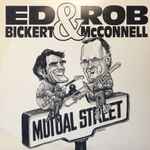
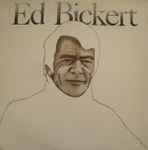
En la onda de Ed Bickert
Otros artistas afines, con vinilo.