Gerome Ragni
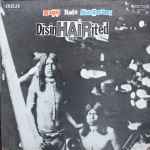
Gerome Ragni (born Jerome Bernard Ragni; September 11, 1935 – July 10, 1991) was an American actor, singer, and songwriter, best known as one of the stars and co-writers of the 1967 musical Hair. On June 18, 2009, he was inducted into the Songwriters Hall of Fame. Born Jerome Bernard Ragni in Pittsburgh, Pennsylvania, he was one of ten Italian-American siblings. He attended suburban Scott Township High School, where he appeared in various school productions. He attended Georgetown University and The Catholic University of America. At Catholic University, he discovered an interest in theater, and began studying acting with Philip Burton. Ragni made his acting debut in Washington, D.C. in 1954, playing Father Corr in Shadow and Substance. He continued to act whenever he could find work. In 1963, he appeared in the New York production of War at the Village South Theatre, for which he won the Barter Theatre Award for Outstanding Actor. In 1954, Ragni made his professional stage debut in a Washington D.C. production, Shadow and Substance. In 1964, he was an understudy for the role of Horatio at the Lunt-Fontanne Theatre in the Broadway production of Hamlet, starring Richard Burton. He then appeared as the Messenger (uncredited) in Richard Burton's Hamlet, the film version of the production, released by Warner Bros. in 1964. That same year, Ragni made his first Off-Broadway appearance in New York City in the anti-capital punishment musical Hang Down Your Head and Die at the Mayfair Theatre on October 18 with James Rado, a fellow actor and friend who was studying with Lee Strasberg. Hang Down Your Head and Die was a success in London. It was first produced in the UK by the Oxford University Experimental Theatre Club in 1964; two cast members and writers were students Terry Jones and Michael Palin, who would later achieve fame as members of the Monty Python comedy troupe. It then moved from Oxford to the Comedy Theatre in London's West End, was well-received and ran six weeks. But when it moved to New York the musical only had one performance, opening and closing on October 18, 1964. Theater critic Howard Taubman wrote in The New York Times, "Death by hanging is swift, but Hang Down Your Head and Die makes a long evening of it... After a while, one feels as if one were being bludgeoned." In 1965, Ragni performed in the role of Tom in The Knack, the play that opened at the New Theatre, and later appeared in the touring company along with Rado. During the show's Chicago run at the Harper Theater, Rado and Ragni tried to revive Hang Down Your Head and Die with what they could remember from the script. They also planned to introduce new material in collaboration with Corky Siegel and Jim Schwall, of the Siegel-Schwall Band, whom they met playing in a beatnik coffee house off the Harper Street strip. They spent time writing ideas for the production, which was to be performed by Rado, Ragni, Schwall, and Siegel in a house on the South Side of Chicago and an apartment on Stony Island Avenue. Rado and Ragni rented the Harper Theatre to put on the production. After two weeks of working on the production, The Knack company went back to New York and Ragni and Rado had to abandon their plans to revive Hang Down Your Head and Die with Siegel and Schwall. Ragni had been involved with The Open Theater since it was begun as part of the Living Theatre in 1962. In 1966, Open Theatre began rehearsals for the Megan Terry play Viet Rock. Ragni took a leading role in the show, which opened at the Martinique Theatre in New York and had a successful run. Viet Rock and experimental theatre inspired Ragni to work with Rado on a musical about hippie culture. As research, they associated with a group of youths in the East Village who were dropping out and dodging the draft. They talked to people in the streets and people they knew, and read articles about hippie culture and youths being kicked out of school for growing their hair long. They wrote lyrics to thirteen songs ("Ain't Got No", "I Got Life", "Reading and Writing", "Don't Put It Down", "Sodomy", "Colored Spade", "Manchester, England", "Frank Mills", "We Look at One Another", "Hair", "Aquarius", "Easy to Be Hard", "Good Morning Starshine" and "Where Do I Go?"), and completed the first version of their musical, called Hair. Two of the thirteen songs were removed, many songs were revised, titles were changed, and more songs were written as they continued to work on the show. Once they agreed on a draft, Ragni and Rado brought the idea to producer Nat Shapiro for consideration. He responded to the songs by asking, "Where's the music?" Shapiro introduced Ragni and Rado to composer Galt MacDermot, who took the script and returned three weeks later with music for the songs Ragni and Rado had written. Their agent, Janet Roberts, tried to sell the show to Broadway producers, but it was rejected. Joseph Papp, of the New York Shakespeare Festival, called to say he wanted to produce it at his new theatre on Lafayette Street. Gerald Freedman was artistic director for the theater and signed on to direct the first production of Hair. On October 29, 1967, Hair opened at The Public Theater with Ragni as Berger, MacDermot as a cop who busts the show at the end of the first act, and Rado as Claude. Michael Butler attended the opening night and subsequent performances, and was dissatisfied when Rado did not regularly play Claude, as he felt Rado had a natural affinity for the part.[citation needed] Butler became interested in moving the show to Broadway. He bought the rights from Papp for $50,000 and began planning a grander production directed by Tom O'Horgan, who Ragni knew from off-Broadway. In the meantime, the show moved to a nightclub in Midtown, called Cheetah, where it had a month-long run. When O'Horgan signed on, the show hired choreographer Julie Arenal, assistant to Anna Sokolow, who had choreographed the Public Theater run. On April 29, 1968, the show re-opened in its revised form at the Biltmore Theatre on Broadway. Rado and Ragni reprised their roles from the off-Broadway production, and MacDermot was the musical director. The songs became hit singles for MacDermot, Liza Minnelli, Nelson Riddle, The Staples Singers, Quincy Jones, Three Dog Night, The Cowsills, Madeline Bell, Paul Jones, Sonja Kristina, The 5th Dimension, Oliver, Caterina Valente, and Barbra Streisand. The Broadway cast Hair album, released on RCA Records, topped the US billboard charts for a year. The 1970 album DisinHAIRited was then released with songs that were cut from the revised production.[citation needed] The Broadway production was a traumatic experience for Ragni. He became wealthy, his marriage broke up, and he became disengaged from mainstream society. He joined a cult and contributed money to the Black Panther Party and the Yippies. Following the Broadway production, Ragni and Rado went to Los Angeles and played their original roles in a production of Hair for five months, making changes to the show as they performed. When they returned to the Broadway production, Ragni's practice of spontaneously changing the show became a nuisance. In one incident, Ragni and Rado were arrested after walking nude down the aisle during a performance. At another time, there were guards outside the theatre who barred Ragni and Rado from entering. When the conflict was resolved, all Ragni's changes were written into the script and Ragni and Rado rejoined the show. Soon afterwards, Ragni joined the touring company, playing Berger in many cities.[citation needed] In 1969, shortly after Hair's success, Ragni, Rado, and Viva, the Andy Warhol superstar, made the movie Lions Love, directed by Agnès Varda and made in Los Angeles. The film depicts the three stars, supposedly living together in Los Angeles while waiting for a film to start shooting. Lions Love is one of the best film records of Rado and Ragni. They did not appear in the 1979 film version of Hair, which was
Discografía en vinilo
Ordenada por relevancia (lo más escuchado primero).
En la onda de Gerome Ragni
Otros artistas afines, con vinilo.