
John Howard (70s UK singer/songwriter, later A&R)
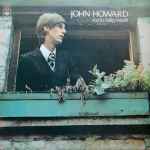
John Howard (born Howard Michael Jones; 9 April 1953) is an English singer-songwriter, pianist and recording artist and published author. With his February 1975 debut album Kid in a Big World (CBS Records), Howard emerged as a late voice of the glam-pop wave of the early 1970s. Across a musical career that has included two main periods of recording activity – 1974-84 and 2004–present – Howard has released 21 studio albums and 12 studio EPs. In March 2018, he became a published author, his first autobiography, Incidents Crowded With Life, covering his childhood up to 1976, was published by Fisher King Publishing. In August 2020, the second volume of his autobiography, Illusions of Happiness, covering the years 1976 - 1986, was published by Fisher King Publishing. In February 2022, the third volume of his autobiography, In The Eyeline of Furtherance, covering 1986 to 2001, was published by Fisher King Publishing. In September 2023, Howard's first novel, Across My Dreams With Nets of Wonder, was published by Fisher King Publishing. John Howard was born Howard Michael Jones in Bury, a market town in North West England which historically is part of Lancashire and administratively is within Greater Manchester. Having started playing the piano at the age of four years, Howard began classical training at seven. He attended St. Gabriel's Roman Catholic High School in Bury, and in 1969 enrolled at the Accrington College of Art. Starting in March 1970 and continuing for the next three years, Howard – having adopted the professional moniker "Jon Howard" – played his own songs at universities and folk clubs, and at the Octagon Theatre in Bolton. At the Octagon, Howard often played support for the folk/progressive rock band Spirogyra. The band at the time was managed by Howard's contemporary, Max Hole, who later, as an A&R manager at WEA Records U.K. in the early 1980s, went on to sign Howard Jones, whose birth name – ironically – is John Howard Jones. Hole went on to serve as chief operating officer of Universal Music Group International. Shortly after moving to London in August 1973, Howard was playing at the Troubadour folk club, when he was spotted by Norman "Hurricane" Smith's manager Stuart Reid, who was the head of pop at Chappell Music. Reid signed Howard to a management contract – changing "Jon" to "John," in the process – and Howard signed with CBS at the end of that year. Kid in a Big World (1975) was the first of three albums that Howard recorded for CBS in 1974 and 1975. The album – recorded at Abbey Road and Apple Studios – was produced by ex-Shadows drummer Tony Meehan and Paul Phillips. Session players included founding Zombies and Argent keyboardist Rod Argent and founding Argent drummer Bob Henrit. CBS initially put considerable resources behind its new artist – promoting Howard's debut album with a major print advertising campaign, life-sized cardboard cutouts of Howard at record shops, and a launch concert for recording industry executives and press at the Purcell Room in London's Southbank Centre. But BBC Radio 1 refused to play the first single, "Goodbye Suzie," calling it "too depressing," and also passed on the second single, "Family Man," calling it "anti-woman." Following his debut album release in February 1975, Howard recorded two more albums of material for CBS that year. His second album – Technicolour Biography (recorded 1974 and 1975), produced by Paul Phillips – was a collection of songs in a vein similar to those on Kid in a Big World. Indeed, the songs on both of Howard's first two albums were among the group of songs, written between 1970 and 1973, that led CBS to sign Howard in late 1973. But after BBC Radio 1's rejection of the two singles from the debut album, CBS balked at this new set and shelved the project, with the songs never being developed beyond the initial "vocals and piano" demonstrations. At this point, CBS, anxious for a hit, paired Howard with Biddu, a producer best known for his pioneering work in disco. Howard set about writing a new collection of songs, and the result was his third album, Can You Hear Me OK? (recorded 1975). CBS's promotion of the only single, "I Got My Lady," from that fully produced third album included Howard's only live television appearance – on a December 1975 episode of the BBC television program The Musical Time Machine, which ran from 1975 to 1977. Also appearing on that episode were Johnny Mathis and Lynsey de Paul. In his first autobiography, "Incidents Crowded With Life", he writes about this appearance Howard recalls that he was greeted by a beaming Lynsey De Paul "Brilliant", she said, "I watched you on my monitor! Such a pro!” "Lovely, John", Patsy, my manager's wife, said, squeezing my arm, "and not a head move anywhere!” "Aren’t you allowed to move your head?” Lynsey asked conspiratorially. "Not if you’re a male performer on a BBC show, apparently", I replied. "Have you seen the dancers on this show?” she laughed. "Try telling them that!” But when the single did not chart as well as CBS had hoped, CBS shelved that album too. Having failed to find an audience for Howard's music, CBS ultimately released only the first "installment" of Howard's first three albums – sometimes now referred to as the "Kid trilogy." Howard left the label in early 1976. Stephen Thomas Erlewine called this sequence of events one of the most extreme of examples of Murphy's Law in record company history." Many years later, Howard's mentor Paul Phillips – who at the time was Howard's producer and A&R manager at CBS – had a more specific explanation. Phillips told Howard that his difficulty in getting radio airplay was due primarily to homophobia in the recording industry. Howard, who is gay, presented a louche and effete image at a time – the early 1970s – when, despite the shattering of gender stereotypes that was being heralded by the emergence of glam and disco, record label executives and radio programmers still often expected gay male artists to conform to traditional ideals of masculinity and to keep their sexuality to themselves. Howard wrote about his experience of this dynamic in his 2007 song, "My Beautiful Days." After leaving CBS, Howard spent a brief time playing London's fashionable restaurants and piano bars – including a regular stint, for several months in 1976, at April Ashley's AD8 club. In late 1976, Howard suffered a fall in which he broke his back and feet. But after a period of recuperation and recovery, he resumed recording and released a number of singles over the next several years. Howard's work with the producer Trevor Horn in 1977 and 1978 resulted in two 7" singles – "I Can Breathe Again"/"You Take My Breath Away" (Ariola, 1978) and "Don't Shine Your Light"/"Baby Go Now" (SRT, 1979) – that were among Horn's earliest commercially released production credits. And a brief return to CBS in late 1979 led to two more 7" singles – "I Tune into You"/"Gotta New Toy" and "Lonely I, Lonely Me"/"Gotta New Toy (remix) – both released in 1980. In 1981 – the year before Culture Club released its debut album, Kissing to Be Clever – Howard teamed up with Culture Club producer Steve Levine, a collaboration that resulted in another two 7" singles, "It's You I Want"/"Searching for Someone" and "And the World"/"Call on You." But by the mid-1980s, Howard had stopped recording and moved to the business side of music, where he forged a successful career in A&R for fifteen years, before "retiring" to Pembrokeshire, Wales, in 2000. Among the artists Howard worked with during this period were: Elkie Brooks, Maria Friedman, Connie Francis, Hazell Dean, Sonia, Gary Glitter, The Crickets, Lonnie Donegan, Madness, Barry Manilow and Sir Tim Rice. Howard did record one album during this period, The Pros and Cons of Passion. The album – a collection of Howard originals and covers of songs by George Harrison, Brian Wilson, k.d. lang, Stephen Sondheim, Lou Reed, Neil Young, Paul McCartney and Janet
Discografía en vinilo
Ordenada por relevancia (lo más escuchado primero).
En la onda de John Howard
Otros artistas afines, con vinilo.