Ian Moss
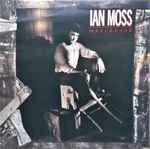
Ian Richard Moss (born 20 March 1955) is an Australian rock musician from Alice Springs. He is the founding mainstay guitarist and occasional singer of Cold Chisel. In that group's initial eleven year phase from 1973 to 1984, Moss was recorded on all five studio albums, three of which reached number one on the national Kent Music Report Albums Chart. In August 1989 he released his debut solo album, Matchbook, which peaked at number one on the ARIA Albums Chart. It was preceded by his debut single, "Tucker's Daughter", which reached number two on the related ARIA Singles Chart in March. The track was co-written by Moss with Don Walker, also from Cold Chisel. Moss had another top ten hit with "Telephone Booth" in June 1989. At the ARIA Music Awards of 1990 Moss won five categories: Album of the Year, Best Male Artist, Breakthrough Artist – Album, Single of the Year and Breakthrough Artist – Single. Since then his solo music career has been more low-key, his other top 50 albums are Worlds Away (November 1991), Let's All Get Together (July 2007) and Soul on West 53rd (November 2009). In 1993 Cold Chisel, with Moss as a member, were inducted into the ARIA Hall of Fame. Moss has participated with periodic Cold Chisel reunion tours or new studio albums in 1998, 2003 and from 2009 to 2012 (as from August 2013). Ian Richard Moss was born on 20 March 1955 in Alice Springs, Northern Territory, to Geoffery Moss (18 April 1911 – 1989) and Lorna (née Robinson) (born ca. 1922). During World War II Geoffery survived the 1942 bombing of Darwin, he enlisted in the army and later worked for the Allied Works Council in Alice Springs. Lorna was a fellow employee at Allied Works Council when they married in September 1945. Moss has an older brother, Peter Geoffrey Moss (born 8 October 1948), an older sister, Penny (born 30 July 1951), and a younger brother, Andrew (born July 13 1961). When Moss was four years old he performed for his family and friends and at nine, sang "The Battle of New Orleans" at a school concert. He later recalled "I was always keen on music and singing. I used to do little vocal concerts for my parents". Moss initially took piano lessons but switched to guitar at age 11: "My older sister was learning classical piano and my older brother was a good rhythm strummer and right into Bob Dylan. I started off with classical piano aged about 7 or 8, but unfortunately wasn't into it enough". In 1969 he joined a local band, Seen, which included drummer Rod Martin and two brothers, Robert and John Fortunaso. Moss played rhythm guitar by plugging an acoustic guitar into the bass player's amplifier. Seen played at local centres and organised their own dances. Moss sang a couple of songs with the group and a year later, he bought an electric guitar to replace his acoustic. Moss recalled, "I was with them for about a year and by that time I was starting to get my own band happening". The following year he formed Hot Ice with Roger Harris – guitar, David Michel – drums, Wayne Sanderson – Bass and Paul Wiles – keyboards. The group debuted in front of the whole school at the Alice Springs High School regular Friday assembly which took place in the Alice Springs Youth Centre with cover versions of Creedence Clearwater Revival's "Proud Mary" and "Who'll Stop the Rain". Thereafter they regularly played at the Youth Centre Saturday night dances. In 1972, Moss relocated to Adelaide – where his older siblings had already moved. Moss had failed a year of high school and decided to repeat at Marion High School. In 1973 he started an Electronics course at Kilkenny Technical College but "lasted one term there ... totally daydreaming the whole time", he left and worked in various factory jobs. In September 1973, Moss, on guitar and lead vocals, formed a rock group, Orange, in Adelaide with Don Walker, a songwriter and organist, and Leszek Kaczmarek on bass guitar. Within months the line-up included Steve Prestwich on drums and Jimmy Barnes on lead vocals, and they were renamed, Cold Chisel. The group's early line-up was volatile with Barnes, Prestwich and Walker all leaving and returning at various times. In 1975 Kaczmarek was replaced on bass guitar by Phil Small. Moss's main role was as lead guitarist, although he would frequently take over lead vocals when Barnes was out of the band. After periods spent in Adelaide, Armidale and Melbourne, Cold Chisel eventually settled in Sydney in mid-1977 and signed a recording contract with WEA late that year. Early the following year they recorded their self-titled debut album, which appeared in April. Moss supplied lead vocals for two tracks, "One Long Day" and "Rosaline". Moss's vocals feature on some of the band's best known songs, including the singles "My Baby" (August 1980), "When the War Is Over" (1982), and "Saturday Night" (March 1984) and on Circus Animals (March 1982) album track, "Bow River". Moss wrote "Bow River" about a cattle station in the Kimberley region of Western Australia where his brother, Peter, had once worked; it has since become Moss's signature tune. It was also the B-side of "Forever Now", which was released in the same month as the album. Moss sang lead on the group's version of "Georgia On My Mind" which became a staple of their live shows, although their only recording is on the 1984 live album, Barking Spiders Live: 1983. Their fifth studio album, Twentieth Century, was issued in April 1984 with two tracks, "Saturday Night" and "Janelle", featuring Moss on lead vocals. However the group had disbanded as Barnes was keen to begin his solo career. During Cold Chisel's first phase, Moss gained status as a songwriter, contributing "Never Before" for East (June 1980), the track was the first one aired by national radio station Triple J when it switched from AM to FM in 1980. Another Moss-written track is "No Good for You" on Circus Animals. He also worked as a session musician for other artists, including playing a guitar solo on the track "Skin" from the album Icehouse (October 1980) by Sydney new wave band Flowers and an appearance on Richard Clapton's The Great Escape (March 1982), which also featured Barnes. After Cold Chisel disbanded, Ian Moss took a break from the music industry before launching his solo career in October 1986. His first backing band consisted of Andy Cowan on keyboards (ex-Madder Lake, Ayers Rock, Kevin Borich Express), Joe Imbroll on bass guitar (ex-Goanna) and John Watson on drums (ex-Kevin Borich Express, Australian Crawl). By April the following year the line-up was Watson, Joe Creighton on bass guitar (ex-Melissa, Billy T) and Peter Walker on guitar and synthesiser (ex-Bakery) – Walker had also produced Cold Chisel's debut album in 1978. During 1988 Moss worked in Los Angeles for nine months preparing material for his debut album, Matchbook. In November 1988, Moss released his debut single, "Tucker's Daughter" which peaked at number two on the ARIA Singles Chart and number six on the New Zealand Singles Chart. Moss's second single, "Telephone Booth", was issued in June-1989 and reached number seven on the ARIA Singles Chart, and top 30 in New Zealand. Matchbook, followed in August, which reached number one on the ARIA Albums Chart, it remained at the peak spot for three weeks and sold more than 200,000 copies. In New Zealand it reached the top 20 on the albums chart. Matchbook was produced by Moss and Lord-Alge; it was dedicated "in loving memory of Geoff Moss 1911–1989". Australian musicologist, Ian McFarlane, found the album displayed Moss's "exemplary, controlled guitar technique, but also highlighted his soulful voice ... [he] handled all lead vocals with considerable style and authority". Two further singles, "Out of the Fire" and "Mr. Rain" were released from the album and both charted on the Australian top 100. At the ARIA Music Awards of 1990 Moss won five categories Album of the Year, Best Male Artist and Breakthrough Artist – Album for Matchbook; and Single of the
Discografía en vinilo
Ordenada por relevancia (lo más escuchado primero).
En la onda de Ian Moss
Otros artistas afines, con vinilo.