Kevin Coyne
Kevin Coyne (27 January 1944 – 2 December 2004) was an English musician, singer, composer, film-maker, and a writer of lyrics, stories and poems. He was critically acclaimed for his unorthodox style of blues-influenced guitar composition, the intense quality of his vocal delivery, and his lyrics describing injustice to the mentally ill. Musicians who have described themselves as Coyne fans include Sting and John Lydon. In the mid-1970s, prior to the formation of the Police, Coyne's band included guitarist Andy Summers. BBC disc jockey Andy Kershaw described Coyne as "a national treasure who keeps getting better" and as one of the great British blues voices. Over many years Coyne produced the art work for many of his own album covers. His move to Germany, in the 1980s, saw his work on full-size paintings blossom in its own right. Coyne was born in Derby, Derbyshire, England. As a teenager and young adult Coyne studied at the Joseph Wright School of Art from 1957 to 1961 and then studied graphics and painting at Derby School of Art from 1961 to 1965. There he met Nick Cudworth (piano, acoustic guitar). His love of American bluesmen developed, as did his song-craft and his guitar and vocal talents. At the conclusion of his arts training, Coyne began the work that would change him forever – he spent 1965 to 1968 working as a social therapist and psychiatric nurse at Whittingham Hospital near Preston in Lancashire and then for "The Soho Project" in London as a drugs counsellor. During this period of working with the mentally ill he performed regularly. Subsequently, his musical aspirations took precedence and he signed a record deal in 1969. Joined by Dave Clague (bass, acoustic guitar, ex-Bonzo Dog Doo-Dah Band), Coyne's band got an early break as a result of a demo heard by John Peel, who in 1969 signed them to his Dandelion Records label. At first billed as Coyne-Clague (an early Dandelion release erroneously named them just "Clague"), the band soon altered its name to Siren. Reviewing the band's 1971 LP Strange Locomotion, Robert Christgau wrote in Christgau's Record Guide: Rock Albums of the Seventies (1981): "Like Fleetwood Mac, this is British blues that neither chokes on false roots nor enmires itself in boogie reductionism. Kevin Coyne's humorously belligerent drawl embodies the band's wit and its punk chauvinism. Mistake: 'Fetch Me My Woman,' which (second mistake) goes on for 7:40." In 1973 he appeared on the BBC's The Old Grey Whistle Test, performing "I Want My Crown" and "House on the Hill" with guitarist Gordon Smith and percussionist Chilli Charles. In 1975 Coyne and his band performed at the alternative festival held to protest against the Eurovision Song Contest 1975 in Stockholm; footage from the concert was later released as the 1976 film Musikfilmen. In late 1975 and 1976 Coyne completed the musical England, England, written with playwright Snoo Wilson, and described as "an evocation of the Kray twins". The musical, directed by Dusty Hughes, was performed in August 1977 at the Jeannetta Cochrane Theatre, in Holborn, London. It drew attention to the associations between fascism and the type of British nationalism that later saw the rise of the National Front and the election of Margaret Thatcher. From 18 August to 24 September 1977 it played at the Bush Theatre in Shepherd's Bush. In 1978 Coyne collaborated with fellow Derby Art School graduate Ian Breakwell to produce the film The Institution based on Breakwell's Artist Placement Group work at Rampton Secure Hospital in Nottinghamshire. Early in his career, Coyne turned down a meeting with founder of Elektra Records Jac Holzman (Coyne's band Siren were on Elektra in America) to discuss replacing Jim Morrison in the Doors. "I didn't like the leather trousers!" was Coynes' alleged reason. Coyne's first solo album, mainly with only his voice and guitar, was Case History (1972), released on Peel's Dandelion label. It was not a success, but it was noticed by Virgin Records, which signed Coyne and released his 1973 album Marjory Razorblade. The single "Marlene" (b/w "Everybody Says"), taken from the album and released in August 1973, was the first Virgin single. Coyne was the second artist signed to Virgin Records, after Mike Oldfield. Coyne got on well with label-mates such as John Lydon, who played "Eastbourne Ladies" on a Desert Island Discs–type show, and the Mekons, who recorded his "Having a Party", an attack on Richard Branson. Described as being musically "... a mixture of blues and music hall comedy, with a punk edge", the 1973 album contained many notable songs, such as "Eastbourne Ladies" and "House on the Hill" about life in a psychiatric institution. It was the record that established Coyne's reputation. In 1976 Coyne released the live album In Living Black and White that included Zoot Money, Andy Summers, Steve Thompson and Peter Woolf. Culled from three shows, it featured a cover of Bob Dylan's "Knocking on Heaven's Door". Released in 1979, the album Babble, by Coyne and singer Dagmar Krause, was subtitled "Songs for Lonely Lovers", with Q magazine noting that Coyne's and Krause's voices "complement each other so well (...) the song functions as a kind of exchange." The subsequent tour courted controversy when Coyne suggested, in the theatre presentation of the piece, that the destructive relationship between the two lovers could have been based on the Moors murderers. Two performances at the Theatre Royal in Stratford, London were cancelled at short notice by Newham Council following negative press reports in The Sun and the Evening Standard. The show was eventually staged, for four nights, at the Oval House in Kennington. Reviewing the show for the NME, Paul Du Noyer wrote: "Babble" is a particularly thorough, painstaking exploration of the reality of one relationship, stripped of romance and artifice. The format employed is correspondingly stark. Against a stage-set of light-bulb, table and chairs Coyne and his partner Dagmar Krause stand at either side; the only accompaniment comes from Bob Ward and Brian Godding, playing electric and acoustic guitar in the gloom behind. American singer/songwriter Will Oldham claimed that the Babble album had "changed my life" and he recorded two of the songs himself. Oldham also went on to form a side project called The Babblers – who strictly played covers of songs from Babble. Extracts from a performance of Babble, in Berlin, were included in the short German film Herz Aus Feuer (1979) by Claudia Strauven and Wolfgang Kraesze. The album Politicz, featuring Peter Kirtley on guitar and Steve Bull on keyboards, was released in 1982. AllMusic's reviewer Dean McFarlane described the album as "One of the British singer/songwriter's more outwardly experimental records, this album contains some of his most intimate work, deeply personal songs and techniques which were taking him further and further away from tradition... strictly a post-punk album with a humorous political agenda". The same year, Coyne appeared in concert with his band (Peter Kirtley (guitar), Steve Lamb (bass), Steve Bull (keyboards) and Dave Wilson(drums)) live in front of the Berlin Wall at the Tempodrom. The concert was later issued on the 2008 DVD At the Last Wall (Dockland Productions, Meyer Records). Following a nervous breakdown and increasing difficulties with drink, Coyne left the UK in 1985. He settled in Nuremberg, West Germany and having given up alcohol, never stopped recording and touring, as well as writing books and exhibiting his paintings. Coyne's move to Germany saw his writing and painting career blossom. He published four books, two of which, Showbusiness and Party Dress, were published by Serpent's Tail in London. There were numerous exhibitions of his visual work throughout Europe. Those in Berlin, Amsterdam and Zürich were well reviewed and attended. In the late 1980s Coyne acted on stage, playing the small part of a rock star in Linie Eins (Line
Discografía en vinilo
Ordenada por relevancia (lo más escuchado primero).
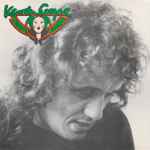
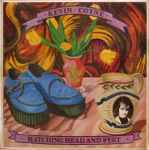

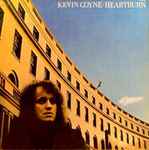
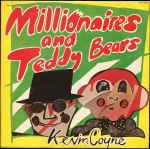
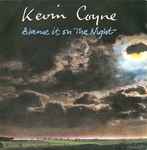
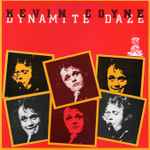


En la onda de Kevin Coyne
Otros artistas afines, con vinilo.