Earl Hooker
Earl Zebedee Hooker (January 15, 1930 – April 21, 1970) was a Chicago blues guitarist known for his slide guitar playing. Considered a "musician's musician", he performed with blues artists such as Sonny Boy Williamson II, Junior Wells, and John Lee Hooker and fronted his own bands. An early player of the electric guitar, Hooker was influenced by the modern urban styles of T-Bone Walker and Robert Nighthawk. He recorded several singles and albums as a bandleader and with other well-known artists. His "Blue Guitar", a slide guitar instrumental single, was popular in the Chicago area and was later overdubbed with vocals by Muddy Waters as "You Shook Me". In the late 1960s, Hooker began performing on the college and concert circuit and had several recording contracts. Just as his career was on an upswing, he died in 1970, at age 40, after a lifelong struggle with tuberculosis. His guitar playing has been acknowledged by many of his peers, including B. B. King, who commented, "to me he is the best of modern guitarists. Period. With the slide he was the best. It was nobody else like him, he was just one of a kind". Hooker was born in rural Quitman County, Mississippi, outside of Clarksdale. In 1930, his parents moved the family to Chicago, during the Great Migration of blacks out of the rural South in the early 20th century. His family was musically inclined (John Lee Hooker was a cousin on his father side and Joe Hinton on his mother side), and Earl heard music played at home at an early age. About age ten, he started playing the guitar. He was self-taught and picked up what he could from those around him. He developed proficiency on the guitar but showed no interest in singing. He had pronounced stuttering, which afflicted him all his life. Hooker contracted tuberculosis when he was young. The disease did not become critical until the mid-1950s, but it required periodic hospitalizations which began at an early age. By 1942, when he was 12, Hooker was performing on Chicago street corners with childhood friends, including Bo Diddley. From the beginning, the blues was Hooker's favorite music. In this period, country-influenced blues was giving way to swing-influenced and jump blues styles, which often featured the electric guitar. In 1942, the popular guitarist T-Bone Walker began a three-month stint at the Rhumboogie Club in Chicago. He had considerable impact on Hooker, with both his playing and his showmanship. Walker's swing-influenced blues guitar, including "the jazzy way he would sometimes run the blues scales" and intricate chording, appealed to Hooker. Walker's stage dynamics, which included playing the guitar behind his neck and with his teeth, influenced Hooker's later stage act. Around this time, Hooker became friends with Robert Nighthawk, one of the first guitarists in Chicago to play the electric guitar. Nighthawk taught Hooker slide guitar techniques, including various tunings and his highly articulated approach, and was a lasting influence on Hooker's playing. Also around this time, Hooker met Junior Wells, another important figure in his career. The two were frequent street performers, and sometimes, to avoid foul weather (or truancy officers), they played in streetcars, riding from one line to another across Chicago. Around 1946, Hooker traveled to Helena, Arkansas, where he performed with Robert Nighthawk. When he was not booked with Nighthawk, he performed with Sonny Boy Williamson II, sometimes on Williamson's popular radio program, King Biscuit Time, on station KFFA, in Helena. Hooker toured the South as a member of Nighthawk's band for the next couple of years. This was his introduction to life as an itinerant blues musician (although he had earlier run away from home and spent time in the Mississippi Delta). In 1949, Hooker tried to establish himself in the music scene in Memphis, Tennessee, but was soon back on the road, fronting his own band. By the early 1950s he had returned to Chicago and was performing regularly in clubs. This set the pattern that he repeated for most of his life: extensive touring with various musicians interspersed with establishing himself in various cities before returning to the Chicago club scene. During this time, he formed a band with the blues drummer and vocalist Kansas City Red. In 1952, Hooker began recording for several independent record companies. His early singles were often credited to the vocalist he recorded with, although some instrumentals (and his occasional vocal) were issued in Hooker's name. Songs by Hooker and blues and R&B artists, including Johnny O'Neal, Little Sam Davis, Boyd Gilmore, Pinetop Perkins, the Dells, Arbee Stidham, Lorenzo Smith, and Harold Tidwell, were recorded for King, Rockin', Sun, Argo, Vee-Jay, States, United, and C.J. (several of these recordings, including all of the Sun sessions, were unissued at the time). The harmonica player Little Arthur Duncan often accompanied Hooker during this period. Among these early singles was Hooker's first recorded vocal performance, an interpretation of the blues classic "Black Angel Blues". His vocals were more than adequate but lacked the power usually associated with blues singers. Hooker's "Sweet Angel" (1953, Rockin' 513) was based on Nighthawk's "Black Angel Blues" (1949) and showed that "Hooker had by now transcended his teacher". (B. B. King later had a hit with his interpretation, "Sweet Little Angel", in 1956.) One of Hooker's most successful singles during this period was "Frog Hop", recorded in 1956 (Argo 5265), an upbeat instrumental in which the influence of T-Bone Walker's swing blues and chording techniques can be heard, but Hooker's own style is also apparent. Despite a major attack of tuberculosis in 1956, which required hospitalization, Hooker returned to performing in Chicago clubs and touring the South. By late 1959, Junior Wells had brought Hooker to the Chief–Profile–Age group of labels, with which he began one of the most fruitful periods of his recording career. Their first recording together, "Little by Little" (Profile 4011), was a hit the following year, reaching number 23 on the Billboard Hot R&B Sides chart. With this success and his rapport with Chief owner and producer Mel London, Hooker became Chief's house guitarist. From 1959 to 1963, he appeared on about forty Chief recordings, including singles for Wells, Lillian Offitt, Magic Sam, A.C. Reed, Ricky Allen, Reggie "Guitar" Boyd, Johnny "Big Moose" Walker, and Jackie Brenston, as well as singles on which Hooker was the featured artist. He performed for nearly all of Wells's releases, including "Come On in This House", "Messin' with the Kid", and "It Hurts Me Too", which remained in Wells's repertoire for the rest of his career. Hooker regularly performed with Wells for the latter part of 1960 and most of 1961. Hooker released several instrumentals for the Chief labels, including the slow blues "Calling All Blues" (Chief 7020) in 1960, which featured his slide guitar playing, and "Blues in D Natural" (Chief 7016), also in 1960, in which he switched between fretted and slide guitar. A chance taping before a recording session captured perhaps Hooker's best-known composition (although by a different title). During the warm-up preceding a session in May 1961, Hooker and his band played an impromptu slow blues featuring his slide guitar. The tune was played once, and Hooker was apparently not aware that it was being recorded. Producer Mel London saved the tape and, when looking for material to release the following spring, issued it as "Blue Guitar" (Age 29106). "Earl's song sold unusually well for an instrumental blues side", and Chicago-area bluesmen included it in their sets. Sensing greater commercial potential for Hooker's "Blue Guitar", Leonard Chess approached London about using it for the next Muddy Waters record. An agreement was reached, and in July 1962 Waters overdubbed a vocal (with lyrics by Willie Dixon) on Hooker's single. The
Discografía en vinilo
Ordenada por relevancia (lo más escuchado primero).

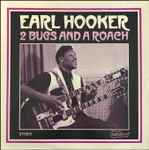
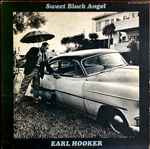

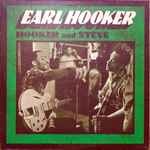
En la onda de Earl Hooker
Otros artistas afines, con vinilo.