Bruce Haack
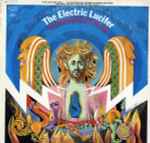
Bruce Clinton Haack (listen) (May 4, 1931 – September 26, 1988) was a Canadian musician and composer in the field of electronic music. Bruce Haack played on his family's piano at the age of three, and was providing piano lessons for others by the time he was a teenager. While attending college in Edmonton, Canada, at the University of Alberta, Haack began performing in local venues with a then-popular local band called The Swing Tones. While the band played primarily modern and old-time music, they also performed Ukrainian Folk music, which introduced Haack to Eastern musical motifs and themes. This exposure would prove to have a significant influence on Haack's work later in life. Prior to leaving Alberta to move to New York City, Haack assembled a large record collection of music from many parts of the world. At this time, Bruce Haack is remembered[according to whom?] as having the ability to hear music and play it back immediately from memory, and would improvise riffs. Haack was also invited by Aboriginal peoples in Canada to participate in their pow-wows, experimenting with peyote, which influenced his music for years to come. His upbringing in the isolated town of Rocky Mountain House in Alberta, Canada, gave him plenty of time to develop his musical talents. Seeking formal training to hone his ability, Haack applied to the University of Alberta's music program. Haack was rejected from the music program because of his poor notation skills, however at the University of Alberta he wrote and recorded music for campus theater productions, hosted a radio show, and played in a band. He received a degree in psychology from the university; this influence was felt later in songs that dealt with body language and the computer-like ways children absorb information. New York City's Juilliard School offered Haack the opportunity to study with composer Vincent Persichetti; thanks to a scholarship from the Canadian government, he headed to New York upon graduating from Edmonton in 1954. At Juilliard, Haack met a like-minded student, Ted "Praxiteles" Pandel, with whom he developed a lifelong friendship. However, his studies proved less sympathetic, and he dropped out of Juilliard just eight months later, rejecting the school's restrictive approach. Throughout the rest of his career, Haack rejected restrictions of any kind, often writing several different kinds of music at one time. He spent the rest of the 1950s scoring dance and theater productions, as well as writing pop songs for record labels like Dot Records and Coral Records. Haack's early scores, like 1955's Les Etapes, suggested the futuristic themes and experimental techniques Haack developed in his later works.[citation needed] Originally commissioned for a Belgian ballet, Les Etapes mixed tape samples, electronics, soprano, and violin; the following year, he finished a musique concrète piece called "Lullaby for a Cat". As the 1960s began, the public's interest in electronic music and synthesizers increased, and so did Haack's notoriety.[citation needed] Along with songwriting and scoring, Haack appeared on TV shows like I've Got a Secret and The Tonight Show starring Johnny Carson, usually with Pandel in tow. The duo often played the Dermatron, a touch- and heat-sensitive synthesizer, on the foreheads of guests; 1966's appearance on I've Got a Secret featured them playing 12 "chromatically pitched" young women. Meanwhile, Haack wrote serious compositions as well, such as 1962's "Mass for Solo Piano", which Pandel performed at Carnegie Hall, and a song for Rocky Mountain House's 50th anniversary. One of his most futuristic pieces, 1963's "Garden of Delights", mixed Gregorian chants and electronic music. This work was never broadcast or released in its complete form. Haack found another outlet for his creativity as an accompanist for children's dance teacher Esther Nelson. Perhaps inspired by his own lonely childhood, he and Nelson collaborated on educational, open-minded children's music. With Pandel, they started their own record label, Dimension 5 Records, on which they released 1962's Dance, Sing, and Listen.[citation needed] Two other records followed in the series, 1963's Dance, Sing, and Listen Again and 1965's Dance, Sing, and Listen Again & Again. The records included activity and story songs typical of those found on other children's records at the time. The music moves freely between country, medieval, classical, and pop, and mixes instruments like piano, synthesizers, and banjo. Lyrics deal with music history or provide instructions like, "When the music stops, be the sound you hear", which resulted in an often surreal collage of sounds and ideas. The otherworldly quality of Haack's music was emphasized by the instruments and recording techniques he developed with the Dance, Sing, and Listen series. Though he had little formal training in electronics, he made synthesizers and modulators out of any gadgets and surplus parts he could find, including guitar effects pedals and battery-operated transistor radios. Eschewing diagrams and plans, Haack improvised, creating instruments capable of 12-voice polyphony and random composition. Using these modular synthesizer systems, he then recorded with two two-track reel-to-reel decks, adding a moody tape echo to his already distinctive pieces. As the 1960s progressed and the musical climate became more receptive to his kind of whimsical innovation, Haack's friend, collaborator, and business manager Chris Kachulis found mainstream applications for his music. This included scoring commercials for clients like Parker Brothers Games, Goodyear Tires, Kraft Cheese, and Lincoln Life Insurance; in the process, Haack won two awards for his work. He also continued to promote electronic music on television, demonstrating his homemade device encased in a suitcase on Mister Rogers' Neighborhood in 1968, where he sampled a song by the Rolling Stones entitled "Citadel". He released The Way-Out Record for Children later that year. Kachulis did another important favor for his friend by introducing Haack to psychedelic rock. Acid rock's expansive nature was a perfect match for Haack's style, and in 1969 he released his first rock-influenced work, The Electric Lucifer. A concept album about the earth being caught in the middle of a war between heaven and hell, The Electric Lucifer featured a heavy, driving sound complete with Moog synthesiser, Kachulis' singing, and Haack's homegrown electronics including a prototype vocoder and unique lyrics, which deal with "powerlove" — a force so strong and good that it will not only save mankind but Lucifer himself. Kachulis helped out once more by bringing Haack and Lucifer to the attention of Columbia Records, who released it as Haack's major-label debut. As the 1970s started, Haack's musical horizons continued to expand. After the release of The Electric Lucifer, he continued on Lucifer's rock-influenced musical approach with 1971's Together, an electronic pop album that marked his return to Dimension 5. Perhaps in an attempt to differentiate this work from his children's music, he released it under the name Jackpine Savage, the only time he used this pseudonym. Haack continued making children's albums as well, including 1972's Dance to the Music, 1974's Captain Entropy, and 1975's This Old Man, which featured science fiction versions of nursery rhymes and traditional songs. After relocating to West Chester, Pennsylvania, to spend more time with Pandel, Haack focused on children's music almost exclusively, writing music for Scholastic Corporation like "The Witches' Vacation" and "Clifford the Small Red Puppy." He also released Funky Doodle and Ebenezer Electric (an electronic version of Charles Dickens' A Christmas Carol) in 1976, but by the late 1970s, his prolific output slowed. Two works, 1978's Haackula and the following year's Electric Lucifer Book II, were never released. Haackula, Haack's darkest album, struck out
Discografía en vinilo
Ordenada por relevancia (lo más escuchado primero).


En la onda de Bruce Haack
Otros artistas afines, con vinilo.