Tak Shindo (exotica composer)
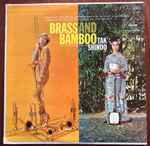
Takeshi "Tak" Shindo (Japanese: 進藤 武, November 11, 1922 – April 17, 2002) was an American musician, composer and arranger. He was one of the prominent artists in the exotica music genre during the late 1950s and early 1960s. Shindo also founded a dance band in 1947 and was a frequent lecturer and writer on Japanese music. He first gained prominence for his work on the 1957 motion picture Sayonara, served as the musical director for the television series Gunsmoke, and composed theme music for The Ed Sullivan Show and Wagon Train. He is most remembered for the exotica albums he released from 1958 to 1962, including Mganga! The Primitive Sounds of Tak Shindo (1958), Brass and Bamboo (1959) and Accent on Bamboo (1960). He also released several albums in Japan during the mid-1960s that blended American and Japanese musical traditions. During the 1950s and 1960s, Shindo was a columnist for the Rafu Shimpo covering classical and popular music. In 1980, Shindo made a documentary film, Encounter with the Past, about the Manzanar relocation camp where he was relocated in 1942 as part of the Japanese American internment policy. Shindo was born in 1922 in Sacramento, California. He moved with his family to Los Angeles in 1927. He enrolled at Los Angeles State College in 1941, but he was relocated to the Manzanar Relocation Center in early 1942 as part of the Japanese American internment policy that was adopted after the outbreak of war between the United States and Japan. Shindo spent more than two years at Manzanar. While at Manzanar, he worked as a reporter for the Manzanar Free Press and developed his interest in music. Music professor W. Anthony Sheppard, who published an article on Shindo and his music in 2005, concluded that, had it not been for his internment at Manzanar, Shindo would most likely have become an electrical engineer. Sheppard observed: While he had some musical experience, he had just begun college before Pearl Harbor and had no thoughts of pursuing music as a career. ... Shindo performed in one of the camp orchestras and took advantage of the camp's musical education program. Most significantly for his later career, he also took correspondence courses in orchestration. Shindo enlisted in the U.S. Army in 1944 and served as a Japanese language instructor in the Military Intelligence Service at Fort Snelling, Minnesota. While at Fort Snelling, he also continued his correspondence courses in music and became an arranger for the Nisei Eager Beavers band. Following the war, Shindo studied music at Los Angeles State College and studied jazz composition at the American Operatic Laboratory school. He also formed a dance band in 1947, which he continued to operate for more than 25 years. In a 1947 interview, Shindo discussed the multi-ethnic composition of his band: "As long as a player can produce good music, that's all I'm interested in. My band is supposed to be Japanese-American. But besides the four Nisei on it, I have Jewish, Negro, Russian, Irish, and Mexican-American boys on it. And we have a swell time together." Shindo received his bachelor's degree in 1951 from Los Angeles City College and subsequently studied under film composer Miklós Rózsa at the University of Southern California. Early in his career, Shindo worked on several television series, including service as the musical director for Gunsmoke and Suspense. He also composed theme music for The Ed Sullivan Show, Wagon Train, and Adventure. Shindo also collected Japanese instruments and wrote and lectured on Japanese music. In the late 1950s and 1960s, Shindo was frequently called on by Hollywood film and television productions to serve as a technical consultant on projects incorporating Japanese music and themes. In his article on Shindo, Professor Sheppard noted: "Shindo suddenly found the mainstream spotlight shining on him in the late 1950s as the representative of Japanese musical culture in Hollywood film and television." He first gained general notoriety for his work as technical adviser for the music in the 1957 motion picture, Sayonara. Shindo was charged with blending Japanese and western musical influences, using Japanese instruments and a mixed choral group of 38 voices of which 16 were female Japanese and four were male Japanese. Ron Burton, in an article distributed by the United Press, wrote of Shindo's work on the film: "The movie is being regarded as a vehicle that will create a demand for Japanese music in this country and do much to give the Western world a better understanding of Japanese culture." Shindo added, "An important part of what this picture is doing for an understanding of Japanese culture comes from the music. We have, of course, adapted it for the occidental ear." Shindo later recalled that his work on Sayonara opened up numerous opportunities for him. He noted that "the whole thing just lined up one after the other ... it just rode and rode to the point I couldn't keep up with it anymore." Other projects in which Shindo was asked to consult (or compose) include Cinerama Seven Wonders of the World (1955), Stopover Tokyo (1957), Escapade in Japan (1957), Gunsmoke (1957), Wagon Train (1958, composer for episode titled "The Sakae Ito Story"), Studio One (1958, composer/director of "The Kurushiki Incident"), Cry for Happy (1961), and A Majority of One (1962). Shindo is most remembered for the albums he recorded featuring a mix of eastern and western musical styles and instrumentation. Jazz composer and critic Leonard Feather named Shindo as a "Giant of Jazz" in the fifteenth article in Feather's series on the "giants of jazz." His albums won favor with listeners of music in the exotica genre that also included artists Martin Denny, Les Baxter, Arthur Lyman and Chaino. The popularity of exotica peaked in 1959 as Denny's album "Exotica" spent five weeks at No. 1 on the Billboard album chart and was the No. 3 album of the year according to Billboard. Shindo later recalled what attracted him to the style: "Everyone is looking for a style. So in my case, I decided being Oriental, I had something I should draw upon and so I decided to go 'exotic sound.'" Shindo's 1958 debut album, Mganga! The Primitive Sounds of Tak Shindo, was his first foray into the exotica genre. The album explores the primal rhythms of African music with influences from Afro-Cuban jazz. It also features animal sounds and chants to create an exotic, fantasy feel. Music critic Jason Ankeny described Mganga! as "vibrant and intoxicating, with a rhythmic intensity quite uncommon for its era. For an artificial experience, it packs a genuine wallop." Mganga! has been called "Shindo's orchestral fantasy of Africa" and is probably the best known of his albums in the exotica genre. In late 1959, Shindo's album Brass and Bamboo was released by Capitol Records. The album featured 10 standards and two original compositions by Shindo, combining the sounds of traditional Japanese instruments, including koto, shamisen, and bamboo flutes, with Western brass with "orchestration in tempos and moods that range from ballads to swing." The fanfare drums used in the recording were borrowed from the Tenrikyo Church in Los Angeles, and musicians from the Los Angeles Philharmonic Orchestra contributed a Chinese gong acquired on a trip to Hong Kong. At the time of the album's release, Shindo said: "It . . . introduces a foreign sound to the American ear. Oriental instruments have been used for solo passages in record before, but as far as I know this is the first time they have ever been an integral part of the arrangements." One reviewer rated it as the "Album of the Month" for April 1960, calling it a "sparkling debut" with "a new, refreshing blend of music of the East and West, big band dance arrangements spiced with exotic instrumental sounds of the orient." Esquire magazine in 1960 wrote: "Tak mixes ancient Eastern and modern Western instruments in a steamy dance sukiyaki." Another reviewer wrote that
Discografía en vinilo
Ordenada por relevancia (lo más escuchado primero).

En la onda de Tak Shindo
Otros artistas afines, con vinilo.