Tom Robinson (British singer-songwriter, bassist and radio presenter)
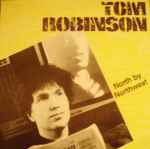
Thomas Giles Robinson (born 1 June 1950) is an English singer, bassist, radio presenter and long-time LGBT rights activist, best known for the hits "Glad to Be Gay", "2-4-6-8 Motorway", and "Don't Take No for an Answer", with his Tom Robinson Band. He later peaked at No. 6 in the UK singles chart with his solo single "War Baby". Tom Robinson was born into a middle-class family in Cambridge on 1 June 1950. He attended Friends' School, Saffron Walden, a co-ed privately funded Quaker school, between 1961 and 1967. He played guitar in a trio at school called The Inquisition. Robinson has two brothers, including Matthew, and a sister. At the age of 13, Robinson realised that he was gay when he fell in love with another boy at school. Until 1967, male homosexual activity was a crime in England, punishable by prison. He had a nervous breakdown and attempted suicide at 16. A head teacher got him transferred to Finchden Manor, a therapeutic community, in Kent, for teenagers with emotional difficulties, where he spent his following six years. At the community, Robinson was inspired by John Peel's The Perfumed Garden on pirate Radio London, and by a visit from Alexis Korner. The blues musician and broadcaster transfixed a roomful of people, using nothing but his voice and an acoustic guitar. The whole direction of Robinson's life and career became suddenly clear to him. Robinson's voice recorded November 2015 Problems playing this file? See media help. In 1973, Robinson moved to London and joined the acoustic trio Café Society. They impressed Ray Davies, of The Kinks, enough for him to sign them to his Konk label and produce their debut album. According to Robinson, Davies's other commitments made the recording a lengthy process and, after it sold only 600 copies, he left the band. Subsequently, when the Tom Robinson Band were playing at the Nashville Rooms in London, Robinson saw Davies enter and sarcastically performed The Kinks' hit "Tired of Waiting for You". Davies retaliated with a mocking Kinks song "Prince of the Punks" (released as a B-side of "Father Christmas") about Robinson. Robinson, in turn, wrote "Don't Take No For An Answer" about Davies's hindering his career, later released on the Rising Free EP.[citation needed] In London, Robinson became involved in the emerging gay scene and embraced the politics of gay liberation, which linked gay rights to wider issues of social justice. Inspired by an early Sex Pistols gig, he founded the more political Tom Robinson Band in 1976. The following year the group released the single "2-4-6-8 Motorway", which peaked at No. 5 in the UK singles chart for two weeks. The song alludes obliquely to a gay truck driver. In February 1978, the band released the live extended play Rising Free, which peaked at No. 18 in the UK singles chart and included his anthemic song "Glad to Be Gay", originally written for a 1976 London gay pride parade. The song was banned by the BBC. It did receive extensive daytime play on Capital Radio. In May 1978, the band released their debut album, Power in the Darkness, which was very well received, peaking at No. 4 in the UK Albums Chart, and receiving a gold certification by the BPI. Their second album, TRB Two (1979), however, was a commercial and critical failure, and the band broke up four months after its release. In 1979, Robinson co-wrote several songs with Elton John, including his minor hit "Sartorial Eloquence (Don't Ya Wanna Play This Game No More?)", which peaked at No. 39 in the U.S. Billboard Hot 100 and a song about a young boy in boarding school who has a crush on an older student called "Elton's Song". It was recorded, but not released until 1981 on the album The Fox. He played two songs live— "Glad to Be Gay" and "1967 (So Long Ago)" — during June of that year at The Secret Policeman's Ball (1979). In 1980, Robinson organised Sector 27, a less political rock band that released a critically acclaimed but unsuccessful album, Sector 27, produced by Steve Lillywhite. The band nevertheless received an enthusiastic reception at a Madison Square Garden concert with The Police. However, their management company went bankrupt, the band disintegrated, and Robinson suffered another nervous breakdown. Desolate, in debt, and sorrowing from a breakup with a beau, Robinson fled to Hamburg, Germany, much like his idol David Bowie, who had escaped to Berlin at a low point in his life. Living in a friend's spare room, he began writing again and ended up working in East Berlin with local band NO55. He also released a German-language single, "Tango an der Wand" ("Tango at the Wall"), with lyrics by Horst Königstein, a director and screenwriter who had also written the lyrics to Peter Gabriel's German albums. However, the single failed to have a commercial impact. In 1982, Robinson penned the song "War Baby" about divisions between East and West Germany, and recorded his first solo album North by Northwest with producer Richard Mazda. "War Baby" peaked at No. 6 in the UK singles chart and at No. 1 in the UK Indie Chart for three weeks, reviving his career. His following single, "Listen to the Radio: Atmospherics", co-written with Peter Gabriel, peaked at No. 39 in the UK singles chart, and provided him further income when it was covered by Pukka Orchestra in 1984. The Pukkas' version was a top 20 hit in Canada under the title "Listen to the Radio". Robinson's return to Britain led to late-night performances in cabarets at the Edinburgh Fringe, some of which later surfaced on the live album Midnight at the Fringe (1988). His career enjoyed a resurgence in the mid-1990s with a trio of albums for the respected folk/roots label Cooking Vinyl and a Glastonbury performance in 1994. In 1986, a BBC producer offered him his own radio show on the BBC World Service. Since then Robinson has, unusually, presented programmes on all the BBC's national stations: Radio 1, Radio 2, Radio 3, Radio 4, 5 Live and 6 Music. He presented The Locker Room, a long-running series about men and masculinity, for Radio 4 in the early 1990s. In 1994 he wrote and presented Surviving Suicide, about his suicide attempt. In 1997, he won a Sony Academy Award for You've Got to Hide Your Love Away, a radio documentary about gay music, produced by Benjamin Mepsted, and later hosted the Home Truths tribute to John Peel a year after his death in 2004. Until June 2025, Robinson presented Now Playing @6Music, a show that played songs based on a certain theme and listeners' input. In his later career Robinson rarely performs live, apart from two annual free concerts, known as the Castaway Parties, for members of his mailing list. These take place in South London and Belgium every January. In the Belgian Castaway shows, he introduces many songs in Dutch. The Castaway Parties invariably feature a wide variety of established and unknown artists and groups who have included Show of Hands, Philip Jeays, Jan Allain, Jakko Jakszyk, Stoney, Roddy Frame, Martyn Joseph, the Bewley Brothers and Paleday alongside personal friends such as Lee Griffiths and T. V. Smith. In 2009, Robinson founded "Fresh on the Net", a showcase website for upcoming bands and artists whose aim is "to help independent musicians find new listeners, and independent listeners find new music". Robinson played "2-4-6-8 Motorway" and "Glad to Be Gay" at the BBC introducing stage on the Friday afternoon of the 2011 Glastonbury Festival, after announcing that The Coral would not be showing as they were 'stuck in the mud'. In July 2013, at the Tabernacle on Powis Square in Notting Hill, a new line-up of TRB performed the entire Power in the Darkness album to launch its release on CD. The title track featured a guest appearance by T. V. Smith. In 2014, he was one of the performers at the opening ceremonies of WorldPride in Toronto, Ontario, Canada, alongside Melissa Etheridge, Deborah Cox and Steve Grand. In October 2015 he released his first new album in 20 years, Only the
Discografía en vinilo
Ordenada por relevancia (lo más escuchado primero).


En la onda de Tom Robinson
Otros artistas afines, con vinilo.